Folks we’re likely to give those mules whiplash goin’ north than south only to whip back north, but I’ll try to keep us on a straighter trail the next few weeks.
Anywho, this week we’re turnin’ the wagons to Montana Territory and THE BATTLE OF THE LITTLE BIG HORN!
But we can’t go rushin’ into things and right into the middle of the battle (we all know how that kind of rash action faired for Custer) Don’t get your petticoats in a bunch, we’ll get there, but first let’s take some side trails to northern Wyoming and South Dakota.
The Bozeman Road enraged the Sioux and Cheyenne from it’s opening in 1863-64, because it crossed the Powder, Tongue, and the Big Horn rivers, lands they and their Crow enemies claimed as prime hunting grounds. Teton Sioux, Cheyenne and Northern Arapaho warriors allied to defend this territory, first in an attack at Platte Bridge Station, July 1865, and then against the troops brought against them. Hostilities escalated when Colonel Henry Carrington and his infantry headed for the Powder River, leading Red Cloud (the most powerful of the Sioux Chiefs) to lead the majority of Indian leaders to walk away from peace negotiations at Fort Laramie to return and defend their lands.
Carrington and his men established three forts in the area, Fort Reno, Fort Phil Kearny, and Fort C.F. Smith. Carrington’s troops quickly found themselves in an impossible situation with low morale and vastly outnumbered by the Indians. Red Cloud’s warriors closed in and placed the forts under siege with Fort Phil Kearny facing the worst of it.
In December 1866, a brash and reckless officer Captain William J. Fetterman took eighty-one men out of the fort to protect a wagon train and impetuously followed warriors led by a young Sioux war chief, Crazy Horse. Within forty minutes Fetterman and his men where dead. The Fetterman massacre shocked the nation and more troops were sent to the area to build a stronger fort, Fort Fetterman. Violence escalated and by 1867 the government realized it must vastly increase troops on the Bozeman Road or abandon it.
In the Fort Laramie Treaty of 1868, the Sioux seemingly got what they wanted. Red Cloud refused to discuss terms until the soldiers left the hated forts. The Bozeman Road was closed, the forts closed, with the promise of no new posts in that area. In line with the new policy of “concentration” the commissioners persuaded the chiefs to accept a reservation centering on the Black Hills and consisting mainly of today’s South Dakota west of the Missouri River. It must be noted that the Powder, Tongue and Big Horn areas, where Red Cloud had just won his war, were not part of the reservation. This area became unceded Indian lands, closed to general white entry, available for seasonal hunting, but not permanent occupation by the Indians.
Sitting Bull
This treaty, like others before it, was only a temporary peace. Red Cloud and most of the older chiefs went on the reservation, but many younger Sioux leaders, like the Hunkpapa chief, Sitting Bull and the Oglala Crazy Horse, refused to accept the decision. These “nontreaty” Indians kept their bands in the unceded lands. Treaty commissioners expected these bands to be forced to the reservation when buffalo hunting declined. But these Sioux adamantly refused to settle on reservations and ventured farther north into the Yellowstone territory to hunt, making white settlers uneasy.
While things in the Yellowstone remained static for the most part, things in the Black Hills were building steam like an out of control locomotive headed toward a cliff. Rumors of gold spurred white men into the sacred Black Hills, lands clearly defined within the 1868 reservation. Men hungry for gold and good agricultural lands poured into this area.
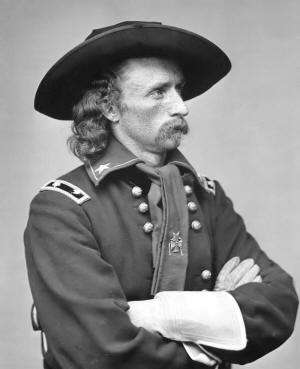
In 1874, an officer hungry for glory, Colonel George A. Custer threw coal into the engine as he led an “expedition” into the lands and sent back reports of a land heavy with gold and ripe for agriculture. And although Indians killed some and the army half-heartedly threw out others, still settlers came by the thousands. The 1875 gold boom made a travesty of the 1868 treaty and brought to a boil the situation with the Sioux. As more and more whites flooded the area the Indians left the corrupt agencies and headed west to join the nontreaty bands.
President Grant and policy makers far removed from the lands further complicated the issues. While passively allowing settlers into the Black Hills region, military force would be used to drive the Sioux and Cheyenne out of the unceded lands and back to the reservations.
Early December 1875, the Indian Bureau sent messengers to the bands in southeastern Montana and northeastern Wyoming, ordering them to return to the reservation by the end of January 1876. First, if you look at the timeline the order did not give the tribes enough time to comply, but it did not matter as the Indians had decided to stand and fight in any case. The United States Army officially called these bands “hostiles.”
The army eagerly made its first move against these hostiles in March 1876. General George Crook, who proved himself against the Apache in Arizona led 900 men north from Fort Fetterman, Wyoming. Facing subzero weather the first confrontation “Battle of Powder River” accomplished almost nothing. Even though a large band of Sioux was captured the army was unable to hold or destroy the camp. Crook returned to Fort Fetterman.
From his Chicago headquarters, General Phil Sheridan, developed a spring-summer three pronged campaign to corral the Sioux and Cheyenne. Three large armies would be sent into the unceded lands with the hopes at least one would engage the hostiles and defeat them. The “Montana Column” began moving down the Yellowstone in April 1876, with 450 infantry from Fort Shaw and Fort Ellis. Their commander was Colonel John Gibbon and their assignment was to block any Indian movement north or west of the Yellowstone. The “Dakota Column” left Fort Abraham Lincoln near Bismarck in mid-May under the command of General Alfred Terry. They moved across the Dakota plains and up the Yellowstone Valley. Among Terry’s column was the 700 man Seventh Cavalry under Colonel George A. Custer.
Custer was already a national hero for actions during the Civil War and as a dashing Indian Fighter. Originally, he was supposed to command the entire Dakota Column, but was removed from command when he testified against President Grant’s brother regarding the corruption of the Indian Services. At the last minute he was allowed to go along with the column and command the Seventh. Historians speculate Custer may have acted as he later did at Little Big Horn in an attempt to recover his glorious reputation he believed Grant tarnished.
While the Montana and Dakota columns moved toward a rendezvous on the lower Yellowstone, General Crook again led the army north from Fort Fetterman. Crook, Gibbon and Terry had only a general idea where the Indians where and how many there might be. Throughout the spring of 1876, bands of Sioux and Northern Cheyenne fled the reservation and joined the hostile camps near the Rosebud and Little Big Horn rivers. By June, their villages may have housed as many as 15,000 people, including three to four thousand warriors.
The three advancing columns were forced to act somewhat independently since communications were slow and unreliable. Crook encountered the Indians first. On June 17, his men paused on Rosebud Creek, a large Sioux-Cheyenne force under Crazy Horse, attacked them. It was a helter-skelter attack and counterattack ending when the Indians withdrew. Crook and his men withdrew, as well, back to Goose Creek. Crazy Horse moved to join their allies. This battle effectively removed Crook’s column from the campaign.
Terry and Gibbon converged on the Yellowstone. They had no idea about Crook’s location. They chose a sensible strategy of attempting to entrap the Indians from both the north and south. They would send Custer’s swift Seventh Cavalry on a sweep southward up the Rosebud and then across and down the Little Big Horn. Meanwhile, they would move the slower infantry southward up the Big Horn and then up its Little Big Horn tributary. Both armies should reach the Indian village on June 26, 1876. Terry gave Custer considerable discretion if the Indians seemed likely to escape.
June 22, Custer rode up the Rosebud. On June 24, he made his first controversial decision. Instead of following Terry’s order, he pursued and Indian trail westward before reaching the upper Rosebud. Driving his men to exhaustion on a night march, Custer reached the divide between the two streams, at dawn June 25, and his scouts reported smoke of an enormous encampment. Whether to gain all glory, or to hit the Indians before they could scatter, or both, Custer decided not to wait for Terry and the 26th rendezvous date. He failed to acknowledge the immensity of the Indian gathering, even though his terrified scouts warned him. The Seventh, in his vain opinion, could whip any number.
Mid-day, Custer’s troops advanced down Reno Creek, out of sight from the Indian camp, the stream the Indians called the “Greasy Grass.” Custer divided his command into three units. Three troops under Captain Frederick Benteen to scout the hills west of the village, hoping Benteen could contain an Indian retreat. Major Marcus Reno, was ordered to cross the Little Big Horn with three more troops, and strike the camp at its southern end. Custer would retain the remaining five troops and skirt the bluffs to the right of the village and attack the center.
When Reno hit the near end of the enormous village, the Indians did not panic and rallied under Chief Gall and rushed their attackers. Reno tried and failed to form a defensive skirmish line. He led his men in a disorganized and bloody retreat back across the river and dug in on the bluffs there. Benteen’s returning force soon joined what was left of Reno’s, with Benteen taking over for the distraught Reno.
Chief Gall
Unaware of these developments, Custer emerged from the bluffs to the east of the village and attempted to cross the river and attack it. But Gall’s warriors, having left Reno’s force, moved across the stream and attacked Custer instead. The colonel retreated up the ridges, but it was too late. More warriors joined Gall, and Crazy Horse led another attack flanking from the north. The Indians overwhelmed Custer’s skirmish lines, and within a half-hour wiped out his command. While they celebrated a great victory, the Indians kept Reno and Benteen under siege until evening the next day. Aware that more soldiers were coming they dispersed. Terry and Gibbon arrived at the battlefield on June 27, 1876. They buried more than two hundred and sixty dead and prepared Reno’s and Benteen’s wounded for removal to the steamboat Far West.
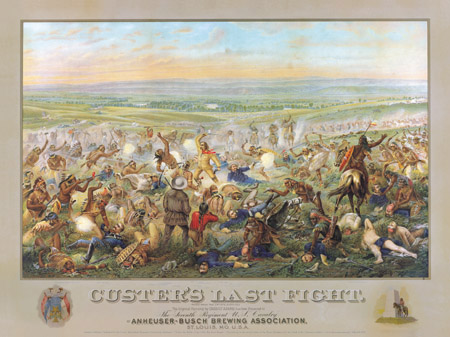
News of the “Last Stand” blazed across newspapers throughout the country in early July 1876. Highly inaccurate accounts of “the massacre” disrupted Fourth of July celebrations of the nation’s centennial, and sent Americans poring over maps of Montana Territory. Custer became the legend and hero he always desired being, and generations of schoolchildren learned of his daring actions, but never of his impetuous recklessness. And every western saloon, it appeared, displayed a romantic Anheuser-Busch painting of the battle. Custer’s wife, Libby, was the greatest proponent of spreading his legend, and it is believed it was in her honor that those who knew best of his actions on that day, kept their mouths closed until after her death.
The Battle of the Little Big Horn was in no way decisive. The Indians won a significant victory, but this victory only postponed their ultimate and tragic defeat. More troops descended on the plains at the call for unconditional surrender.
Brave chiefs and warriors like Sitting Bull and Crazy Horse continued to resist. But in 1877, starving and demoralized Sioux and Northern Cheyenne bands surrendered. Even the great Crazy Horse gave up in early May. By autumn1877, the conquest of the proud Sioux and Northern Cheyennes was complete. Their brave “stand” against Custer all but forgotten and diminished by the Custer propaganda until cooler heads removed from the time and prejudice could provide a complete picture to the events in June 1876.
So take your young’uns on up to Montana where every June reenactors bring history to life. This year y’all can catch a full color reenactment on June 22, 23, or 24th. Iffin’ ya want to join the action contact www.custerslaststand.org and ride into battle with Sitting Bull and Crazy Horse, or with George A. Custer’s Seventh Cavalry.
The other forts and battlefields mentioned in this post can be visited, as well. In some cases, the buildings are gone, but there are still markers and signs you can follow. And don’t forget to visit The Custer Battlefield Museum in Garryowen, MT.
Toss the young’uns in the wagon and continue their learnin’. Heck, they won’t even know this is all that yuck from their ol history books, and they’ll learn somethin’ before they realize what happened. And ya know y’all just might learn somethin’, too.
See ya on the trail, and watch how ya drive those mules! Last time ya almost ran clear into Cookie’s grub wagon, he liked to ‘ave turned the air blue.
**Crazy Horse is not pictured in this post as I could only find pictures thought to be the Sioux warrior
Source:
Malone, Michael P., Lang, William, Roeder, Richard. Montana: A History of Two Centuries. University of Washington Press. Seattle. 1976.
My own essay written in 1995 while attending Montana State University-Billings, and plaques on trails of the various battle listed from my trips to these locations.
We have us a fun time over at the Wild West, but there are times when fiddles need to be stored, yee-haws need to be hushed and we need to veer off the trail and rope in on an issue. One thing always valued in the Old West was children and here at Kirsten Lynn’s Wild West we keep that tradition alive. Our children should be treasured and protected. But unfortunately for thousands of children they are used as pawns by one parent in a vindictive “punishment” against the other. They are kidnapped by a parent they trust, brainwashed against another parent they love and scarred by one of the two people who should be protecting them from all harm.
So today, with her permission, I am re-posting Angeline De Luca’s thoughtful, heartfelt and inspiring review of CHASING THE CYCLONE by Peter Thomas Senese a man who not only writes about this devastating tempest, but lived in its terrifying path and snatched his son from the dark clouds before he was lost forever in the violent storm.
Blurb: Paul Francesco is an independent, successful single man in his late thirties who has everything in the world going for him: financial stability with the real possibility of obtaining significant wealth, a dedicated and loyal group of family and friends, and a challenging, exciting, and rewarding career. Except Paul has one problem: he lives with a deep, dark secret that torments him: he is a ghost living in purgatory despite his relative success.
Unknown to Paul, there is an evil plan to extort his hard-earned assets from him and in the process deny him the one thing that is more important to him than anything else in the world: to be an active part of his son Alex’s life. Unfortunately, his innocent and trusting seven-year old son is at the center of this vicious and diabolical plot directed at him.
When things go from bad to worse to unbelievably insane – when judges choose not to uphold the laws of their nations, when law enforcement turns a blind eye, and when one government after another’s hands are tied due to bureaucratic issues of jurisdiction or non-participation of the international treaty on child abduction, the only thing that could prevent Alex from becoming another sad and sorry statistic on a report that nobody wants to read or think about is his father’s vow to never abandon him no matter what. As a result, Paul is forced to become a hunter, chasing the predators who have taken his son to the other side of the world. With the situation becoming more and more desperate, he is forced to find other resources to help him.
As the hunt moves across international borders, taking Francesco to the other side of the world, he gathers together an extraordinary group of individuals, each with their own powerful stories, to help him. The story moves from The United States and Canada, to the island nations of Oceania, and culminates in the horrifying black-markets of Asia.
Chasing The Cyclone by Peter Thomas Senese is written as a first-hand account of the growing epidemic that is international parental child abduction, and the extreme difficulties all parents whose child has been abducted must face in order to protect the welfare of their victimized child or children. This story makes clear what needs to be done both here in The United States and throughout the world in order to protect children from being abducted and taken across international borders.
Angeline’s Thoughts: If I had to use one word to describe Chasing the Cyclone by Peter Thomas Senese it would be phenomenal. As in remarkable. Extraordinary. I have read many books over the years, for enjoyment, for education, because I had to, because I wanted to. I cannot think of any other book that comes close to making me feel as I did when I read this book. I believe these feelings will stick with me forever. This story, inspired by horrific events, is about the love between a father and a son. And that love is beautiful.
Like the blurb states, Chasing the Cyclone takes us on Paul’s journey discovering his ex-wife’s deceptions at the expense of their son, Alex. Kidnapping him with help from others; she relocates to New Zealand. The failure of the court system is unreal, particularly before she leaves Canada. Alex is a US Citizen, but since he was abducted from Canadian soil, the US could do nothing to help. Those helping her try to extort Paul; did not have Alex’ welfare in mind. They were greedy. And evil. Paul does everything he can to rescue his child. With the help of several amazing people, he does just that.
We not only see the roller coaster ride Paul is on, we feel it. Mr. Senese writes this story from his heart. It is a subject he knows all too well after all. The ups. The downs. And my goodness there is a lot of downs. My heart broke. I was spitting mad. I was so frustrated many times. I know what I felt, I can’t imagine what Paul felt. Then he would see his son, the clouds would lift and the love between them bounced off the page; straight into my heart.
About a third of the way through the book, Paul is wondering how he will go about forgiving her “because that’s what it’s going to take for Alex to become whole again.” I had to stop reading and think about this. I admit that forgiveness was the last thing on my mind. I had zero compassion towards the woman. Then I was reminded that she is still the mother of his son. Alex needs both his father and mother. Although she was keeping him away from Paul, she does love Alex and Alex loves her.
Paul was absolutely right. He would need to forgive her eventually, for Alex and his sake. He also knew it wouldn’t be easy. Forgiveness, an admirable quality to have and Paul has it. More proof of what a good man Paul is. A good man and full of grace.
Paul has amazing friends to help him through. They stood by him, traveled with him and supported him without question. In another life examining moment, I was thankful because I, too, have these kinds of friends (minus any special ops type training, of course). I cherish each one of those friendships. The basis of the book is tragic, but there is a lot of love shown in it too.
I could not put this book down. Inspired by the realities a parent targeted for abduction faces, I knew before I read it that it would be emotional. I, also, knew in my heart that this story was meant for me. Not because I am going through anything similar or that I know of anyone else who is, but because I could be a voice for thousands upon thousands of children abducted by their own parent(s). Our society is not aware of the enormity of international parental abduction. It’s huge. We need to educate ourselves.
Although Mr. Senese is reunited with his son, his work continues as was evidenced by a large number of sworn testimonials by many thankful parents who Mr. Senese has directly helped in either reuniting with their own child or preventing their child from being internationally abducted. Establishing the I CARE Foundation and being closely involved in the rescue attempts of abducted children is but one of the many impactful acts of Mr. Senese. Clearly, ‘involved’ for Mr. Senese means financially, emotionally, legally, and investigative support. Hundreds of thousands of children are at risk. With the work of Peter and the ICARE Foundation, not only have many children been rescued, but important legislation has been presented and the courts are being educated. Mr. Senese is a lifeline for other Chasing Parents. His selflessness is inspiring. He is hope.
I have added Mr. Senese to my bucket list of people I’d love to meet in person in my lifetime. It’s been a pleasure visiting with Mr. Senese over the last few weeks. He is sincere and he is doing great things for other Chasing Parents. Please visit his website to learn more about international parental abduction and to learn where to purchase Chasing the Cyclone. Please educate yourself. It is the least you can do for your children.
He weathered the storm and they will survive.
KIRSTEN AGAIN: Thanks to all who stopped by the campfire. I hope you’ll walk away with a new awareness to a crime that for too long has not received the spotlight it deserves, and you will do what you can to protect our children. A special thank you to Angeline De Luca from Guilty Pleasures Book Reviews for this amazing review. I highly recommend whether you’re an author, a reader, or both you visit Guilty Pleasures Book Reviews for fantastic reviews with NO SNARK! And please friend Angeline on Facebook so you can keep up with all of her outstanding reviews!!
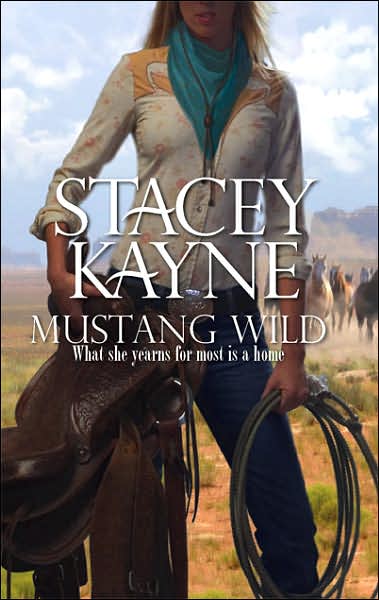
WHOO-EEE!! We have roped us another ace-high author! Me and the boys are tickled plum to death to feature Stacey Kayne’s Wild Series in this week’s Western Roundup!! I’m havin’ to beat back Cookie with a stick! Stacey even threw a free ebook, reader’s choice, into the pot for one lucky commenter!!
So let’s get through the ballyhoo first. To enter for the ebook you must leave a comment (about the books, author, cowboys, the west, or any combination) and a good email (in the section to leave your name and e-mail). I’ll stick my hand in my hat (I learned my lesson about usin’ Cookie’s) tomorrow morning at first light and pull out a winner!
Now let’s get to those wild cowboys and the wild women who love ‘em!
No smooth-talking man is going to outwit her!
With the deed to her land and kid brother to protect, Mustanger Skylar Daines shouldn’t have tangled with the likes of Tucker Morgan. His stolen kiss scatters her senses, and quicker than a whirling dust devil, they’re wed!
What had started as a joke is now Tucker’s worst nightmare. He’s keen to fix the marital slip-up–then he tells Skylar the deed she holds belongs to him, and him alone.
Perhaps Skylar shouldn’t be so fast to have their marriage annulled. She’s not about to be swindled out of the one thing she yearns for most–a home.
First they’ll have to beat her father’s murderer to Wyoming. Hearing the killer is after his ranch, Tucker teams up with a woman who has no trouble taking control of his mustangs–or his desire.
KIRSTEN’S THOUGHTS: MUSTANG WILD is fun, intense, sensual, and just plain entertaining. Stacey Kayne takes you right on the trail herding mustangs in the Old West with villains and nature plotting against Skylar and Tucker at every turn and their siblings not doing a whole lot to help out the situation (other than adding humor for the reader and grief to Skylar and Tucker).
Skylar is such a great heroine. She’s tough, determined, honorable and her desire to settle down and provide a home for her and her brother will hit you in the heart. I love how she proves her skill training mustangs to Tucker, and she doesn’t rub it in how good she is, she just does her job and does it better than most. It was tender to watch her shift from tough cowgirl to tender mother figure for her brother and soft woman with Tucker (when she didn’t want to shoot him).
Tucker is so charming it should be illegal, and although his natural instinct is to protect Skylar he respects her skills and comes to admire her for more than just her talent with horses. He’s a bit of the irresponsible brother, but once he sets his mind to making Skylar his hold onto your hats he’s all business and determined to win. Readers will be as helpless as Skylar to resist all that charisma when this devastatingly good looking cowboy turns it on.
The trail to Wyoming in dangerous, but the real danger is these two stubborn people losing their hearts!
A promise from his past threatens what Chance values most…his freedom
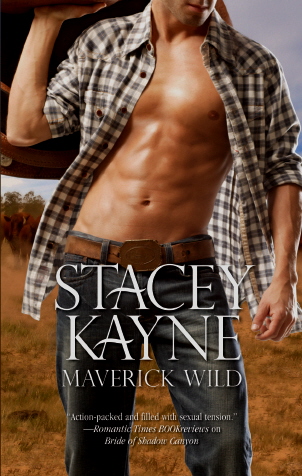
Cora Mae Tindale isn’t looking to stir up trouble—she just needs a safe place to hide while she plans out her future. Having escaped the marriage trap set by her conniving mother, she’s arrived in the wilds of Wyoming searching for the stepbrother who promised to always protect her. She hadn’t counted on the boy from her childhood becoming a war-hardened rancher with heart-stopping looks that could tempt a saint.
Plagued by horse thieves and marriage-minded females, the last thing Chance Morgan needs is a woman on his ranch. But Cora Mae is more than just a pretty face—she’s part of his past; a reminder of the guilt and broken promises he’s spent too many years trying to forget. A distracting array of curls and curves, she hardly resembles the mischievous spitfire from his youth, but her eyes hold the shadows of a painful past, and a passion she struggles to conceal. Cora Mae’s indifference entices Chance in a way that blatant flirtation never could. He yearns to discover the truth she hides, but will uncovering her secrets expose his own?
KIRSTEN’S THOUGHTS: Chance is a tough, gruff, stubborn cowboy who values his independence above everything, so you know he’s going to fall hard for sweet Cora Mae. He might growl around a bit, but moments with his nephew, Skylar and Cora Mae give us a look at the real man who’s loyal to a fault and sweet when he needs to be.
Cora Mae can’t out ride most men, like Skylar, and she can’t out shoot and out survive most anyone, like Maggie. But she has just the right kind of grit to escape her mother and track her stepbrother to the wilds of Wyoming. And since Chance needs all the sweetness and gentleness he can get Cora Mae is the perfect match for him. But don’t worry, she’s no pushover and has no problem telling him exactly where he can ride his horse when he needs a good slap on the back of the head, too.
MAVERICK WILD keeps the fun and romance going that Tucker and Skylar started in MUSTANG WILD, but adds a new suspense as Chance and Cora Mae face cattle thieves, a manipulative mother/stepmother and a cunning widow. These two have their work cut out for each other as they find their way back to where they belong…with each other.
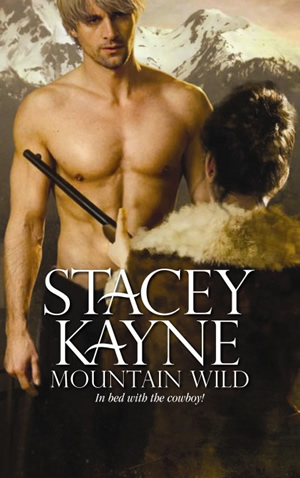
In the midst of a range war, Garret Daines is dead-set on keeping his ranch from greedy local cattle barons. An attempt on his life during a winter storm lands him in the healing hands of a mountain recluse. He can hardly believe the youthful beauty he discovers hidden beneath her mountain woman attire or the passion unleashed by her tender touch.
When “Mad Mag” pulls the handsome rancher from the snow she has no idea he’ll be the man to thaw her wounded heart. But Maggie is hiding a mess of secrets in her mountain sanctuary, none of which she’s willing to share. Murderous cattlemen threaten their fragile bond and Maggie has to face the fears of her past or risk losing her hope for the future. Garret will defend his wild woman at any cost, but can he convince her their love is worth the risk?
KIRSTEN’S THOUGHTS: I know I shouldn’t play favorites in the series, but doggonit it’s my blog! MOUNTAIN WILD melted me like butter. In fact, I’ll go one better, Garret and Maggie are still two of my favorite characters ever.
When we first meet Garret he’s Skylar’s cocky little brother, but even then he’s a charmer. And whoa doggies, when brother grows up he grows up in all the right ways. He’s strong and steady and so sweet and funny you can’t help but love him. His determination to make his own way and earn the respect of his family keeps you pulling for him. Unlike Tucker and Chance, Garret wants love, marriage, family (and has since MAVERICK WILD) and it made him a stronger hero for desiring those things and fighting to show Maggie how much better they were together.
Maggie just touched my heart from the start, even under all her animal skins and floppy hat. I already liked this character from MAVERICK WILD, but the more you get to know her the more you see how wounded and desperate she is for tenderness and sweetness (things Garret excels at), and how much she would like to be a part of Garret’s world, but fears giving up her freedom and the rejection she might face. It doesn’t take long, for the reader or Garret, to see her mountain shrew act, is just that, a show to protect her heart.
Like MUSTANG WILD and MAVERICK WILD, MOUNTAIN WILD has enough suspense and action to keep you enthralled, but at the end it’s the romantic tension that will keep you turning pages and then cursing yourself for reading it too fast.
Seriously folks, this is a must read series. Tucker, Skylar, Chance, Cora Mae, Garret, and Maggie will capture your heart. With each book you’ll change your mind about who your favorite cowboy is and then change it back again depending on who’s talking. I have rarely read a book where the heroine didn’t at some point annoy me, or I wished the cowboy would ride off into the sunset alone. Well, with the Wild Series I found three women who I cheered for all the way and was ecstatic when they lassoed their man. And Stacey Kayne does a magnificent job of giving each character a very distinct and real voice. Once you meet her people, she could remove all tags and a reader would know without hesitation who is speaking, or acting a certain way.
Stacey Kayne masterfully pulls together people and places so you almost feel like the gang is welcoming into their home and personally sharing their love stories. When you’re done reading you’ll be surprised you haven’t been in Wyoming sitting before a roaring fire and chatting with the Morgans and Daineses. This is a “put high on the keeper shelf” series ‘cause you will want to visit this clan over and over.
If you’re begging for more Stacey Kayne after you’ve read the Wild series, and you will be, here are two more fabulous stories filled with heart stopping cowboys and their brave women worthy of their own feature, but hey I’ve got chores.
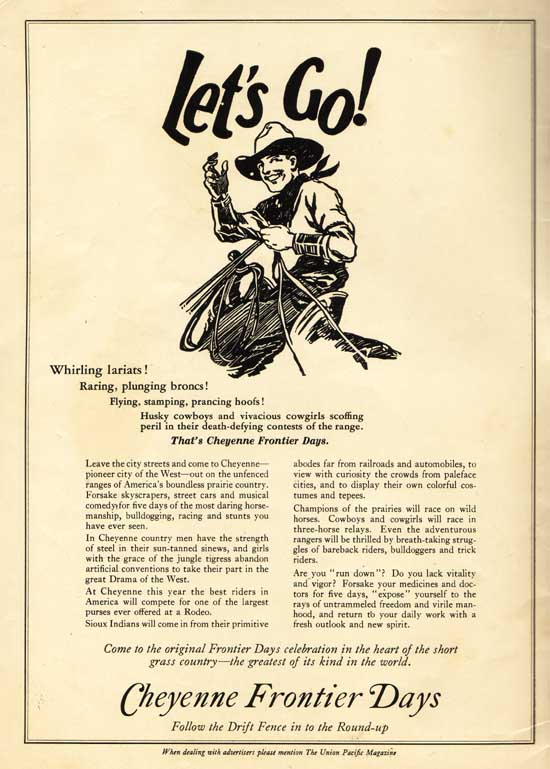
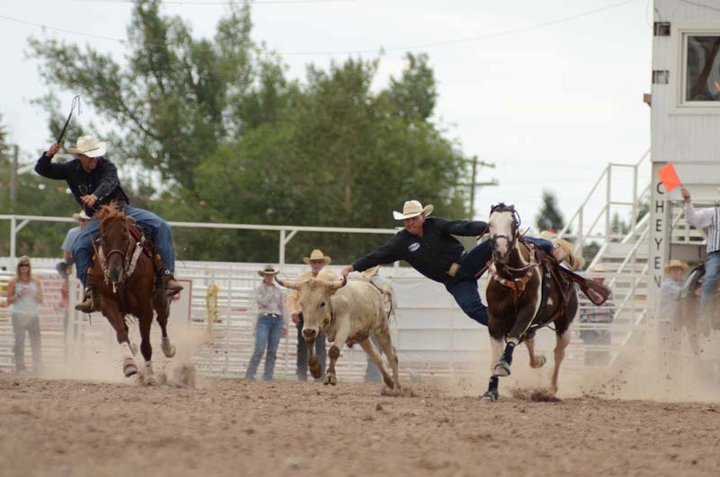
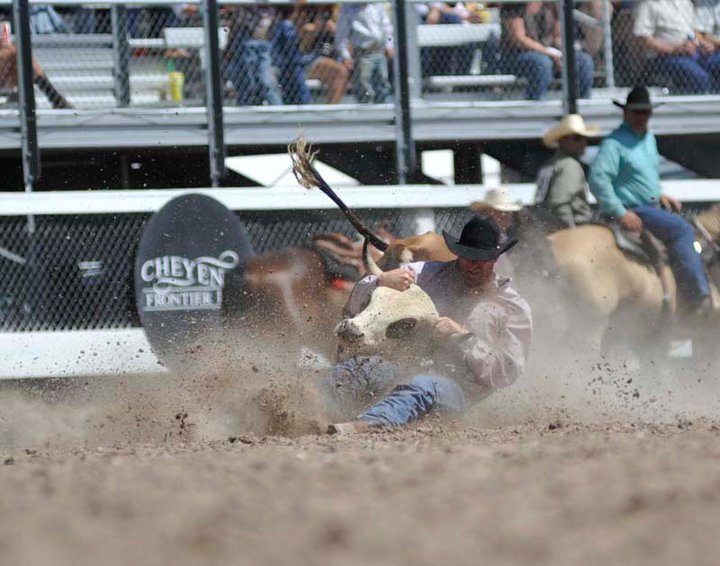
Continuing on down the trail from the majestic Tetons, this week we’re lookin’ at a whole different kind of spectacle. Let’s talk rodeo folks!! And if we’re talkin’ rodeo we must be talkin’ the largest outdoor rodeo in the world. The Daddy of ‘Em All…Cheyenne Frontier Days!
YEEE-HAAAW!! Strap on your spurs we’re in for a rip snortin’, six-shootin’, bronc bustin’, bull riden’, steer ropin’, bulldoggin’ thrills and chills ride!
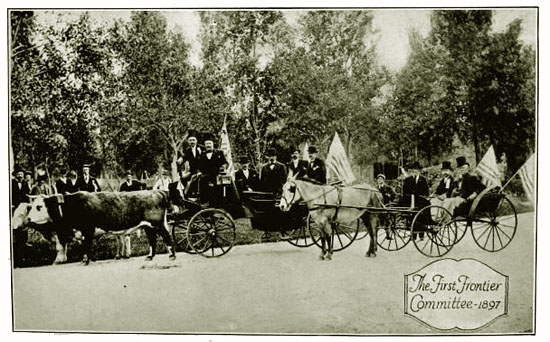
Acting on a suggestion from Frederick W. Angier, Traveling Passenger Agent of the Union Pacific Railroad, in 1897 plans for the first “Frontier Day,” were formulated in the Trivoli Saloon at the corner of 16th Street and Carey (the Saloon serves as the present day Chamber of Commerce). On September 23, 1897, a legacy of the old west began with the first Frontier Day.
Flags decorated the town and a special excursion train brought in a band and visitors. The Sun-Leader reported on the “thousands of visitors from all over the state and from Colorado and Nebraska.” The first Frontier Day presented ox teams, vigilantes, and stage holdups as major parts of the presentation. The first Frontier Day parades consisted merely of cowboys racing down the street “perhaps scaring women, children and dogs.” The first celebration only lasted one day. It started at noon with a cannon fired by Battery A of the 76th Field Artillery and concluded with a Grand Ball at Keefe Hall.
Bill Jones won the saddle bronc contest, and the only marring incident on the first Frontier Day was when bleachers were smashed by wild horses, which had broken loose and spectators fled for safety. The following year William F. Cody’s “Wild West Show and Congress of Rough Riders of the World” attracted an audience of 6,000 to the festivities. The event was such a success it was expanded to two days, but continued to be referred to as “Frontier Day” until 1910.
Frontier Day gained national attention in 1904 with the spectacular performance by black cowboy Will Pickett. Pickett, who is credited for single-handedly inventing the Bulldogging contest, observed that cowdogs would bring steers down by biting the steer on the muzzle. Thus Pickett would, “attack a fiery, wild-eyed, and powerful steer, dash under the broad breast of the great brute, turn and sink his strong ivory teeth into the upper lip of the animal, and throwing his shoulder against the neck of the steer, strain and twist until the animal, with its head drawn on way under the controlling influence of those merciless teeth and its body forced another, until the brute, under the strain of slowly bending neck, quivered, trembled and the sank to the ground.”
Pickett’s performance was reported nationally in Harper’s Weekly and he was offered a place in the Miller Bros. 101 Wild West show. He was the first black man inducted into the Rodeo Cowboy Hall of Fame.
Women, though participating in rodeos since the 1880s, made their first appearance in the Frontier Day rodeo in 1904. Bertha Kaepernick gave and exhibition of bronc riding.
By 1908, Cheyenne Frontier Day, was recognized as the premier rodeo in the United States and cowboys from all over the country came to compete. That year the citizens of Wyoming were shocked by at least two of these out of state cowboys. The Basin, Wyoming newspaper TheBig Horn County Rustler reported, in their August 28th edition, “for the first time in history neither the world’s champion bronc buster or steer roper was from Wyoming, also neither man was a resident of the group of states immediately surrounding Wyoming.” The steer roping champion was Ikua Purdy of Hawaii.
The bronc riding champion that year was Dick Stanley of Portland, Oregon. Stanley won the championship “by the most splendid exhibition of horsemanship ever seen in a frontier arena…Stanley performed a feat never before accomplished by a buster, riding to finish old Steamboat and spurring the horse at every jump. Many men have ridden old Steamboat for years the undisputed worst bucker of the world, but never before did a rider spur the equine warrior and manage to remain on his back until he was subdued.”
After his death in 1910, it was discovered that Dick Stanley was really, Earl Carl Shobe, and he had jumped bail in Wyoming some years before on charges of murder and post office robbery.
Steamboat continued to compete until John Coble sold out. He donated Steamboat to the Cheyenne Elks Lodge. In 1914, Steamboat contracted blood poisoning from a barbed wire fence and met his end. The horse was inducted into the Pro-Rodeo Hall of Fame in 1979.
Legends, both man and beast, continued to be made at Frontier Park and cowboys from around the country enter to test their metal at the Daddy.
The Basin Republican reported in July 1909, “entries are still coming in for various events at Frontier and judging from the official program…there will be more contests and more interesting features than ever before. Six fine band [sic] have been engaged to supply music, and in addition to the purely wild west sports, Uncle Sam’s crack Ninth Cavalry will do some special stunts…”
Only war could threaten the Daddy, but after World War I ended the question on the people of Cheyenne’s mind was whether there would be Frontier Days. In November 1918, the Wyoming State Tribune put their minds to ease. “With the War over, troop movements stopped, and many of the best performers who have been in the army probably out, and ready to appear again by the time the show is held, things are said to be looking up for a good Frontier celebration next summer.” Trains were running under normal conditions without troop and munitions being transported, so tourists could once again travel West.
One blight caused concern for the success of that year’s show. Prohibition. How would being a dry state effect people’s desire to come to Cheyenne “a wide open town in the minds of many…They come to frontier [sic] to see a wide open cow town, and when the town is no longer that, the effect on the number of people who come here for the show forms a subject of much speculation.” They didn’t speculate too long, and in July 1919 Frontier Days was held in all its pageantry to large crowds.
Parades, concerts, pancake breakfasts, Indian dancers, the largest outdoor rodeo in the world, and more cowboys than you can lasso in a year, the Daddy of ‘em All never disappoints. So put it on your bucket list, or better yet high tail it to Cheyenne this July and live the experience.
And while you’re in the neighborhood mosey on over to Fort Laramie or the Wyoming Territorial Prison and Old West Park.
Whatever you do, get a move on pilgrims and get your hides down to old Cheyenne!
Sources
“Basin Republican.” July 27, 1909. page 1
“Big Horn County Rustler.” August 28, 1908. page 1
“Wyoming State Tribune.” No. 288. November 20, 1918. page 6.
Wyoming Tales and Trails. http://www.wyomingtalesandtrails.com/frontierdays.html
YEEEE-HAW!!! Y’all will wanna turn that nag around and head over to the campfire today for sure. Today, I’m featuring books by Cheryl Pierson and Elizabeth Lane two authors who know their cowboys and what makes a story ace-high.
To make this a regular hog killin’ time, Cheryl Pierson offered to giveaway a copy of all her stories mentioned today!! So Cookie will be hoppin’ tonight pulling FOUR names out of the hat!
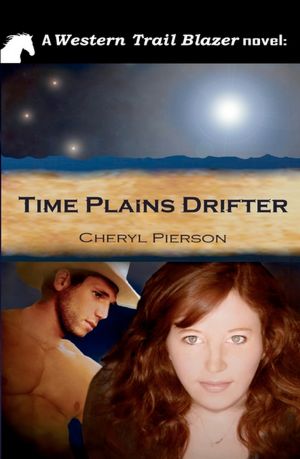
Now let’s get all the ballyhoo taken care of before we get to the fun. Leave a good e-mail address (where required) for a chance to win. **E-copies only of all prizes for foreign winners.** The first name out of the hat wins a copy of TIME PLAINS DRIFTER (autographed print copy or e-book choice for U.S. winner, e-book for foreign winner). The other three winners will receive an e-book copy of one of Cheryl Pierson’s short stories featured!
Since my trusty nag, wordpress, gave me the slow roll this mornin’ I’m gonna extend the contest and won’t draw the winner ’til first light tomorrow. So commence to commentin’!
Now let’s get on to the good stuff! (Remember bold print is official blurb my comments trail behind)
Trapped in Indian Territory in 1895 by a quirk of nature, high school teacher Jenni Dalton must find a way to get her seven students back to 2010. Handsome U.S. Marshal Rafe d’Angelico seems like the answer to her prayers: he is, after all, an Angel. In a race against time and evil, Rafe has one chance to save Jenni’s life and her soul from the Dark One – but can their love survive?
If you enjoy time travel stories read TIME PLAINS DRIFTER! If you’ve never read a time travel book, or don’t think you want to…READ TIME PLAINS DRIFTER! The time travel is the most realistic explanation for time travel I’ve read and then you add in the paranormal elements tied to Rafe, and really Cheryl Pierson lassoed it all together so beautifully you just have to read it. Rafe d’Angelico is rugged, tortured, and swoon worthy (I actually swooned… more than once) the perfect old West lawman. Jenni, from present day Oklahoma, is gutsy and determined enough to hold her own in 1895 Indian Territory. The only thing I can say against Jenni is she gets Rafe, and here I was reading up on time travel methods. The secondary characters are legendary, and if Rafe and Jenni weren’t such a fantastic hero and heroine the others could steal the show. Heart pounding action scenes and love scenes, good versus evil (and did I mention a swoon worthy hero) make TIME PLAINS DRIFTER a must read!
Don’t forget to check out Cheryl’s other fabulous stories available at Amazon, Barnes and Noble, and Smashwords! Westerns, Western Romance, and Contemporary you won’t be disappointed in any of this author’s works. I couldn’t choose just one so below are three of my favorites from her short story collection. But JASON’S ANGEL gets a special tip of my hat. This story could have been five hundred pages and I’d still want more.
HOMECOMING
EVERY GIRL’S DREAM
San Francisco Lawman Flynn O’Rourke swore he’d bring his sister’s killer to justice. So when suspect Aaron Cragun is identified, Flynn will do anything, even rent a boat and sail to Cragun’s remote home to find him. But Flynn doesn’t anticipate the storm that wrecks his boat, the injury that erases his memory…or the beautiful woman who rescues him.
Sweet Sylvie is loving and kind—and Aaron Cragun’s daughter. As Flynn’s memory returns, will the lawman keep his vow or allow himself to fall for the one woman forbidden to him?
THE LAWMAN’S VOW is MAGIC from the setting to the hero and heroine and the secondary characters. Elizabeth Lane brings readers a story to grab a cup of coffee or tea and get swept away. Flynn O’Rourke is kind, generous, but don’t worry he’s still tough enough to take on the bad guys. Oh, and did I mention he smolders (literally I smelled smoke and realized it was my Kindle). His interactions with Sylvie and her young brother are so tender you’re sure to melt. I was a bit worried when I read the blurb that Sylvie might be a bit flighty or annoying in her innocence, but Elizabeth Lane did a wonderful job of making Sylvie loving and innocent, but also an intelligent young woman whose strength is in her heart and her determination to protect those she loves. You end up rooting for these two to overcome all that stands between them and find their happily ever after. THE LAWMAN’s VOW is a bit different in that it’s not a shoot ‘em up Western, but this is a story you’re sure to enjoy!
Below are three of my favorites from Elizabeth Lane’s vast selection. You can find Elizabeth’s books on Amazon, Barnes and Noble, or e-Harlequin. I have to give special mention to CHRISTMAS MOON. I read this story in December and the characters are still with me. Winter, spring, summer, fall, I would recommend this book anytime. My only warning is once you start reading you won’t stop.
It’s gettin’ on to summer time and pretty soon many of you will be loadin’ up supplies and the little tykes in the Conestoga and headin’ out on the trail. God bless ya’ll!
So, for the next few weeks I’m gonna feature a few places in the West I hold near and dear to my heart. Places I consider home, as do many of the characters in my manuscripts.
I can’t even count the number of times I’ve been to the location featured today, and I’ll probably go just as many times as I can in the future. It is truly one of the most beautiful places on God’s earth and if you haven’t been, well turn that wagon ‘round and get those mules headed West to Wyoming!
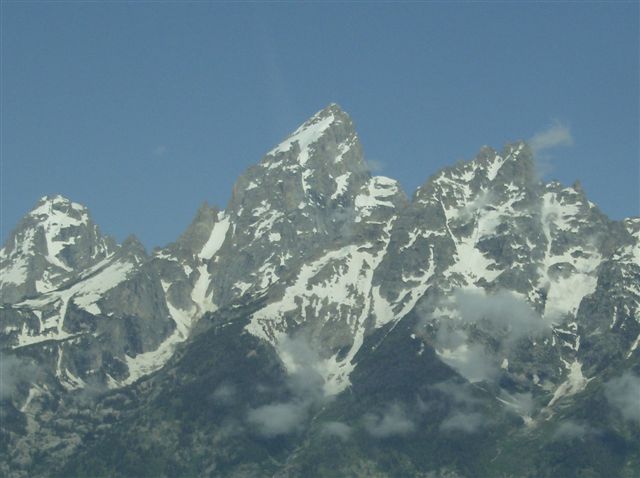
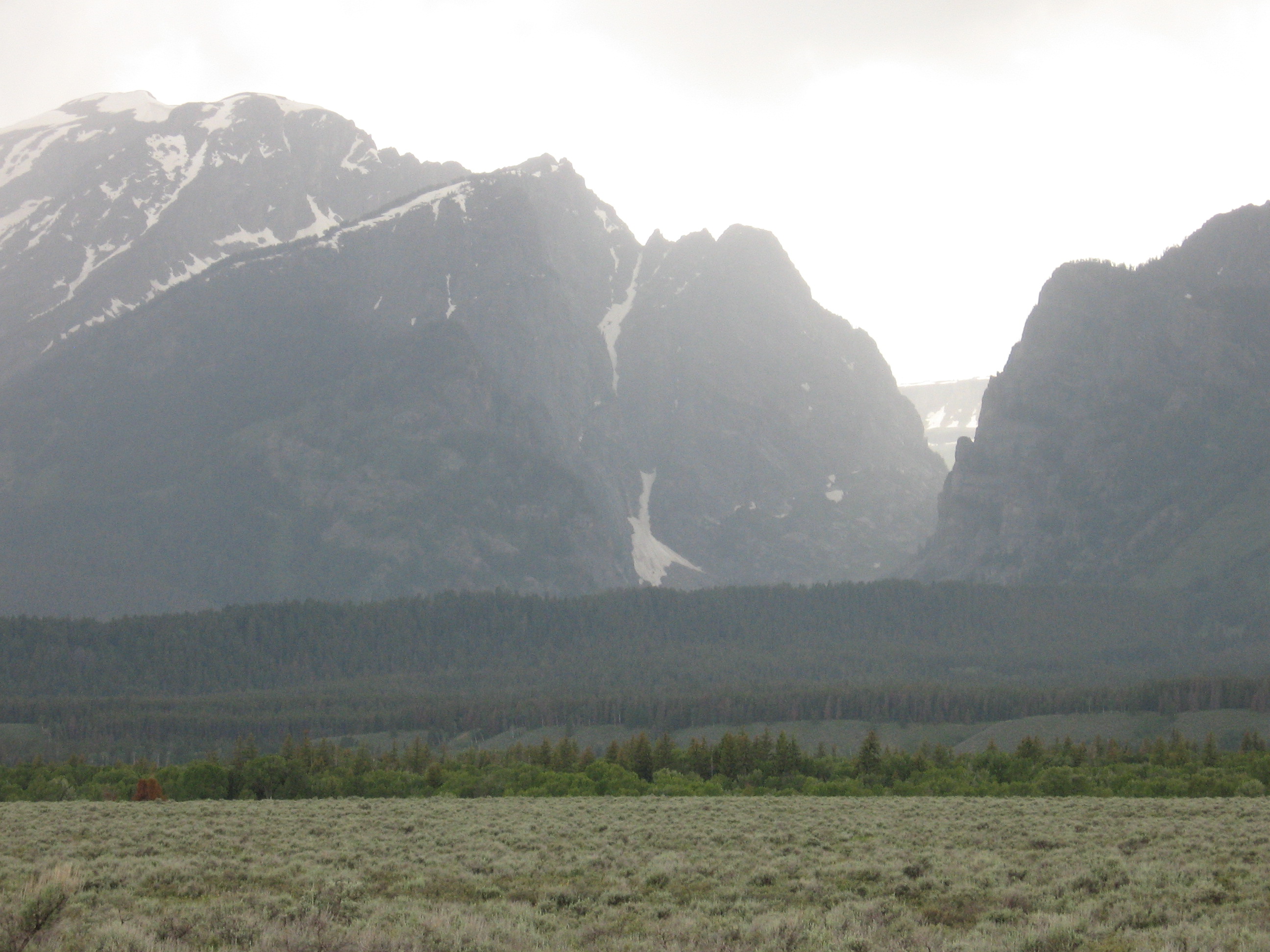
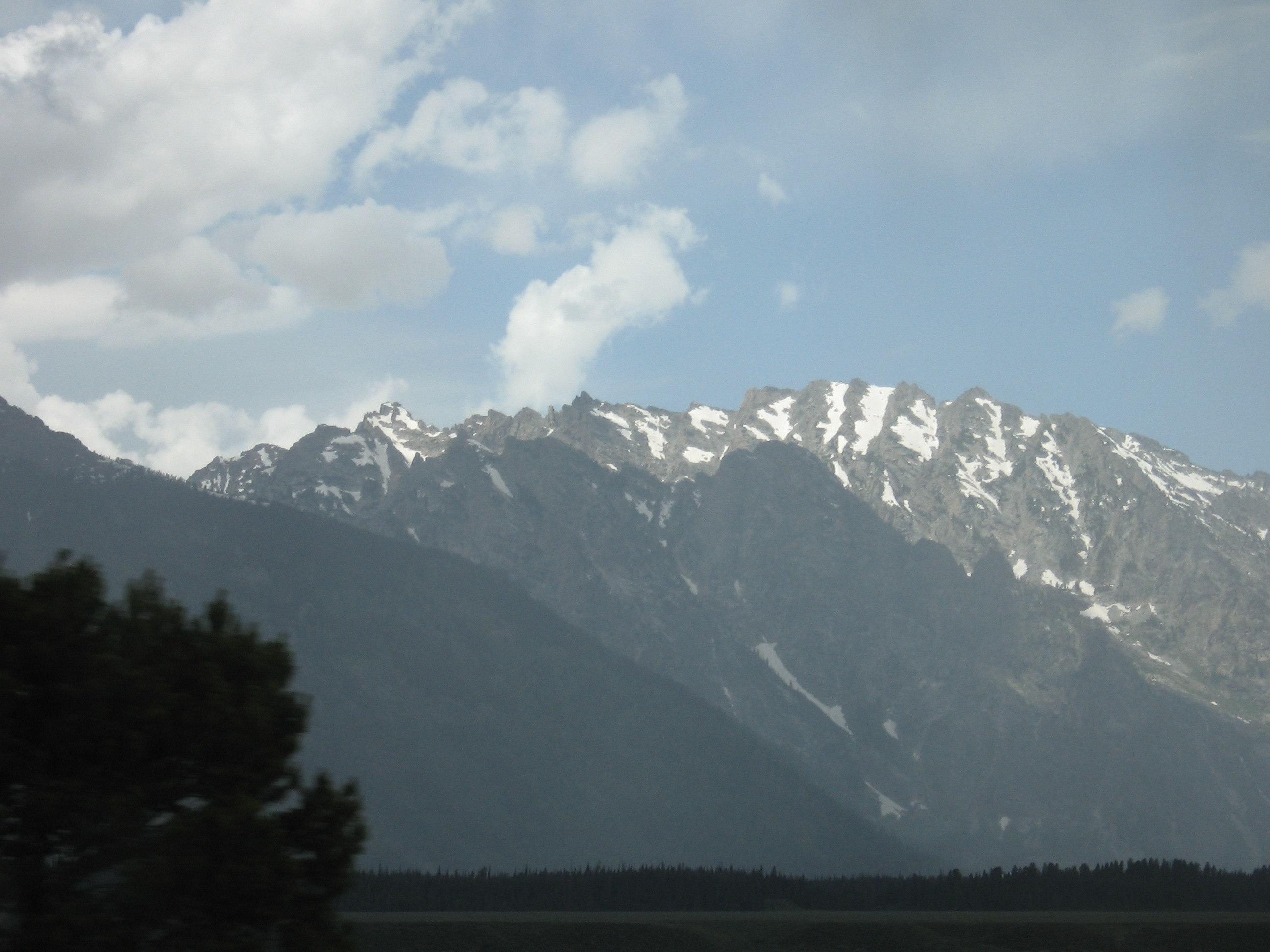
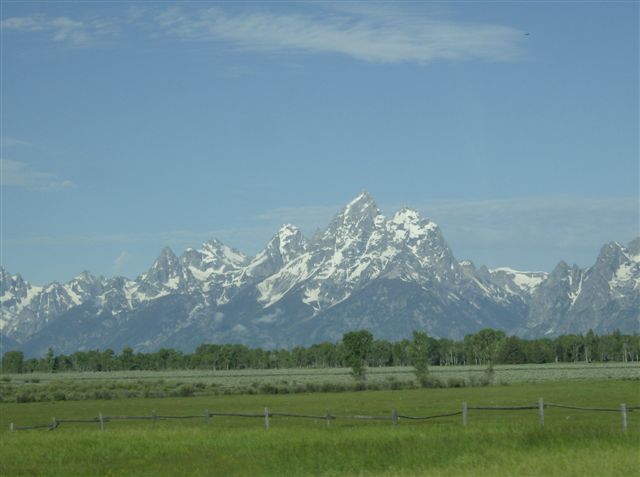
GRAND TETON NATIONAL PARK & JACKSON HOLE, WYOMING
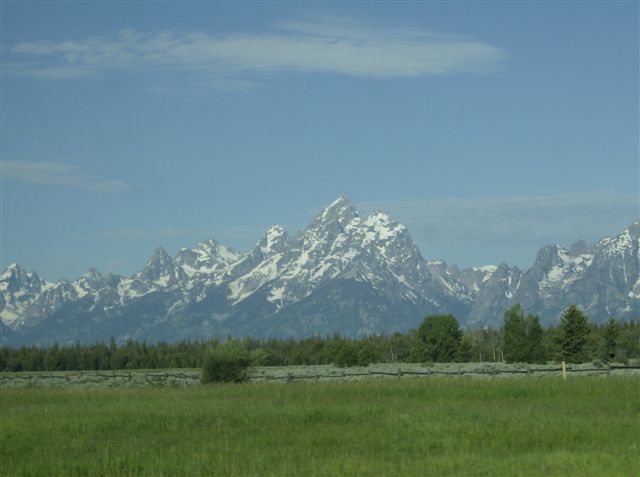
Named for the largest of the peaks the Grand Teton there are three peaks, the Grand, Middle and South Tetons.
Archeological studies show humans arrived in the Teton Range over 11,000 years ago. By the time the first white explorers entered the region in the early 19th Century it was the people of the eastern Shoshone tribes they encountered. For the modern Wind River Shoshone, who continue to maintain close cultural ties to this region, the majestic and snow-capped peaks of the Tetons hold special significance. “In the Shoshone belief system, mountain peaks provide access into the spirit world, where they gain special powers for such things as hunting or healing.”
The first white men who ventured into the Tetons were trappers and explorers. These men will be featured in future posts as each deserves a post to themselves and I’m not sure you’d appreciate a hundred page blog. So we’ll let John Colter, Jim Bridger, John Hoback, Edward Robinson, Andrew Henry, Jed Smith, Jacob Reznor and others take a breather, but we’ll meet them up on the trail a piece.
The Three Tetons, were among the most significant landmarks in the fur trade era. By the 1820s, the mountains were known as the Trois Tetons, the Three Paps, or the Three Tetons. It is unkown how these peaks received their names, however it is likely Iroquois or French Canadian trappers from the Pacific Northwest may have been responsible. Two trappers wrote of their first experience viewing these majestic peaks. Warren Ferris saw the Three Tetons for the first time, in 1831, from the Gray’s River south of Jackson Hole. He described them as “three inaccessible finger-shaped peaks of a lofty mountain overlooking the country to a vast distance. . . . Their appearing [sic] is quite singular, and they form a noted landmark in that region.” Osborne Russell viewed the Tetons for the first time from Pierre’s Hole, where they are most visible and distinct. From Russell’s vantage point, the range appeared as “Mountains piled on Mountains and capped with three spiral peaks which pierce the cloud.”
Trappers used the Three Tetons as guides to passes and trails through the valley. Two passes provided access through the Teton Range, Conant Pass, and Teton Pass. The latter pass was the most important. Other important passes were Togwotee, Union, and Two Ocean. Significant routes through the valley were the Hoback Trail, the Yellowstone, and the Gros Ventre River route. Because Jackson Hole is located between South Pass and the upper Snake River country, it was common for trappers to follow the Hoback or Gros Ventre Rivers from the Green River Basin, then cross Teton Pass. Parties traveling from the Bighorn Mountains in the east followed the Wind River and crossed into Jackson Hole via Union or Togwotee Pass. At Union Pass, trappers could turn south, strike the Green River and head south to other profitable trapping grounds. Mountain men entered or exited the Yellowstone country via the Lewis River or Two Ocean Pass.
In 1872, William H. Jackson took the first photographs of the Grand, Middle and South Teton. In the area to photograph Yellowstone, Jackson took a side trip to the Tetons as Yellowstone had lost something of its novelty. The Tetons, never before photographed, now became more important to Jackson. Jackson and a small party including his assistant, Charley Campbell, John Merle Coulter, the botanist, P J. Beveridge, and a packer named Aleck.
They ascended Table Mountain situated to the west of the three Tetons. The mules carried food and camp gear, while Jackson’s mule, “Old Molly,” hauled his precious photographic equipment. They set up camp at tree line, spent three days exploring the area, and sought a good vantage point for photographic work. While making their way to the summit of Table Mountain, they found their passage blocked by a wall of rock. “On one side was a sheer precipice, but on the other a ledge supported a bank of hard snow, ‘which offered a passage around the wall.’ ” The snowbank formed a dangerous angle, hanging over a sheer drop of several hundred feet. Deciding the risk was worth the view, they first packed a trail on the snow, then carefully guided their saddle and pack animals across the snowbank. Jackson’s photographs of the Grand Teton are among the most famous of his thousands of remarkable images of the American West. The Grand Teton was revealed to Americans for the first time.
By the time, President Chester A. Arthur traveled through Jackson Hole in 1883 with a large entourage of guides, Indians, cavalrymen, packers, and political cronies, the purpose was recreation rather than exploration. A year after Arthur’s tour, the first settlers entered Jackson Hole, marking a new era in the valley’s history.
After years of politics and social disagreements about how to preserve the Teton Range prominent Jackson Hole residents agreed on a plan to protect the Teton Range and six lakes at the base of the range. President Calvin Coolidge signed the executive order establishing the 96,000 acres Grand Teton National Park.
This is barely a thumbnail sketch of the history of the Teton area. But don’t fret, I’ll be covering more in future posts. If you can’t wait for me, a good sketch of the history can be found at www.nps.gov/grte/.
Or heck, treat yourself to a first hand look and don’t forget to visit the towns of Jackson and Dubois while you’re up there. It’s a sight that hits me right in the heart and soul every time. That moment when from a basin blanketed in snow or wild grasses, sage,and flowers rises three peaks touching a vast clear blue sky or their tips hidden by clouds heavy with snow or rain. I always say I don’t need any more pictures of the Tetons, and I always end up taking hundreds more.
*Information on the Park provided by “A Place Called Jackson Hole.” Daugherty, John. Grand Teton Natural History Association. Moose, Wyoming. 1999.
**The pictures provided on this page are my own from my last visit to the Tetons**
Saddle up readers for the first Wednesday Western Round-Up! Every Wednesday I’ll be featuring two or three Westerns (current releases or classics) that I’d recommend for any trail! And this week Cookie will be stickin’ his hand back in the hat for a special giveaway, so read to the end to see how to get your name in the hat!
Now, don’t misunderstand I’m not a professional reviewer, but if I had saddles to give away I’d give each of these authors FIVE. My comments appear after the official book blurb. Enough of my jawin’ here’s the good stuff!
Two men. One woman. A land that demanded courage–or death…
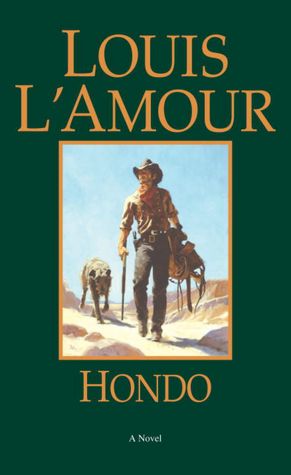
He was a man etched by the desert’s howling winds, a big, broad-shouldered man who knew the ways of the Apache and ways of staying alive. She was a woman raising a young son on her own on a remote Arizona ranch. And between Hondo Lane and Angie Lowe was the warrior Vittoro, whose people were preparing to rise against the white men. Now the pioneer woman, the gunman, and the Apache warrior are caught in a drama of love, war, and honor.
I had to start with one from the master of Westerns, Louis L’Amour. And HONDO? Big SIGH! I’d not only say this is one of my favorite Westerns, but one of my favorite Western romances. The book blurb describes Hondo to a T. He enters the pages carved from the land he travels. A true man of the West. And his dog Sam is just as weather beatin’ and as much a loner as the man he follows. Angie Lowe is a strong woman alone and raising her son in a harsh land after her husband runs-off. She’s a self-sufficient Western woman and isn’t looking for a man to save her, but doggonit it sure is nice when a man tough enough to do the job comes along. :o) And after the kiss Hondo plants on her as he’s leaving, you bet your boots he crossed her mind long after his horse disappeared into the distance. He did his share of thinking about her, too. Which was really one of the most poignant things about this book is how through everything they cross each others minds (and hearts).
Of course, in true L’Amour fashion there’s plenty of action, fistfights, gunfights and a battle between the U.S. Army and the Apaches. But for me it was made all the better for the personal stories of survival for both Hondo and Angie and the love story woven throughout.
Oh! And the scenes with Hondo and Angie’s son are priceless!
All right, I’m going to list a few Louis L’Amour books I would recommend. This isn’t even a grain of sand in the desert that is Louis L’Amour’s collection. So post your favorite!
CONAGHER, FLINT, REILLY’S LUCK, SHALAKO, HIGH LONESOME
Eleanor Lacey’s husband is as dead as their sexless marriage. While she waits for the law to decide if she’s widowed or divorced, she leaves scandal in Connecticut behind and flees to Texas to begin anew. But she needs money—fast. What better way to earn her grubstake, than by cooking meals for the richest rancher in the state?
Cyrus Burke works hard for every penny he makes and prides himself on knowing where to cut costs. He doesn’t want a wife cluttering up his life. His housekeepers are good enough—round the clock employees tending his sexual appetite, too. Mrs. Lacey applies for the position and looks like a promising candidate. Delicious in fact, as smooth and creamy as a tasty tart.
When Eleanor and Cyrus come together, it’s a recipe for hot love—take one wickedly willful widow and one arrogantly masterful man, add a dash of decadent desire, a pinch of sizzling naughty, and turn up the fire.
Gem is an author who never disappoints, and A PINCH OF NAUGHTY is no exception. Cyrus is a hawt cowboy hero, but he’s also intelligent and earned everything the hard way. His strength of will is what earns the respect of others (or terrifies them). And when he’s not imposing his will, he’s charming your bloomers off. Eleanor is the perfect Eastern born heroine to light a fire under Cyrus’ boots. She’s every bit as intelligent, stubborn, determined and not afraid of earning her own way. Like Angie, in HONDO, Eleanor doesn’t need a man to save her, but she’s not a fool who won’t accept some help when it comes in the form of a tall drink of water cowboy. :o) Oh, and just so you know, the love scenes are hotter than Eleanor’s oven!
Don’t forget Gem’s Eclipse Series! They’re all treasures for sure. I have to give a special hoot and holler for PERFECT STRANGERS. A fabulous story from beginning to end with characters you won’t forget.
Others in the Eclipse Heat Series: QUINCY’S WOMAN and FIVE CARD STUD with BREED TRUE and WOLF’S TENDER coming soon.
YEEE HAW!! AS A SPECIAL TREAT, GEM HAS GRACIOUSLY OFFERED TO GIVE ONE COMMENTER A COPY OF “A PINCH OF NAUGHTY” ALL YA HAVE TO DO IS LEAVE A LITTLE ‘OL COMMENT ON THE BLOG AND YOUR NAME GOES IN COOKIE’S HAT!!!
Howdy! Welcome to the first gathering around the campfire. Shake off the trail dust, grab a cup of Arbuckle’s from Cookie and join me. But remember take off those spurs before you squat down, many a cowboy had a rude awakening who didn’t.
This being the first post I thought I’d pay tribute to the people who settled in one of my favorite towns in the West, an area that serves as the backdrop for most of my stories, Sheridan, Wyoming. And since I write about romance, I chose a couple who epitomized the indelible spirit of the land they settled on and a true romance.
Orphaned at a young age, John B. Kendrick (born in Texas, 1857) was raised by relatives until he struck out on his own at the age of fifteen taking his first job breaking horses for room and board. In 1879, the twenty-two-year-old hired on with the Snyder-Wulfjen Brothers of Round Rock, Texas to move a herd of cattle from Matagorda Bay on the Gulf of Mexico to the grass lands of Wyoming.
On the trail, Jack Kendrick experienced the worst the open land had to offer: drought, flood, storm and stampede.
Anything at night almost, a stumbling horse, the odor of some wild animal or a blinding flash of lightning would start the herd to running. Then the cowboys would have to follow. Sometimes the cattle would run until morning. Or they might stop now and then for a few minutes. Whereupon, of course, we would halt with them, the rain meanwhile coming down in torrents and the night being so black that nothing could be seen but the electricity on our horses’ ear or the lightning wriggling over the ground like illuminated serpents.
But the greatest threat to Jack was pretty seven-year-old Eula Wulfjen who crawled upon the lanky cowboy’s lap and proclaimed she intended to marry him just as soon as she was old enough. True to her word, in 1891, after years at finishing schools in Colorado and Texas nineteen-year-old Eula married thirty-four-year-old Jack.
When they married, John Kendrick was no longer living on cowboy wages. Like many of the cowboys with whom he rode, Kendrick’s formal education ended after the fifth grade. Unlike many of his fellow cowpokes, Kendrick continued his lessons on the trail and during roundups. Instead of gambling and drinking, Kendrick spent his spare time reading and studying from books he carried in his saddle bags.
Kendrick bought a few head of cattle with his cowhand’s wages. By 1887 he was superintendent of the Converse Cattle Company, moving the operation to Montana. And just four years after marrying Eula, John completed his purchase of the Converse Cattle Company and started expanding his holdings.
But for the first few years of their marriage the new couple faced separation and adjustments. Although, Eula’s family moved often during her early years, she was raised to enjoy the finer things. John, not wanting his cultured wife to live in the rough bachelor digs of his mud-chinked log cabin sitting fifty miles from the nearest town sent Eula to live with her parents while he worked to improve the living conditions on his ranch in Montana. John expressed his loneliness for his young bride eloquently for an old cowboy used to solitude.
Do you miss your old man? Not one half so much as I miss “the girl I left behind me.” Somehow the feeling of loneliness is inexplainable [sic]. Everything lacks interest: the scenes along the rode, the different views of snow peaks of the Big Horns, things that I used to enjoy so much.
Eula, fed up with waiting after months of separation, wrote to her husband that she was moving to Montana, “even if she had to sleep on the floor and cook for herself.” John was thrilled with the “spirit of a true little wife and helpmate” she exhibited. For the next eighteen years the OW Ranch in southeastern Montana was their home.
Although isolated, Eula had no time to be bored. She cooked, cleaned, ironed, sewed, did all the bookkeeping for the expanding Kendrick Cattle Company and after the birth of their daughter Rosa-Maye and son Manville she provided their education preparing Rosa-Maye for the seventh grade and Manville for the fifth. The children were taught reading, writing, math, science, and geography as well as how to swim, shoot, skate and ride.
Wanting their children to have a formal education the Kendricks decided, in 1908, to build a house in Sheridan, Wyoming. Kendrick was already heavily involved in the Sheridan business community. In two years, Jack Kendrick, cowboy, became the honorable John B. Kendrick Wyoming State Senator. He then spent two years as the Governor of Wyoming before being elected to the U.S. Senate. Even as a U.S. Senator, Kendrick remained first and always a cattleman. He spent as much time as possible on the OW Ranch and championed the political causes of the cattleman.
He was elected to two more terms and there was talk about a run to the White House. But John wanted to return to the West and enjoy his grandchildren and his homes in Montana and Wyoming, including Trail End. John Kendrick wasn’t destined for the White House or Trail End. On November, 3, 1933, Kendrick passed away after slipping into a coma two days earlier from a cerebral hemorrhage.
Trail End
Eula, who moved between ranch house and executive mansion with grace and extraordinary efficiency proved to be an excellent hostess and tireless worker beside her husband. In 1923, she served as the acting president of the Senatorial Women’s Club, a position traditionally held only by the wife of the Vice President of the United States.
John’s death turned sixty-one-year-old, Eula’s life upside down. She withdrew from all positions outside the home. She lived for twenty-five years at Trail End with her son and his family fiercely guarding her husband’s political and personal memory. She passed away in San Antonio, Texas where she was living with her daughter, and is buried next to her husband in Sheridan Municipal Cemetery.
Before he was finished, John Kendrick’s ranching empire grew to include over 210,000 acres of deeded and leased land in southern Montana and northern Wyoming. He and Eula had traveled extensively, raised two successful children, and served their state and country. But whatever they accomplished they did so together serving as each other’s greatest supporter and closest confidant. Their letters to each other make it clear their love is what they cherished most.
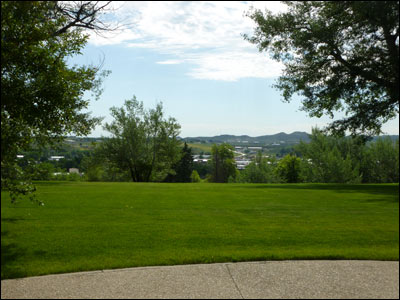
View From Trail End
If you would like to learn more about the Kendricks and read selections from their letters and the letters of their children you can visit www.trailend.org. If you are ever in the Sheridan area I highly recommend a visit to this beautiful home.
Now it’s your turn to jaw for a bit. Refill your mug then speak up. If you’re a writer, do you like setting your story in a real place, or do you prefer designing your own? If you’re a reader, do you like reading a story set in a real place? How about incorporating historical figures in a story? The Kendricks appear in one of mine, do you include real people in your stories?
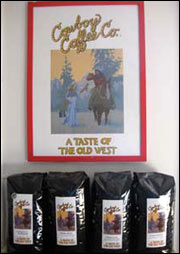
In honor of our first meeting around the flames, I’m giving away a gift box from Cowboy Coffee out of Jackson Hole, Wyoming. Leave your two bits and check back after Cookie dishes out the beans (most likely 7PM EST) when he’ll draw a name out of his hat. He just loves when I give him extra work…
Cookie! Stop lookin’ at me like that and get back to those beans!
See ya all at our next stop on the trail!
*The information and pictures of John Kendrick and Eula Kendrick were provided by Trail End State Historic Site.








 that kind of rash action faired for Custer) Don’t get your petticoats in a bunch, we’ll get there, but first let’s take some side trails to northern Wyoming and South Dakota.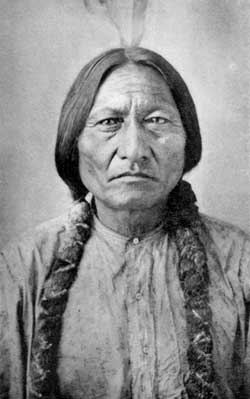
 he led an “expedition” into the lands and sent back reports of a land heavy with gold and ripe for agriculture. And although Indians killed some and the army half-heartedly threw out others, still settlers came by the thousands. The 1875 gold boom made a travesty of the 1868 treaty and brought to a boil the situation with the Sioux. As more and more whites flooded the area the Indians left the corrupt agencies and headed west to join the nontreaty bands.
 June 22, Custer rode up the Rosebud. On June 24, he made his first controversial decision. Instead of following Terry’s order, he pursued and Indian trail westward before reaching the upper Rosebud. Driving his men to exhaustion on a night march, Custer reached the divide between the two streams, at dawn June 25, and his scouts reported smoke of an enormous encampment. Whether to gain all glory, or to hit the Indians before they could scatter, or both, Custer decided not to wait for Terry and the 26th rendezvous date. He failed to acknowledge the immensity of the Indian gathering, even though his terrified scouts warned him. The Seventh, in his vain opinion, could whip any number.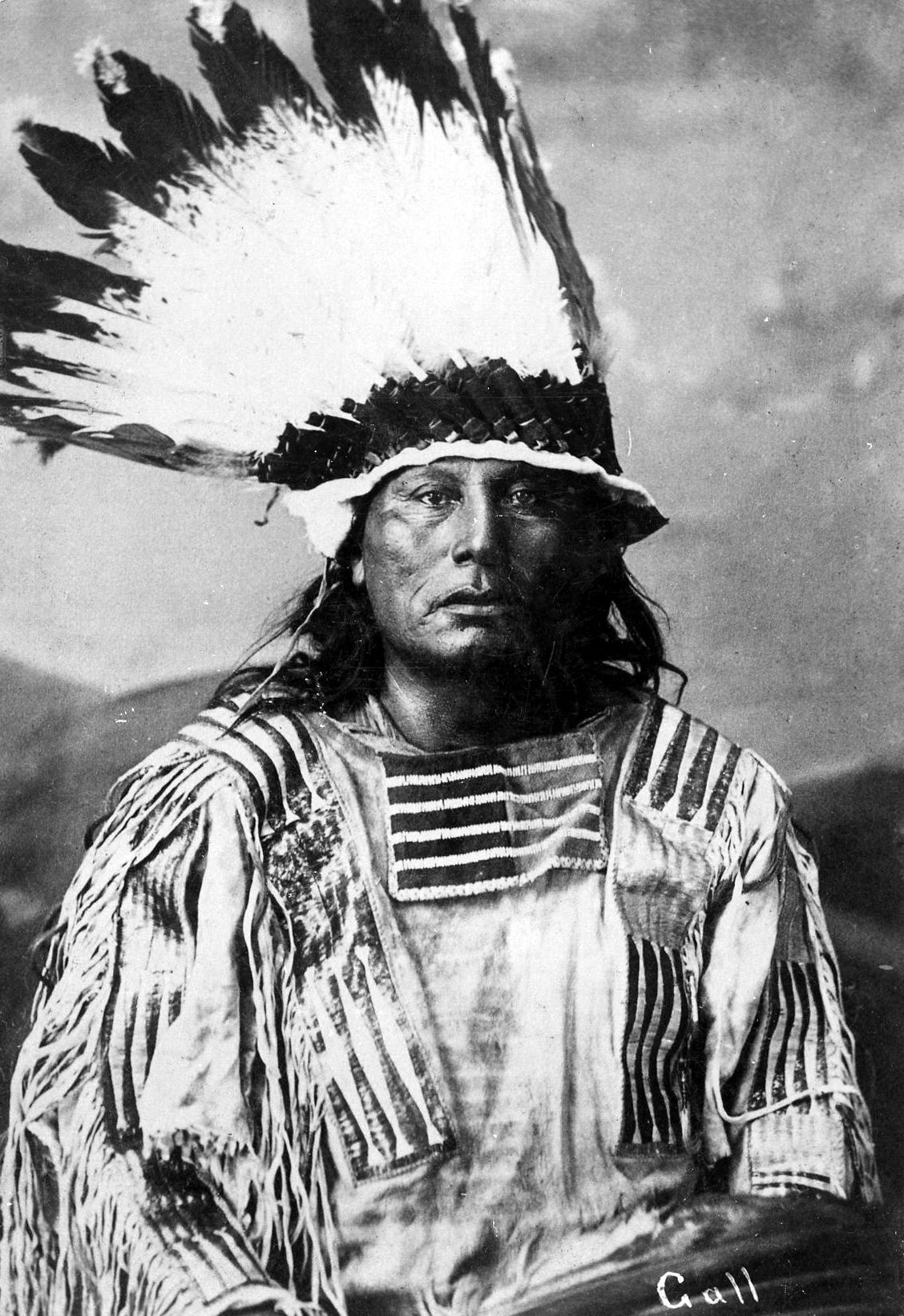
 The Battle of the Little Big Horn was in no way decisive. The Indians won a significant victory, but this victory only postponed their ultimate and tragic defeat. More troops descended on the plains at the call for unconditional surrender.
 So take your young’uns on up to Montana where every June reenactors bring history to life. This year y’all can catch a full color reenactment on June 22, 23, or 24th. Iffin’ ya want to join the action contact www.custerslaststand.org and ride into battle with Sitting Bull and Crazy Horse, or with George A. Custer’s Seventh Cavalry.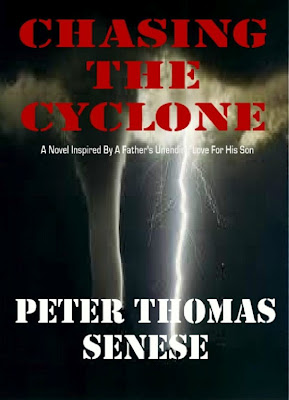











 Howdy! Welcome to the first gathering around the campfire. Shake off the trail dust, grab a cup of Arbuckle’s from Cookie and join me. But remember take off those spurs before you squat down, many a cowboy had a rude awakening who didn’t.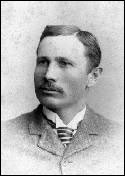
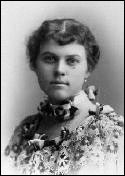 But the greatest threat to Jack was pretty seven-year-old Eula Wulfjen who crawled upon the lanky cowboy’s lap and proclaimed she intended to marry him just as soon as she was old enough. True to her word, in 1891, after years at finishing schools in Colorado and Texas nineteen-year-old Eula married thirty-four-year-old Jack.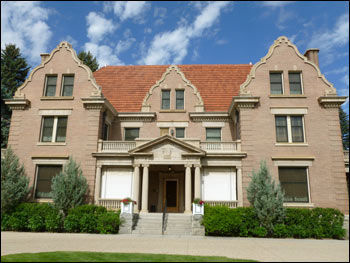
 Now it’s your turn to jaw for a bit. Refill your mug then speak up. If you’re a writer, do you like setting your story in a real place, or do you prefer designing your own? If you’re a reader, do you like reading a story set in a real place? How about incorporating historical figures in a story? The Kendricks appear in one of mine, do you include real people in your stories?