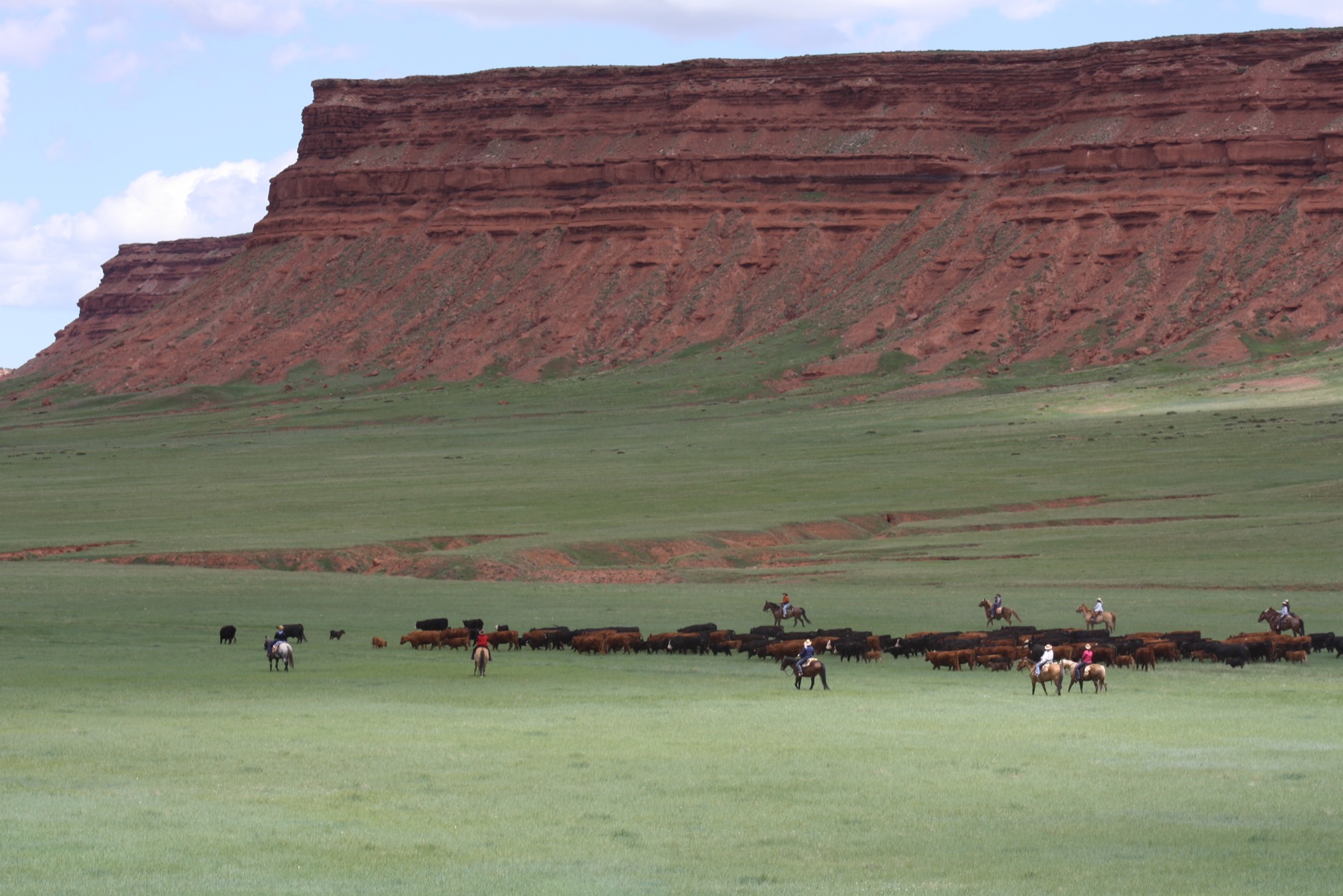
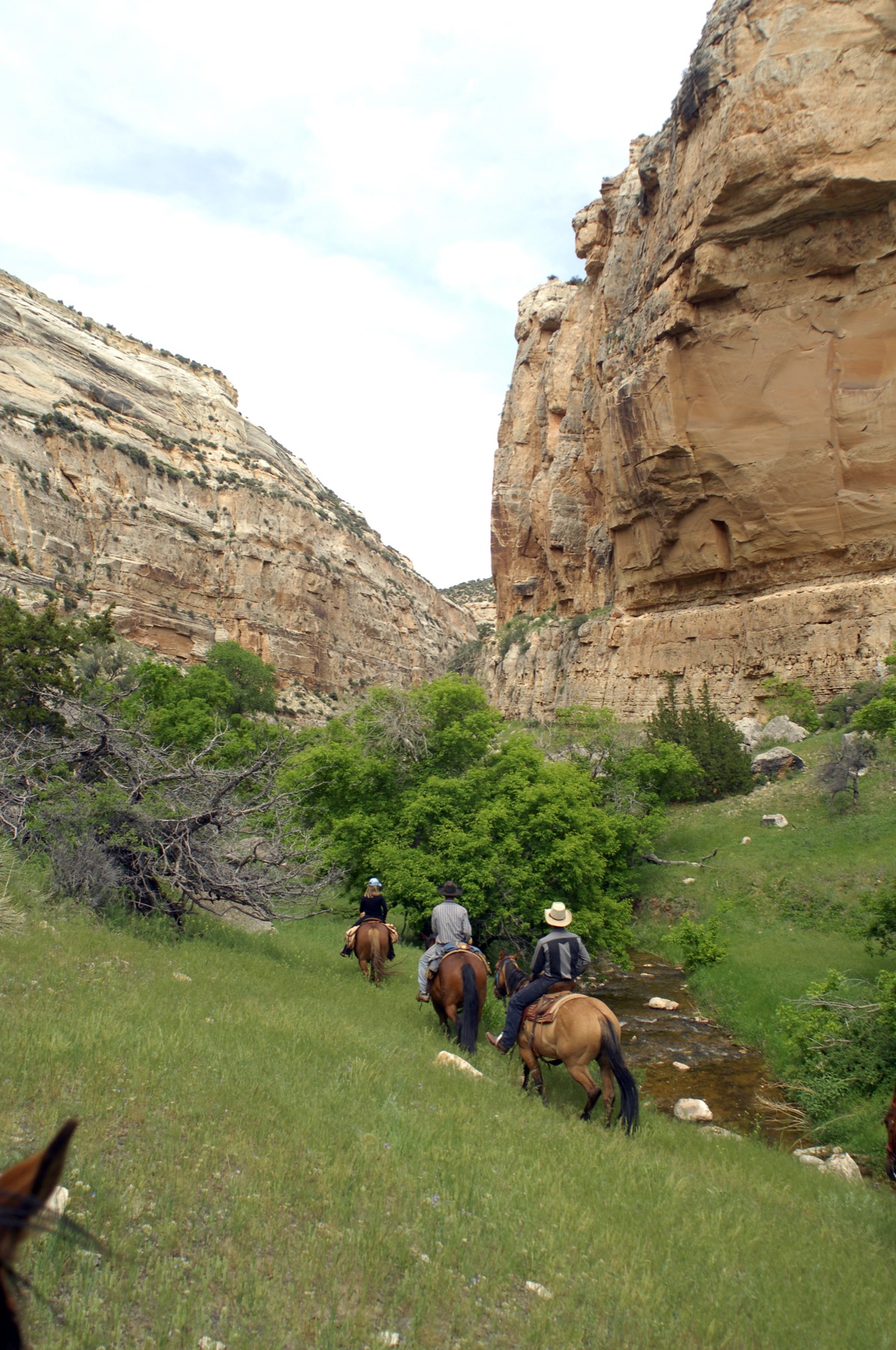
All right folks we’re back on the trail and headed north through ol’ Wyoming. We’ll be followin’ the deep ruts left by the wagons of those brave men and women who made this trek before us lookin’ for a better life. But ya know ol’ Cookie and me we zig and zag a bit, so ya just don’t know where we might end up before we get where we’re headin’.
“Cookie! Where the heck are we headin’?”
Guess we better stop off and load up on supplies…just in case. “Cookie pull this here rig into Fort Laramie. WHOOEEE look at those boys in blue!”
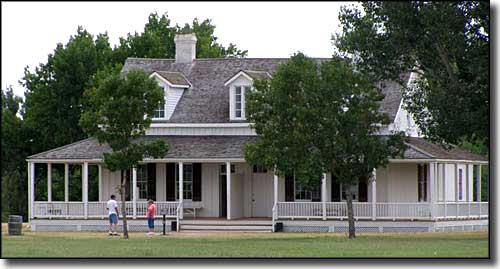
One of the most memorable shrines in Western America, and a location that appears in many books and movies about the West, is found in Eastern Wyoming at the junction of the Laramie and North Platte Rivers. Today the restored buildings of Fort Laramie remain preserved as a National Historic Site, where weary travelers can still stop by off the trail and step back in time.
From 1834 to 1890, Fort Laramie served as a log stockade, adobe trading post, and evolving military post. Fort Laramie was a classic setting for the colorful pageant of the West. Explorers, trappers, traders, missionaries, emigrants, freighters, Pony Express riders, stage drivers, cowboys, homesteaders, as well as soldiers and Indians, all perceived Fort Laramie whether camp-ground, way-station, provision point, fortifications, or temporary home as an island of civilization where the Great Plains met the Rocky Mountains.
The reason for Fort Laramie’s importance was its strategic location on the great central continental migration, more commonly known as the Oregon Trail.
American and French-Canadian trappers were the first white men to explore the headwaters of the North Platte. The first documented visit to the Laramie Fork was seven men of the American Fur Company led by Robert Stuart. Stuart noted in his journal that here “a well wooded stream apparently of considerable magnitude came in from the South West.” He also referred to buffalo, antelope and wild horses in this region. Stuart’s party is credited with the discovery of a near-level Platte River route which led to a natural mountain gateway.
Several geographical names attest to the early infiltration here of French-Canadians, among them a shadowy figure commonly identified as Jacques Laramee, or Laramie. According to an 1831 report a J. Loremy, a free man, was killed by Arapahoe Indians in 1821 presumably near the river and later fort now bearing his name, the euphonious “Laramie” being bestowed on many features throughout Wyoming.
Throughout the 1820s fur trappers and other enterprising Americans such as, Jim Bridger, Jedediah Smith, and Thomas Fitzpatrick rediscovered the South Pass area, and lush beaver country west of the Continential Divide, and established a rendezvous on the Wind River.
In 1826, William Ashley of St. Louis sold out to Jed Smith, William Sublette and David Jackson, and Sublette brought the first wagon caravan up the Platte. In 1832, Sublette and Robert Campbell formed a trading partnership, contracting to supply others at the rendezvous, and in 1834, they built the first fort on the Laramie. The first fort Laramie was named Fort William (according to one of Sublette’s party William Anderson the name was in honor of the common name shared between himself and Sublette). In 1835, Sublette and Campbell sold Fort William to Jim Bridger, Thomas Fitzpatrick and Milton Sublette. These men sold out within a year to the American Fur Company.
In 1836, an overland caravan led by Thomas Fitzpatrick escorted the first white women to cross the continent, Narcissa Whitman and Elizabeth Spalding, missionary wives. These women enjoyed special consideration at the fort with chairs with “buffalo skin bottoms.” The women caused quite a sensation among the trappers and Indians.
In 1837, as Scotch nobleman, Sir William Drummond Stewart, traveled with artist Alfred Jacob Miller. Miller’s sketches remain the only pictorial record of Fort William. Later visitors of record include, Kit Carson, Joe Meek and Osborne Russell, Father De Smet, and Augustus Johann Sutter (whose ranch in Sacramento would later host its own hordes of gold seekers).
Fort William enjoyed a monopoly of the trade in the North Platte until in 1841 when a new fort was built right under their noses. Fort Platte was an adobe-walled fort right on the bank of the North Platte and within rifle-shot of Fort William (or if you’re not measurin’ by shootin’ at your rival that’s about a mile apart).
Not to be outdone the American Fur Company abandoned its log palisades and built a massive adobe structure. They named the new fort, Fort John honoring John B. Sarpy, an officer of the company. Fort John was used consistently in official correspondence, but as in the case of Fort William, the name Fort Laramie prevailed in popular usage.
For years the rivalry between the two posts intensified. Both sent trading parties to distant Indian tribes and flouted the illegal selling of liquor in the cut-throat competition. For a while both of these establishments thrived on the trade in buffalo robes, each spring sending them to St. Louis by wagon caravans or flat-boat flotillas down the Platte. Then in 1845, Fort Platte was abandoned leaving the field wide open for the American Fur Company.
Prior to 1841, the visitors to Fort Laramie consisted of trappers, traders, Plains Indians, missionaries and the random adventurers. However, that was about to change with the arrival of the Bidwell-Bartleson expedition and the White-Hastings expedition the following year. These were the first avowed settlers bound for the west. Both of these expeditions hired Thomas Fitzpatrick, veteran mountain man, as a guide.
The year 1843 saw the first great migration to Oregon, about 1,000 people led by Marchus Whitman and Peter Burnett. These settlers crossed the Laramie and obtained supplies at the post.
The trickle to Oregon became a respectable river of 5,000 in 1845, and for twenty years after Fort Laramie witnessed the annual emigrant stream of humanity moving westward on prairie schooners. Camping, repairing equipment, buying provisions, and mingling at the fort became standard trail procedure.
While provisioning pioneers became a brisk business for the Fort, Indian trade continued to decline. Like a swift prairie wind brings a storm, conditions at the fort were ripe for change. The American Fur Company retired from the scene and a new owner better attuned to the rise of Manifest Destiny hailed its arrival with bugle and drum.
The Government had been looking at establishing a military post along the Oregon Trail, and the site of the Laramie Fork was recommended. President James Polk proposed the action and in May 1846 Congress approved “An Act to provide for raising a regiment of Mounted Riflemen, and for establishing military stations on the route to Oregon.” The first fort raised was Fort Kearney on the south bank of the Platte. But, in 1848, when the news of gold discovered in California raced across the country the urgency to extend the chain of forts increased.
Lieutentant Daniel P. Woodbury, Corps of Engineers, was authorized to purchase the buildings of Fort Laramie “should he deem it necessary to do so,” in 1849. On June 27, 1849, it was reported that this was the most eligible site and Woodbury purchased Fort Laramie from the American Fur Company for $4000.00. Major W.J. Sanderson of Company E, became the first commander of the fort. Sanderson reported that good timber, limestone, hay and dry wood were readily available and that the Laramie River furnished abundant good water for the command.
Company C, Mounted Rifles, arrived in July and Company G, Sixth Infantry in August completed the garrison. The temporary shelter of the adobe post was decrepit and infested with vermin. However, by winter a two-story block of officers’ quarters, a block of soldier quarters, a bakery, and two stables had been pushed to completion. This began Fort Laramie’s forty years as a frontier command post of the United States Army.
The Fort saw an estimated 30,000 Forty-Niners pass through on their way to California gold. This was but the first wave of covered wagon emigrants stampeding toward California. The following years, 1850-1854, saw even larger waves crashing against the little Army post on the Laramie, at times exceeding 50,000 each season.
To a large extent the history of the fort during this period is essentially its role in serving “this transient population during its Exodus from the States, across the vast wilderness known vaguely as Indian Territory to the Promised Land.” For many the Fort was the only civilized place between Fort Kearny and the West Coast.
The emigrant season of Fort Laramie was short, maximum of 45 days. One had to leave the Missouri jumping-off place no sooner than the spring rains could green the prairies for vital pasture for mules and oxen (any time during the last half of April) in order to reach the Sierra Nevadas well before October. Therefore the prime season for Fort Laramie was May-July with the majority of emigrants arriving in June.
The Fort provided care for wounded and sick, and sometimes the final resting place for travelers in the old fort cemetery. Some emigrants disposed of their surpluses here, others were in need of provisions, which the Post Quatermaster was able to supply, and the post blacksmith did a land-office business. However, the busiest place was the post sutler’s store where emigrant coin and valuables were exchanged for canned goods, liquor, patent medicines, lotions, muslin, sunbonnets, and other essentials.
Another busy functionary was the post adjutant, who ran the official emigrant register. Every wagon was stopped and numbers of men, oxen, horses, etc. were tallied. One such record for the season showed: “33,171 men, 803 women, 1, 094 children, 7,472 mules, 30, 616 oxen, 22, 742 horses, 8, 998 wagons, and 5,270 cows” recorded as of July 5,1850.
Contrary to beliefs both then and now, Plains Indians did not attack wagon trains as a habit, especially during the period of 1841-1858. However, two incidents would break the bonds of understanding and disrupt the peace on the Great Plains.
First in 1853, a North Platte ferryman, busy with emigrants, refused to transport a party of young Sioux. The Sioux seized the boat and one fired on the soldiers, who recaptured it. Lieutenant H.B. Fleming and 23 men were dispatched to the nearby village of Minniconjou Sioux to arrest the offender. The Sioux refused to give him up. In the ensuing exchange of gunfire three Indians were killed. The enraged Sioux then threatened the fort. Captain Richard Garnett, post commander, through skillful negotiations diffused the situation, but the seeds of mistrust were planted.
Then on August 18, 1854, eight miles east of the Fort a Mormon caravan passed a village of Brule Sioux. A cow wondered into the village and was promptly butchered by the hungry Indians. Upon complaint by the owner, Lieutenant John Grattan with an interpreter and 28 men was dispatched to arrest the offender. After a brief parley, a fusillade by the soldiers resulted in the death of Chief Conquering Bear, and the retaliatory massacre of Gratten and his entire command. Fort Laramie was threatened, but the Sioux moved away before inflicting any casualties there. But the harmony was destroyed and 25 years of warfare began.
The first serious disturbances did not occur until spring of 1862 when Sioux raided stations west of the fort, running off horses and scalping the tenders. To protect lines of communication vital to the Union Army fighting a Civil War, cavalry companies were ordered to the western theater. Colonel William Collins arrived at Fort Laramie with a battalion of the Eleventh Ohio Cavalry. It was his unenviable duty to guard the route between courthouse Rock and South Pass (a distance of over 500 miles). This blue line seemed powerless to intercept the mounted warriors of the Sioux, or to chase them down.
In the spring and summer of 1864, there were large-scale Indian attacks on stations and ranches in Nebraska and Colorado, disrupting all travel. Then came the unauthorized surprise attack in November by volunteer troops under Colonel Chivington upon a Cheyenne-Arapahoe camp at Sand Creek near Fort Lyon in southeast Colorado. The massacre of around 250 men, women and children, far from squelching the Indian spirit, precipitated a powerful and vengeful alliance of tribes.
Sioux and Cheyenne focused their wrath on the key trail junction Julesburg, where they sacked the town and killed about 20 soldiers and civilians. Then they moved northward. Colonel Collins assembled a force from Fort Laramie to assist Mud Springs. They successfully protected the town and the warriors withdrew to the Powder River.
With the end of the Civil War plans were made to restore order to the Plains. However, the vastness of the desolate terrain, Indian aggressiveness, skill and agility, and poor initial organization and execution resulted in much success for the Plains Indians during 1865 and a dismal year for the soldiers of Fort Laramie.
Instead of a campaign to crush the tribes, in 1866, with Fort Laramie as the setting, runners were sent out from the Fort to “hostile” camps with invitations to a great council to be held in June. Hope appeared on the horizon, when Spotted Tail, head chief of the Brules, brought in the body of his daughter for burial among the whites because it was her express wish. In a ceremony containing all the pageantry of the military and the tradition of the Sioux her body was placed in a coffin on a raised platform on the plateau beyond the fort cemetery.
Peace commissioners assembled on 1 June with the chiefs of the Sioux and Cheyenne. While the ceremonies were still in progress, Colonel Henry Carrington arrived with 2,000 troops, heavily armed and equipped to set up a chain of posts along the Bozeman Trail. To Red Cloud, such an armed occupation made a mockery of any peace treaty. He withdrew in anger, and the Fort Laramie Treaty of 1866 was the shortest lived peace treaty on record.
As forts were erected on the Bozeman Trail hostility continued to mount until in 1868 the Army and Sioux met again at Fort Laramie. The Forts on the Bozeman Trail evacuated and the Fort Laramie Treaty of 1868 gave the Sioux as a reservation all of present day South Dakota west of the Missouri River. It also gave them hunting rights in the great expanse north of the North Platte and east of the Big Horn Mountains. As mentioned in the post about the Battle of the Little Big Horn, this treaty failed, as well as leading to a series of small skirmishes and the massive clash in southeastern Montana. Though a temporary victory for the Sioux and Cheyenne, in the end the Government was left with the ability to dictate the formal relinquishment of the Black Hills.
Before the organized large-scale fighting against the Sioux and Cheyenne reached its climax there began an upsurge of civilian activity vitally affecting Fort Laramie. This was the mass influx of settlers to the Black Hills and the development of commercial traffic to and from Cheyenne.
Fort Laramie’s destiny was welded to the “Magic City of the Plains” about 100 miles to the south that began as a huddle of shacks springing up at the end of track when the Union Pacific construction crews reached that point in 1867. The Sioux wars and the stampeded to south Dakota combined to make Cheyenne a great supply depot and jumping- off place for the Black Hills while Fort Laramie became its principal gateway and guardian.
In November, 1875, the Wyoming territorial legislature authorized the survey and designation of a road from Cheyenne via Chugwater Creek and Fort Laramie to Custer City. By March 1876, the new line was in operation. Vehicles on the new Black Hills Road included bull-trains, buckboards, spring wagons, and anything else that would roll. However, the queen of the road and bright symbol of Fort Laramie’s new era was the colorful Concord stage. The vehicle could accommodate nine first-class passengers inside and equal number on the roof, plus up to 1500 pounds of cargo and luggage. The driver managed the six horses with reins and the crack of his long whip.
The run to Custer City was 180 miles, or 266 miles to Deadwood. The route from Cheyenne to Fort Laramie followed the Chugwater and Laramie Rivers where there was a series of road ranches. The stop just below the fort was Three Mile Ranch, just off the military reservation, which doubled as a place of “entertainment,” complete with assorted belles for off-duty soldiers. The Post Trader was permitted to build a log structure on the fort itself known as the Rustic Hotel.
What would our Westerns be without the colorful stage and its potential holdup, or colorful occupants? The fine art of highway robbery reached a new peak in their assaults on armored stagecoaches with strong-boxes of gold heading for Cheyenne. Fort Laramie cavalry patrols were frequently assigned to guard danger spots or track down criminals. Among incidents in the Fort Laramie neighborhood were several killings at the Three Mile Ranch, the lynching of horse thieves by masked men just north of the iron bridge, and stage hold-ups along the Laramie River.
Among the patrons of the Cheyenne-Deadwood Tail were Generals Sherman, Sheridan and Crook, Chiefs Red Cloud and Spotted Tail, Wild Bill Hickok and Calamity Jane. In fact, Calamity is alleged to have played various roles in the saga of Fort Laramie, including stage driver, roustabout, and occupant of one of the boudoirs at the Three Mile Ranch. Buffalo Bill Cody was another celebrated visitor, as a scout for the Fifth Cavalry.
By the 1880s the small post of 1849 had blossomed into a city unto itself. The Fort structural complex gradually evolved into a sprawling assemblage of adobe, stone, frame and lime-grout buildings, about 70 Army buildings and civilian appendages were identified in 1888, being the most recent or most durable of a total of over 180 buildings constructed between 1849 and 1885.
The Fort was a stabilizing influence on the Great Plains, resembling a county seat in a region shifting from wild frontier to the beginnings of a permanent settlement. Range cattle and cowboys were replacing buffalo and Indians. Mines and ranches became the nuclei of communities sinking roots into the land. Stage lines faded as railroads, trunk lines and branches advanced. But the precursor of such civilization was doomed by the very peace it provided.
During this decade except for occasional assistance to civil authorities in upholding law and order, field exercises, maneuvers, and target practice, military activity was at low ebb, while grand balls, celebrations, dress parades, theatricals, picnics, and tree planting became the dominant preoccupations. This is not the stuff of which epic history is made. And the bright star of the plains was fading fast.
The actual demise of Fort Laramie occurred from May 1889 to March 1890. Various units of the Seventh Infantry were transferred to Fort Logan, Colorado. A detachment from Fort Robinson stripped buildings of doors, windows, fixtures, and accessories and the buildings and furniture rejects were auctioned off. The War Department issued its final order transferring to the Secretary of the Interior the military reservation and the wood and timber reservation at Laramie Peak, “the same being no longer required for military purposes.” And like so many who served in the garrison or passed through on the search for a better life the great military post faded into history.
But put those handkerchiefs away folks and dry those pretty little eyes, cause y’all can still make an Old West pit stop, just like our predecessors, at Fort Laramie! Why there’s still barracks and officers’ quarters ya can walk through or traipse across the parade grounds just like ya wore Blue! And iffin’ ya visit in July or August why ya can really experience the thrill of sweatin’ under that big ol’ Wyomin’ sun it’ll take ya back for sure. Doggone, Cookie! Does a gal have ta beg for a sarsaparilla? My biscuits are burin’ for sure!
Have fun at Fort Laramie folks! See ya next week on the trail!!
McChristian, Douglas C. and Paul L. Hedren. Fort Laramie: Military Bastion of the High Plains (Frontier Military Series). The Arthur H. Clark Company. 2009.
WHOO-EEE folks!! This is Cookie here, yep the myth the legend at your service! Kirsten’s off for a couple days doin’ some cotton pickin’ history thingamajig and with a bunch of those seafarin’ types, so I’m turnin’ this trail into my own fandango!!
So talk to ol’ Cookie folks! What do y’all like about Western romances? What’s yer favorite place in the West (Hint: Wyomin’) Just funnin’ with ya! What is it about us cowboys that really butter yer biscuits? Just jaw for a bit about the West, old and new, and I’m spendin’ the boss lady’s hard earned coin to giveaway a free e-book (commenter’s choice from any past Roundups) to one of y’all.
Don’t leave ol’ Cookie alone ’round the campfire (’cause honest it’s a bit lonely without the boss lady) Come on in and sit a spell. Let’s talk Colts, Cowboys, Beeves, Spurs, Chaps and yer favorite trails West!
We’ve been makin’ tracks like a posse’s on our backside and I’ve been told we’re well ahead of time on the trail. So let’s dip down into the Black Hills since we’re right here and all, and visit a couple monuments worth takin’ a gander at. Don’t y’all worry we’re just leavin’ Wyoming for today, we’ll be back on the straight and narrow in no time.
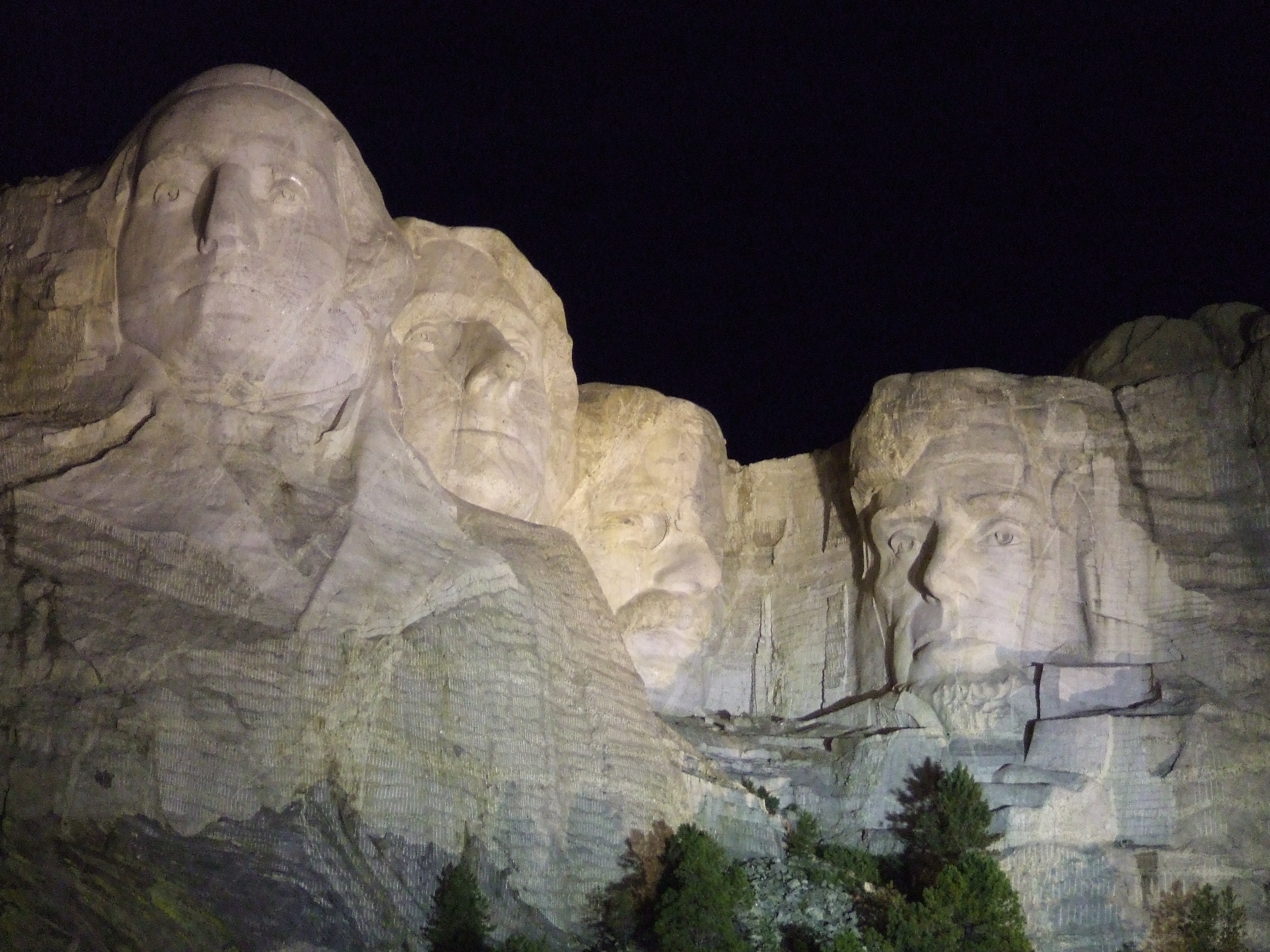
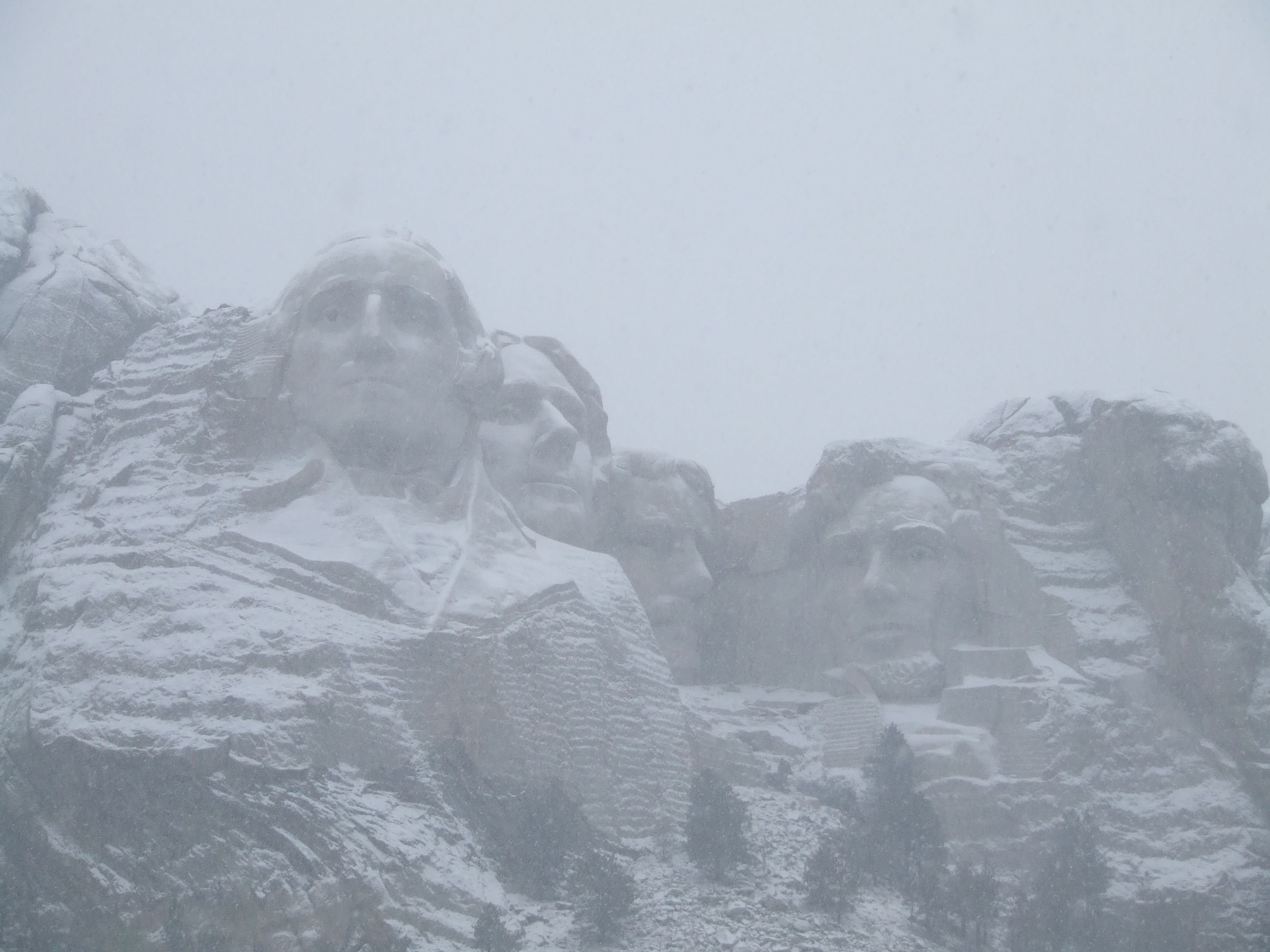
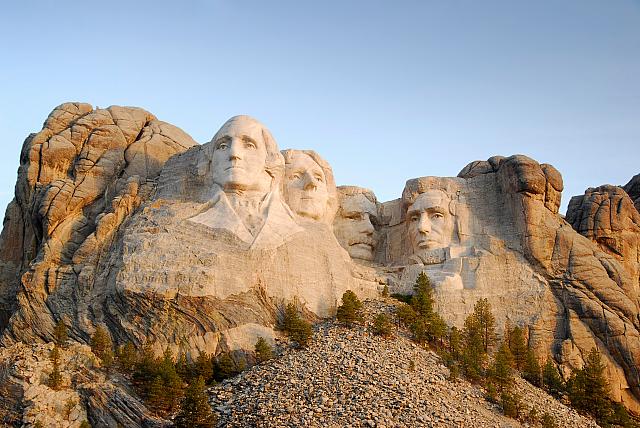
Last time we gawked at a monument created by nature, and Devils Tower was a goodun! Today we’re gonna swing by a monument man carved out of the mountain…Mount Rushmore (sorry no hidden treasure folks, I don’t care what Nicholas Cage says). Wagons Ho, folks! We’re burnin’ daylight.
Doane Robinson, the aging superintendent of the South Dakota State Historical Society, had a vision of a massive mountain memorial carved from stone and so large it would put South Dakota on the map and increase tourism. In 1923, Robinson started telling everyone of his dream of giant statues of Western figures including, Chief Red Cloud, Buffalo Bill Cody, Lewis and Clark and legendary Sioux warriors marching along South Dakota’s skyline. [On a personal note as awesome as Mount Rushmore is, Robinson’s original idea of a monument to Western personalities sounds amazing]
Robinson began campaigning for his mountain statues, speaking to local organizations and writing letter upon letter to government organizations. Many South Dakotans believed Robinson’s massive sculptures would attract thousands of tourists and their wallets. Others found the notion ludicrous. When newspaper stories stopped and snickers ceased, Robinson enlisted the aid of the respected U.S. Senator Peter Norbeck.
Norbeck, a frequent visitor at the White House, held the admiration of his peers in the Senate, as well as, the farmers and ranchers of South Dakota who sent him to Washington. He was instantly captivated by Robinson’s mountain-carving proposal and encouraged Robinson to seek a sculptor capable of commanding such a project.
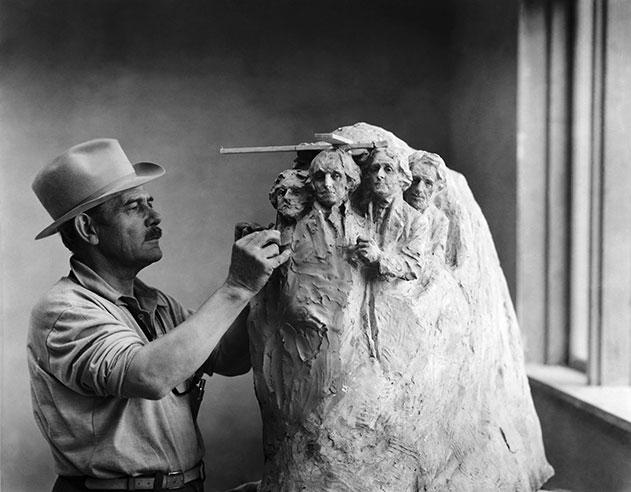
In August of 1924, Robinson contacted Gutzon Borglum who was working at Stone Mountain, Georgia on Robert E. Lee. Robinson invited Borglum to visit South Dakota and talk over the possibility of carving a mountain. Borglum took Robinson up on his offer and met with him in September of 1924 and again in August of 1925. During his second trip Borglum found Mount Rushmore. Next, Borglum and his party climbed Harney Peak. At 7,242 feet, this is the highest point between the Rockies and the Swiss Alps. The surrounding vista inspired him.
“Here is the place!” Borglum exhorted. “American history shall march along that skyline.”
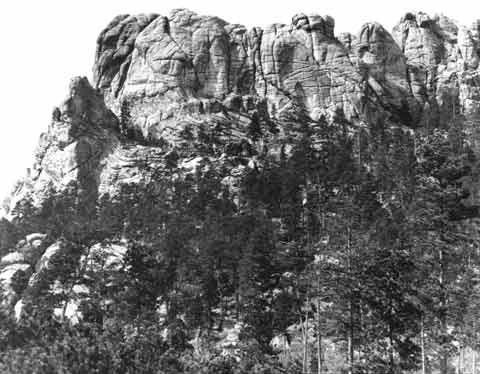
He set his sights on the craggy, pine-clad cliff known as Mount Rushmore, near the isolated mining town of Keystone. It had southeastern exposure, giving it direct sunlight most of the day, and was made of sound granite relatively free from fracture. Borglum carefully explored the crevices and samples the rock of Mount Rushmore reconfirming with each test that he found his mountain.
SIDETRAIL: Mount Rushmore is named after New York City attorney Charles E. Rushmore, who came to the Black Hills in 1884 to check legal titles on properties. On returning to Pine Camp he asked Bill Challis the name of this mountain. Bill replied, “Never had a name, but from now on we’ll call it Rushmore. “ Never hurts to ask, folks ya might get a mountain named after you. Okay back on the main trail.
However, Borglum informed Robinson and Norbeck his life’s work would not be spent immortalizing regional heroes. The sculptor insisted the work demanded a subject “national in nature and timeless in its relevance to history.” So then who…
George Washington: First President. Led the early colonists in the American Revolution. Father of the new country and laid the foundation of American democracy. Because of his importance, Washington is the most prominent figure on the mountain.
Thomas Jefferson: Third President. He was the author of the Declaration of Independence, as document which inspires democracies around the world. He also purchased the Louisiana Territory from France in 1803, which doubled the size of our country, adding all or part of fifteen present-day states.
Theodore Roosevelt: Twenty-sixth President. He provided leadership when America experienced rapid economic growth as it entered the 20th Century. He was instrumental in negotiating the construction of the Panama Canal, linking the east and the west. He was known as the “trust buster” for his work to end large corporate monopolies and ensure the rights of the common working man.
Abraham Lincoln: Sixteenth President. Held the nation together during its greatest trial, the Civil War. Lincoln believed his most sacred duty was the preservation of the Union. It was his firm conviction that slavery must be abolished.
Robinson now had his sculptor, but the challenges to his dream had just begun. Now permission was needed to carve into the mountain. Senator Norbeck and Congressman William Wiliamson (a man equally inspired by Robinson’s vision) were instrumental in getting legislation passed to allow the carving. Williamson drafted two bills, one for Congress and one for the State Legislature. The bill requesting permission to use Federal land for the monument easily passed. The bill sent to the State of South Dakota was not going to pass so easily. The Mount Harney National Memorial bill was defeated twice and almost a third time, when on March 5, 1925, Governor Gunderson signed the bill. The Mount Harney Memorial Association was established later that same summer.
More than the legislation involved was finding money to fund the project, despite Borglum’s promise of large donations from wealthy eastern businessmen. Borglum also promised the people of South Dakota they would not be responsible for paying for any of the mountain carving.
With Congressman Williamson’s assistance, President Calvin Coolidge agreed to visit the Black Hills in 1927. Borglum planned a formal dedication of the mountain. Borglum hired a plane to fly over the State Game Lodge in Custer State Park where Coolidge was staying. As he flew by Borglum dropped a wreath inviting the President to attend the dedication ceremony. Coolidge agreed, and on August 10, 1927, Mount Rushmore was formally dedicated. President Coolidge gave a speech promising federal funding for the project.
Borglum met with Secretary of the Treasury, Andrew Mellon and convinced the Secretary of the projects importance. Mellon offered to fund the entire project, but Borglum said he would only need half the money from the government, the rest he could raise privately. Senator Norbeck was stunned than Borglum turned down full funding (Hint from Kirsten: NEVER turn down full funding)
President Coolidge signed the bill authorizing federal funding matching funds up to $250,000.00 and created the Mount Rushmore National Memorial Commission. The Commission would consist of 12 members appointed by the President. Coolidge appointed ten and said Hoover should appoint the other two.
Hoover quickly appointed the final two members, when he took office, but he never met with the Commission. The Commission had to meet with the president to begin work. Congressman Williamson was asked to make an appointment with the President. Despite interference from Borglum that almost ruined everything, Williamson eventually met with the President and convinced him of the importance of the project. Hoover met with the Commission within a couple days. Officers were elected and the day following the meeting Williamson and Boland (the secretary of the executive committee) went to Mellon and received the first funding.
One notable, and sad, exclusion from the new Commission was Doane Robinson. The father of the project was not even put on the list of potential candidates to serve on the committee to be selected by the President. Robinson continued to support the project and generously offered, “Let me help where I can.” Soon, feeling unnecessary, Robinson moved away from the Rushmore project altogether.
Now with the Commission organized and money in the bank, workers were hired and carving began. After only a few years under the National Park Service, in 1938, Borglum removed all road blocks to his complete control of the Rushmore project. The Commission was reorganized granting Borglum control. Again, Borglum’s ambition threatened the project, when he proposed a Hall of Records, a large repository carved into the side of the canyon behind the carving of the Presidents, to the story of Mount Rushmore and America. Work was stopped in 1939 because the threat of losing all funding if the money was not used on carving the faces as was intended. Work on the Hall of Records ceased and was never started again.
Carving the monument was a project of colossal proportion, but would end in colossal achievement. It involved the efforts of nearly 400 men and women. Duties ranged from call boy to drillers to blacksmiths and housekeepers.
Workers endured conditions that varied from blazing hot to bitter cold and windy. Each day they climbed 700 stairs to the top of the mountain to punch-in on the time clock. Then 3/8 inch thick steel cables lowered them over the front of the 500 foot face of the mountain in a bosun chair. Some of the workers admitted to a fear of heights, but during the Great Depression any job was a good job.
The work was exciting, but dangerous, 90% of the mountain was carved using dynamite. The powderman would cut and set charges of dynamite of specific sizes to remove precise amounts of rock. Before the dynamite charges could be set off, the workers were cleared from the mountain. Workers in the winch house on the top of the mountain would hand crank the winches to raise and lower the drillers. If they went too fast, the drillers in their bosun chairs would be dragged up on their faces. To keep this from happening young men and boys were hired as call boys. Call boys sat at the edge of the mountain and shout messages back and forth assuring safety. During the 14 years of construction not one fatality occurred.
Dynamite was used until three to six inches of rock was left to remove to get to final carving surface. At this point, drillers and assistant carvers would drill holes into the granite very close together. This was called honeycombing. The closely drilled holes would weaken the granite so it could be removed often by hand.
A great story about honeycombing comes from the workers.
Visitors would become very interested in the honeycomb granite and would ask, “How can I get a piece of rock like that?”
The hoist operator would respond, “Oh, I can’t give that away. I’m holding onto it for a buddy of mine that works up on the mountain.”
The visitor would respond, ” I’ll pay, I’ll give you $2.00 for it.”
The hoist operator’s reply was, “Nope, nope, I’d really catch if I gave away my buddies piece of granite.”
Well the visitors were very determined to get a piece of that granite. They would make another offer. “I’ll give you $6.00 for that piece of honeycomb granite.
Well, the hoist operator would pretend to pause and think about it… then he would say, “Alright for $6.00 I’m willing to take the heat.”
The hoist operator would give the visitors the piece of Honeycomb granite and take their $6.00. The visitor would leave very pleased with their rare and hard won souvenir. The hoist operator would wait until he was sure the visitors were gone, then he would get on the phone going to the top of the mountain and he would say, “Boys send down another one!” Another piece of honeycomb granite was sent down, ready for the next visitor looking for a special souvenir from Mount Rushmore.
After the honeycombing, workers smoothed the surface of the faces with a hand facer or bumper tool. The bumper tool would even up the granite, creating a surface as smooth as sidewalk.
From 1927-1941 the 400 workers at Mount Rushmore earned $8.00 a day building a monument people from around the world would visit for generations.
For the final two years of the project, Lincoln, Borglum’s son (who had been literally following in his father’s tracks during the entire project) took over while Gutzon constantly tried to get more money for the project. In March of 1941, as the final dedication was being planned, Gutzon Borglum died. With the artist gone and a World War on the horizon work on Mount Rushmore drew to a close. October 31, 1941 the monument was declared complete.
Between receiving permission, finding funding, dueling personalities at times it was harder to keep the project on track than to do the colossal carving of the four Presidents. However, in the end cooler heads, charm and determination saw the project through to the end, and created an American icon in the Black Hills.
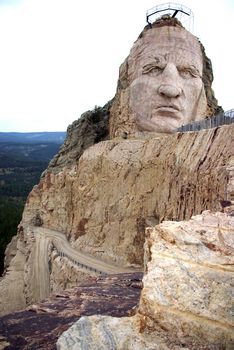
And while yer trekking through the Black Hills stop on over and see the Crazy Horse Monument. Still being carved from the mountain this one should be a real beaut!
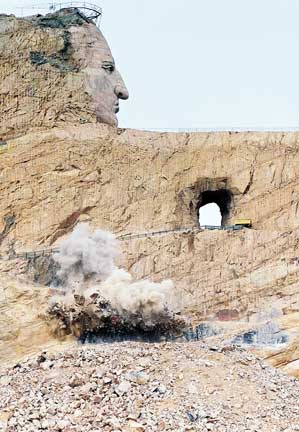
Equipped with only a sledge hammer, a single-jack drill bit and a box of dynamite, Boston-born sculptor Korczak Ziolkowski went to work on June 3, 1948 creating his 563 by 641-foot sculpture of an Indian man atop a spirited warhorse. This would later be called Crazy Horse Memorial. He would spend the next 36 years of his life doggedly blasting away 7,400,000 tons of granite near Custer, South Dakota to rough out virtually the entire figure, in the round.
Now years after Korczak started carving and his death in 1982, work continues on the world’s largest sculpture. The dimensions are awe inspiring. The mountain-sized statue is as long as a cruise ship and taller than a 60-story skyscraper!
When Korczak died, critics reckoned the mountain outlasted the man. But Korczak’s wife Ruth and their ten sons and daughters were determined to keep his vision alive using the plan books and scale models he left behind.
Together, the wife and children brought forth a heroic face from the granite of the Black Hills during the decade of the 90s. The 88-foot-high face of Crazy Horse was dedicated on June 3, 1998, 50 years to the day after Korczak’s first blast.
Work now focuses on the 219-foot-high horse’s head. Blocking out the 22-story high figure has surpassed the halfway mark. There’s a lot of excitement about witnessing Crazy Horse’s steed take shape as these cliff-hanging explosive experts work their fleet of drilling equipment. A new generation of visitors watches as a new generation of workers carry the Crazy Horse dream forward.
If ya haven’t seen Mount Rushmore, and takin’ a gander at what they’re accomplishing with the Crazy Horse Memorial, well than brother and sister load up the wagon and get ya there! I mean NOW doggonit! Don’t just sit there starin’ at the dang computer screen get out and see it for yerself!
Now I’ve gotta go drag Cookie away from the dang helicopter ride. “Cookie! Ya old coot, no one needs ta see yer carcus hoverin’ over the Presidents in that there whirly-bird! Get on back to the wagon!”
WHOO-EEE!!! It is another blazen hot day here on the trail and all ‘cause Ms. Linda Broday came ridin’ up to the campfire with two heart seizin’ cowboys, and two stories that are guaranteed to touch the ol’ ticker (and if they don’t well I’d head to the nearest sawbones and make sure alls workin’ proper in that area)! WHEW! The fire just got a whole lot hotter with Duel and Luke takin’ up space!
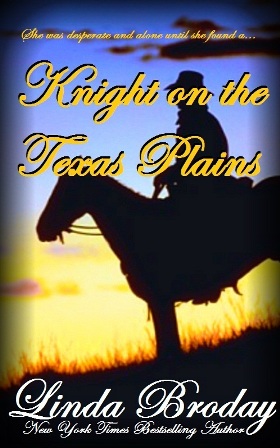
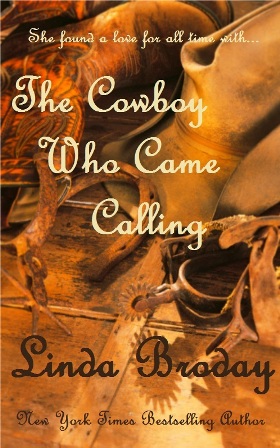
To sweeten whatever that is in Cookie’s pot, Ms. Broday is givin’ away one ebook (Kindle only) copy of KNIGHT ON THE TEXAS PLAIN and THE COWBOY WHO CAME CALLING!!! That means two commenters have a chance at takin’ home a cowboy today! Just leave a comment and before I break a tooth on Cookie’s biscuits tomorrow mornin’ I’ll draw two names.
Be sure to read the inspirations for these stories, as touching as the stories themselves!
A man who’s lost everything that matters…a child no one wants…and a woman with trouble to spare.
Duel McClain sees no reason to keep taking up space on this earth until a poker game changes everything and he leaves the saloon with a baby in his arms, a baby he’d won. He hasn’t a clue what to do with the child. He only knows he’ll protect the little girl with his life if need be. Thinking his life can’t get more complicated, he gets another shock when a woman stumbles into the light of his campfire.
Jessie Foltry is running for her life. She’s hungry and afraid but the man and his child pose little threat. Trusting Duel is the easy part…living without her knight on the Texas plains will be next to impossible.
But is the price too high to become a family?
KIRSTEN’S THOUGHTS: Three lost and broken individuals find healing with each other and form a complete family. Warmth spreads through my chest just thinking of this story and the people Linda Broday brought into my home and left in my heart. Duel McClain *Huge Sigh* is truly a knight in buckskin. A man trying to avoid anything involving his heart can’t stop a heart the size of Texas from rescuing a sweet little girl and a shattered woman. I mean really I don’t know how many times I felt my mouth stretch in a smile at his interactions with his family and little Marley, or just want to cry at his gentle spirit and healing ways with Jessie. But there’s no mistaking this gentle giant leaves a Texas sized boot print on the backside of anyone who threatens his family.
And Jesse, talk about a heroine you can root for even as your heart breaks for her past. And boy does this woman have a lot to overcome from a past so steeped in horror and pain it would take a man like Duel to show her the world isn’t only made of darkness as she brings light to his world, as well. I loved watching her bloom under Duel’s tenderness and both of them find joy in little Marley (who if you just don’t love to death…well you need to get off my trail). Jessie easily became one of my favorite heroines. For all she’d been through and the abuse she took, she could have easily been bitter and hard, but instead instantly cares and coddles Marley and aches for the love of kindhearted Duel.
A secondary character who snatches your heart will be Duel’s father, and equally goodhearted man who longs for his children to find happiness and peace. There are plenty of lighthearted moments, and the town of Tranquility and the people come to life in vivid color under Ms. Broday’s skilled pen, but I’ll warn you have tissue nearby there are some moments that steal your breath, and cause your eyes to leak.
Another secondary character who I could have loved if Duel hadn’t already stolen my heart was Luke McClain, and it just so happens…
Luke McClain thought the worst of his problems was losing his job as a Texas Ranger. That’s before he runs into a bullet and finds himself staring into the beautiful eyes of Glory Day. She’s the kind of woman who can make a man forget everything…except finding the way to her heart. Calling on her is the answer to a dream, but leaving her is next to dying.
Glory has had more trouble in her life than most women her age. With her mother ill and her father in prison, she’s all that stands between her sisters and starvation. Then to top everything off she had to go and shoot Luke. Bringing him home and patching him up is the least she can do. She just never expected to find heaven in his arms.
But the real question is…can the meddlesome cowboy be tamed?
KIRSTEN’S THOUGHTS: Two people deep in shadows of struggles they’re trying to hide, find in each other the vision that might lead them to their deepest desires. Okay, Luke is not a calming, gentle force like his brother, Duel. Luke is a teasing, smart-mouthed rogue more likely to stir a fire than douse the flame, and he keeps Glory caught between wanting to kiss him and shoot him. So she does both! But I’ve always loved teasing, smart-mouthed rogues so I of course I love Luke McClain and his Texas sized mouth and ego. Because you always know beneath all that swagger is a man who’s struggling with a big hurt and a heart in need of a strong love and a lesson in true strength.
Glory Day can meet Luke flame for flame, but her fire doesn’t stem from teasing or self-assurance, her drive is contrived of preservation, hers and her family. Her burdens are about to top out, and then she faces the loss of her eyesight, making all her struggles that much heavier. Glory is a heroine who grabs your heart. Glory is a young woman who is always told how strong and brave she is, and all she wants is someone who will share her load and stand by her side as she fights her battles. Good thing, Luke McClain comes calling. (Another tissue alert folks the ending caused Cookie to get a “little smoke in his eye’).
As in KNIGHT ON THE TEXAS PLAINS, the secondary characters in COWBOY CAME CALLING are priceless. I won’t go into each, but you’re sure to love Glory’s sisters; Quiet, loving Hope with a hidden strength to rival Glory’s, and rowdy, sassy Patience who only wants to be like her oldest sister. As Luke noted the sisters reminded me a lot of the sisters in LITTLE WOMEN (their favorite story).
Both of these stories are just brilliant. You will truly become a part of the story, Linda does such a fabulous job of breathing life into every character and place. The family dynamics both the McClains and the Days are so true to life it’s like sitting in their kitchens, parlors and living rooms and participating in all the antics you’d expect with siblings.
I give KNIGHT ON THE TEXAS PLAINS and THE COWBOY WHO CAME CALLING my YOU MUST READ THESE IMMEDIATELY rating!
LINDA’S INSPIRATIONS FOR THESE STORIES…
When I growing up, our family lived next door to a Latino couple and they had a little girl who played with me sometimes. I learned that she was won in a poker game by the man who posed as her father. He was a horrible drunk and made her life miserable. She always told me she was going to look for her real parents some day. That was the inspiration for Knight on the Texas Plains. I knew I had to write a story that was similar to hers except I wanted to give her a happy ending.
Then when I wrote The Cowboy Who Came Calling I was struggling with deteriorating eyesight because of a disease I have. It seemed no matter what I did we couldn’t stop the progression. It was a very scary time for me. In the book the heroine Glory Day has to face losing her vision. That wasn’t good for someone who was the sole support of her mother and two sisters. I totally related to Glory and was able to immerse myself in her character. Maybe that’s one reason that book is so strong and won the National Readers’ Choice Award.
Make sure to check out other must read stories by Linda Broday. This lady knows how to write about cowboys and the women who love them, so if you’re lookin’ for a yarn for ‘round the campfire just carry one of these in your saddle bags. But make sure ya start with KNIGHT ON THE TEXAS PLAINS and THE COWBOY WHO CAME CALLING!
Cookie if yer missin’ yer money pouch well that’s yer own fault I told ya… Oh sorry y’all, Cookie’s blamin’ that nice Sundance for swipin’ his money. What? Some of y’all are missin’ a bit of coin? Well then I say it’s time we get back to the trail while we have the gold in our teeth.
We’ll be near Sundance…keep yer hands down this ain’t no hold up…I mean Sundance, Wyoming. We’re headin’ for the Nation’s first National Monument! Yep, that’s right Wyoming is home to the First National Park, Yellowstone, and the First National Monument, Devils Tower.
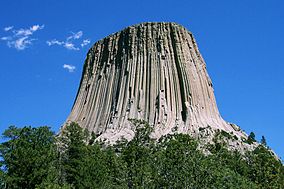
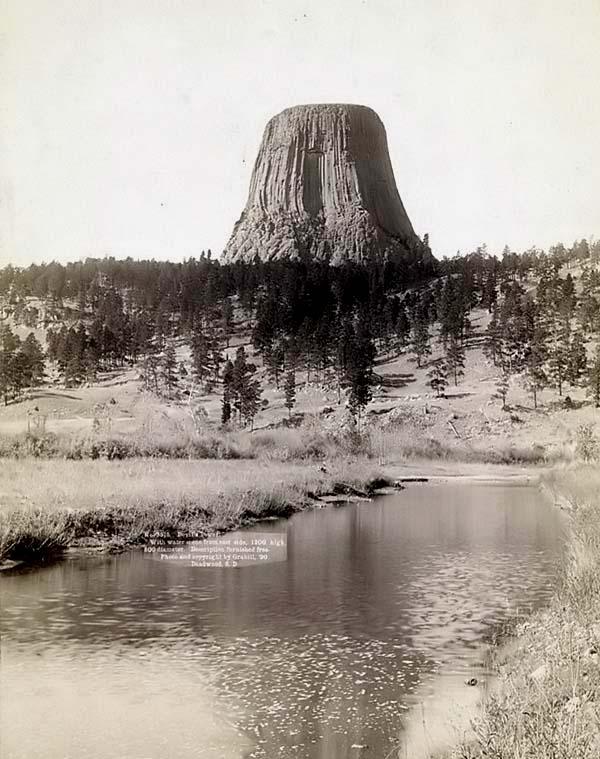
Located in present day Crook County in Northeastern Wyoming, Devils Tower rises 1,267 feet above the surrounding terrain including the Belle Fourche River. At its summit this core of a volcano exposed by erosion is 5, 112 feet above sea level.
Although it is highly likely early trappers and explorers saw the Tower from a distance there was not any direct reference to the formation until 1875. A U.S. Geological Survey party who made a reconnaissance of the Black Hills called attention to the uniqueness of the Tower. Colonel Richard I. Dodge, commander of the military escort, described it as “one of the most remarkable peaks in this or any country.”
Colonel Dodge is credited with giving the formation its present name. In 1876, he published a book “The Black Hills,” where he called the formation Devils Tower. He explained “The Indians call this shaft The Bad God’s Tower, a name adopted with proper modification, by our surveyors.” One of the geologists on the expedition countered Dodge saying “the name Bear Lodge (Mateo Teepee) appears on the earliest map of the region, and though more recently it is said to be known among the Indians as ‘the bad god’s tower,’ or in better English, ‘the devil’s tower,’ the former name, well applied is still retained.” Despite this response the name Devils Tower remained the name generally used, although for a time Geologists continued to use the original name.
The year before the Geological Survey party entered the Black Hills in 1874, in direct violation of the Treaty of 1868, General George A. Custer led an expedition into the Black Hills. The Treaty of 1868 guaranteed this region to the Indians. As a result of Custer’s expedition and his reports of the discovery of gold in the Hills, miners invaded the region. Though the Army attempted to keep order, troops were withdrawn in 1875 and miners and settlers poured into the region with towns like Custer City and Deadwood springing up overnight.
The subsequent battles and Custer’s fate was thoroughly discussed in a past blog, but in the end, the Indians were compelled to cede the Black Hills and most of their lands in Wyoming to whites. This opened up the lands around Devils Tower. In early 1880s the first settlers came into the Belle Fourche Valley in the vicinity of Hulett. With the exception of such outfits as the Camp Stool and the Driscoll, most of the settlers were small-scale farmers and ranchers from the mid-western states. In the vicinity of Moorcroft and the Tower, on the other hand, most of the land was occupied by large-scale outfits, such as the 101. From 1889 to 1892, the Chicago, Burlington, and Quincy Railroad extended its line from the South Dakota State Line through Newcastle, Moorcroft, and on to Sheridan. From several points along this line, the Tower can be seen.
The Government took early action to prevent the Tower from passing into the hands of individuals wishing to exploit the Tower for personal gain. In August 1890, the General Land Office issued an order rejecting all application on the lands around the Tower.
In February 1892, Senator Francis E. Warren of Wyoming wrote the Commissioner of the General Land Office asking him for assistance in preventing the spoliation of Devils Tower and the Little Missouri Buttes (several miles northeast of the Tower). Weeks later the office issued an order setting aside some 60.5 square miles including the Tower and the Little Missouri Buttes as temporary forest reserve.
That same year, the Senator introduced a bill to establish Devils Tower as a National Park. The bill included Devils Tower and the Little Missouri Buttes. The bill was read twice and referred to committee where it appears no further action was taken. It wouldn’t be until fourteen years later when Devils Tower would become a national monument.
Frank W. Mondell, Representative from Wyoming and resident of Newcastle, lent his support to a plan to have the area preserved as a national monument in 1906. Mondell was a member and later chairman of the House Committee on Public Lands. It was result of his influences that President Theodore Roosevelt, on September 24, 1906, proclaimed Devils Tower as the first national monument. The Little Missiouri Buttes were not included in the monument area and remained opened to settlement.
While difficult to reach, the Tower became a favorite camping and picnicking spot for people in the area. One of the inviting features was a large spring of pure cold water located near its base. It could only be reached over unimproved roads or trails by horseback or wagon. It was said it was necessary to ford the Belle Fourche River seven times to get to the Tower. This trek did not stop the people of the area from visiting Devils Tower once or twice a year and spending a few nights there. Fourth of July celebrations were sometimes held at the Tower and people came from considerable distances to attend these events.
The Fourth of July celebration best-known is the 1893 celebration when William Rogers, a local rancher, became the first known man to climb the tower. Rogers with the help of another local rancher, Willard Ripley, prepared a 350-foot ladder to the summit of the Tower. The men drove pegs, out of oak, ash, and willow, 24 to 30 inches in length and sharpened on one end, into a continuous vertical crack found between the two columns on the southeast side of the formation. The pegs were braced and secured to each other by a continuous wooden strip to which the outer end of each peg was fastened. Building the ladder was probably more hazardous than climbing the Tower itself.
People came from as far as 125 miles to witness the first formal ascent of the Tower. Conservative estimates say 1,000 people came by horseback, wagon and buckboard to see the feat. Rogers began his ascent after proper ceremonies were conducted. After a climb taking about an hour, he reached the top. Amid cheering, Rogers unfurled an American flag, specially made for the occasion, and attached it to a flagpole that had been attached to the ladder. Unfortunately, a gust of wind tore the flag loose and it drifted to the base of the Tower, where promoters tore it up and sold the pieces as souvenirs.
Others climbed the Tower using Rogers ladder. One of the first being Linnie Rogers, who duplicated her husband’s climb two years later on July 4, 1895 becoming the first woman to reach the summit. The last to reach the top, by this method, was “the Human Fly”, Babe White, in 1927. Much of the ladder has since been destroyed, but portions of the ladder can still be seen from the south side of the Tower Trail.
In 1937, Fritz Weissner and two other mountaineers from the American Alpine Club of New York City climbed the summit using rock-climbing techniques. Their ascent took four hours and forty-six minutes. Jack Durrance pioneered the classic and easiest route to the summit in 1938. Today climbers still flock to the Tower to test their abilities and reach the summit of Devils Tower.
Representative Mondell continued to seek funding for roads and bridges so tourists could reach the monument. However, bill after bill fell on the deaf ears of Congress. Finally, in 1917 the National Park Service with the help of Crook County built a three mile road leading to the formation. And after petitions signed by the people of Wyoming and South Dakota, and pressure from Senators Warren and John Kendrick a bridge was finally constructed over the Belle Fourche in 1928. The roads and bridge allowed tourists in the ever popular motor vehicles access to the monument. Although for many years the conditions of the roads made the trek to the Tower a difficult one, but despite these hardships visitors continued to make their way to visit, picnic, and camp at the Tower. Access would improve with the construction of the Custer Battlefield Highway (U.S. Highway 14) between Spearfish, South Dakota and Gillette, Wyoming. The state of Wyoming also improved roads into Sundance from U.S. Highways 85 and 16, and a paved highway was also constructed from U.S. Highway 14 to Alva making the south entrance entirely accessible by paved roads.
The CCC (Civilian Conservation Corps) of the 1930s provided extensive development for the Tower. New roads were built, modern water and electrical systems installed, footpaths were laid out, picnic areas were established with tables and benches, and trailer and overnight camping areas were provided to the visitors. Residences for employees, workshops, and machine shops were erected, and in 1938 a museum was completed. The result of these improvements was a flock of tourists to the area.
Unfortunately, World War II would detract from the Tower’s new improvements and with the War tourism dropped dramatically. But just prior to the war, George Hopkins would bring thousands to the Tower, and draw national attention. As a publicity stunt, Hopkins parachuted onto the summit of Devils Tower. His untried preparations for an easy descent failed, and stranded the stuntman on the summit. Food and supplies were dropped by plane to the stranded man, but for six days Hopkins waited while attempts and plans were made to locate a method to get him down.
Jack Durrance, a student at Dartmouth College, skier and mountain climber, who led the second mountain-climbing ascent to the summit in 1938 offered his assistance. Durrance led seven other climbers to the summit where they found a surprisingly upbeat Hopkins. The descent was made with little difficulty. Over 7,000 visitors came to the monument to see Hopkins and witness the rescue over the six days he was stranded on the summit.
Following World War II, tourists returned to the Tower and local celebrations were resumed. Today visitors are invited to walk the 1.3 mile paved trail that encircles the tower or visit the prairie dog town just inside the park. The Wyoming towns of Sundance, Moorcroft and Hulett provide lodging, food and entertainment.
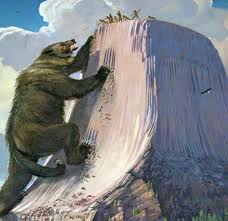
For many Devils Tower is an interesting rock formation, or a challenge to climb. To many American Indian tribes, the Tower is a sacred place central to their culture. In the 1930s, first person narratives were recorded of the legend of the Tower to many of these cultures.
Arapaho Legend
An Arapaho lodge was camped at Bears Tipi. The father of this lodge was a head lodge and had seven children, five boys and two girls. The two girls had made an arrangement between themselves that the one who found the end bond (end rib) of a buffalo should receive the most favors from the brothers. The boys often made trips to other tribes. After a long search one of the girls found an end bone of a buffalo and on picking it up she turned into a bear and made some big scratches on her sister’s back. The bear-girl told her sister, “if you tell the dogs will howl and this will be a signal so I will know that you have told.” The sister did tell her brothers and when they heard the dogs howl and give the signal they were scared and started to run.
The bear-girl heard the signal and ran after them. The girl who had told was carrying a ball in her hand which she dropped and accidentally kicked. The ball bounded up on the big, high rock. The bear-girl reached over her sister’s shoulder to grab the ball, slipped and made very big scratches on the big rock and fell on her sister and broke the sister’s chest. The bear-girl climbed to the top of the big, high rock and told her family that there would be seven stars in the shape of a diamond appear in the east and the first star out would be off to one side and would be brighter than the other stars. This first star would be called Broken Chest Star. From this time on the Arapaho called this big, high rock “Bears Tipi”.
This legend was told to Dick Stone by Sherman Sage, 81 years old. Otto Hungary, Interpreter.
Cheyenne Legend
A band of Cheyenne Indians went on one of their visits to Bears Tipi to worship the Great Spirit; as did many other tribes before the white man came. The Cheyenne braves took their families with them as they felt that would be safe as Bears Tipi was a holy place.
After having camped there for several days, one of the Cheyenne braves noticed that his wife was often gone from camp, staying away for a short time. As time went on he noticed that she was gone longer than before. This brave could not understand why his wife should be gone from their lodge so much as he had always been devoted to her and being a good hunter, as well as a brave warrior, she always had much buffalo, antelope, and deer meat. He furnished her fine skins to make nice clothes.
Becoming suspicious that some other brave in his band might be courting his wife, he watched to see what man was missing when his wife left camp. He found that no man was missing when his wife was gone. This man also saw that his wife had a skin over her shoulders now that she did not wear before coming to this camp.
One day when she had been gone longer than usual, he laid in wait for her, on her return he asked her where she had been and what drew her from camp so much of the time. She would not answer any of his questions. Then the man became mad and tore the skin from her shoulders and saw that she was covered with scratches.
He demanded that she tell him which man had abused her. Becoming frightened at the way her husband was acting she told him that she had been charmed by a very big bear that lived in the big rock. The bear had no mate and had become infatuated with her while she was out gathering fruit. Fearing for the safety of the camp, she had submitted to the bear’s embraces, which accounted for the scratches on her shoulders.
Then the warrior told his wife to lead him to the bear so he could kill it. When they found the bear, the man had great fear because the bear was big, very big. The bear slapped the woman with his paw and changed her into a bear. The man ran to the camp to get the rest of the braves to help him kill the big bear.
They found the bear had crawled into a cave, leaving his hind feet in the door. The bear’s feet were so big that nobody could get past them. They could not get close enough to the bear to kill him so they shot at his feet to make him come out. When the bear came out he was so big that all the warriors were scared and climbed up on a big rock.
The men were so scared that they prayed to the Great Spirit to save them. In answer to their prayers, the rock began to grow up out of the ground and when it stopped it was very high. The bear jumped at the men and on the fourth jump his claws were on the top. The Great Spirit had helped the men and now they had great courage and they shot the bear and killed him. When the bear fell, he fell backwards and pushed the big rock which made it lean.
After that, the bear-woman made this big rock her home, so the Cheyennes called it Bears Tipi.
This legend was told to Dick Stone by Young Bird. Samuel Weasel Bear, Interpreter.
Crow Legend
Once when some Crows were camped at Bears House, two little girls were playing around some big rocks there. There were lots of bears living around that big rock and one big bear seeing the girls alone was going to eat them. The big bear was just about to catch the girls when they saw him. The girls were scared and the only place they could get was on top of one of the rocks around which they had been playing.
The girls climbed the rock but still the bear could catch them. The Great Spirit, seeing the bear was about to catch the girls, caused the rock to grow up out of the ground. The bear kept trying to jump to the top of the rock, but he just scratched the rock and fell down on the ground. The claw marks are on the rock now. The rock kept growing until it was so high that the bear could not get the girls. The two girls are still on top of the rock.
This legend was told to Dick Stone by Rides the White Hip Horse. Goes to Magpie, Interpreter.
Kiowa Legend
Before the Kiowa came south they were camped on a stream in the far north where there were a great many bears, many of them. One day, seven little girls were playing at a distance from the village and were chased by some bears. The girls ran toward the village and the bears were just about to catch them when the girls jumped on a low rock, about three feet high. One of the girls prayed to the rock, “Rock take pity on us, rock save us!” The rock heard them and began to grow upwards, pushing the girls higher and higher. When the bears jumped to reach the girls, they scratched the rock, broke their claws, and fell on the ground.
The rock rose higher and higher, the bears still jumped at the girls until they were pushed up into the sky, where they now are, seven little stars in a group (The Pleiades). In the winter, in the middle of the night, the seven stars are right over this high rock. When the people came to look, they found the bears’ claws, turned to stone, all around the base.No Kiowa living has ever seen this rock, but the old men have told about it – it is very far north where the Kiowa used to live. It is a single rock with scratched sides, the marks of the bears’ claws are there yet, rising straight up, very high. There is no other like it in the whole country, there are no trees on it, only grass on top. The Kiowa call this rock “Tso-aa”, a tree rock, possibly because it grew tall like a tree.
Told by I-See-Many-Camp-Fire-Places, Kiowa soldier at Fort Sill, Oklahoma, 1897.
Lakota Legend
In the Sioux tribe long ago was a brave warrior who often went alone into the wilderness where he would fast and worship the Great Spirit in solitude. Being alone helped him to strengthen his courage so that in the future he could carry out his plans.
One day this warrior took his buffalo skull and went along into the wilderness to worship. Standing at the base of Mato Tipila after he had worshipped for two days he suddenly found himself on top of this high rock. He was very much frightened as he did not know how he would get down. After appealing to the Great Spirit he went to sleep. When he awoke he was very glad to find that he was again at the base of this high rock.
He saw that he was standing at the door of a big bear’s lodge as there was foot prints of a very big bear there. He could tell that the cracks in the big rock were made by the big bear’s claws. So he knew that all the time he had been on top of this big rock he had been standing on a big bear’s lodge.
From this time on his nation called this big high rock Mato Tipila and they went there often to worship. The buffalo skull is still on top of this big high rock and can be seen on the highest point.
This legend told to Dick Stone by Short Bull, who lived a short distance west of Ogalala, South Dakota, on July 31, 1932. Mark Running Eagle, Interpreter.
For me it’s one of my favorite memories of my first visit to Devils Tower when I was only eight-years-old, and my dad passed on one of these legends to my brother and me.
So let’s circle the wagons up here for a bit. Cookie can whip up a picnic…Yes ya can you old coot! And iffin ya got a mind to go ahead and shimmy on up to the top. I’ll cheer ya on from right here!
Sources:
Mattison, Ray H. “The First 50 Years.” National Park Service. 1955
YEE-HAW! We’ve rounded up another ace high series by author Celia Yeary!! I love me a great family series and Ms. Yeary serves one up Texas style with the Cameron family. You’re sure to be hooked with the first story and the next two won’t let ya down! So come on ‘round the fire and look these over then head on out grab ‘em up!
And don’t forget to read to the end where Celia provides a gander into the future of these families! It’s a fun look into an author’s crystal ball. The people of Texas better hold onto their ten gallon hats with the new generation!
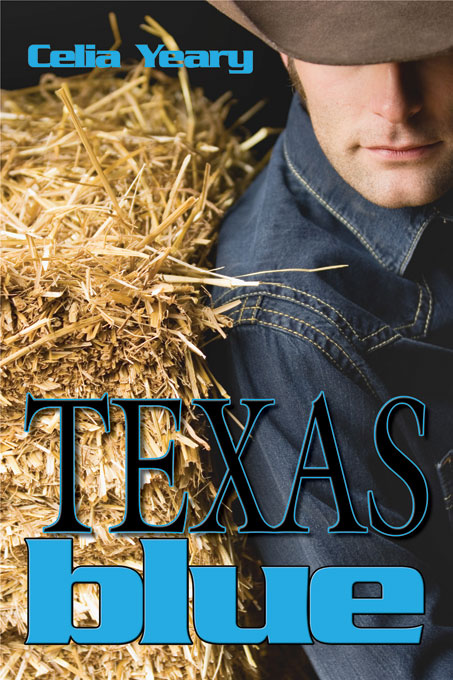
She wasn’t a fit mother… So said the county judge who hired Buck Cameron to retrieve his little daughter. But when Buck finally locates the pretty mother and child, he finds the claim very hard to believe. Now, he faces a dilemma. Should he obey the order? Or should he defy the judge and rescue Marilee and her child from isolation? She’d been banished… Rejected and abandoned by her father, Marilee Weston used the pain of betrayal to survive. Now, she needs a way out of the forest, where she and her daughter had lived for five years. But the towering pines and fear of the unknown imprisoned her. How could she begin a new life for herself and five-year-old daughter? Will the alluring stranger free her, or prove to be even more dangerous?
KIRSTEN’S THOUGHTS: TEXAS BLUE is a tender story of a woman who battles her own fears of what she knows can be a heartless world and the man who helps her realize her own strength and just how much fight she has in her. From the very first pages, I admired Marilee. Though extremely young when deserted by her father and left to raise a baby, born from a violent attack, she has pluck. She desires the best for her daughter, Josie, and is determined to see she is raised a happy child, and to look beyond her own fears to see her daughter has what she needs. And you just can’t find a better hero than Buck Cameron. A man who encourages Marilee to find her strength even though it might cost him her and his heart in the end. Honestly, I got a bit miffed at Marilee ‘cause I’d have snatched Buck up and held on tight, and of course it all works out in the end, but whoo-eee is it ever a ride.
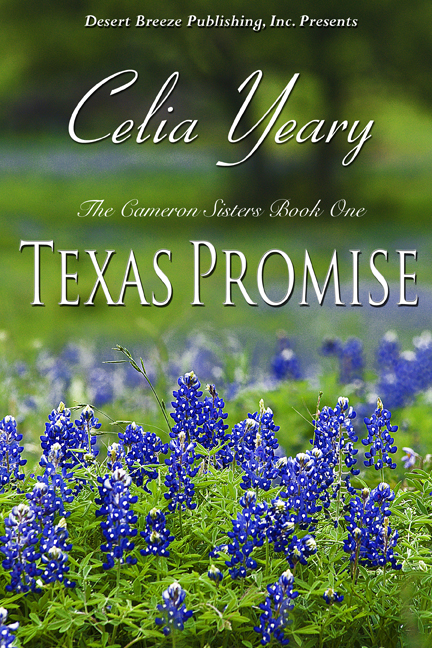
After two years, Jo King’s life as a widow abruptly ends when her husband returns home to Austin. Unable to understand her angry and bitter husband, she accepts a call from the New Mexico Territory to meet her dying birth father whom she knows nothing about. Her plan to escape her husband goes awry when he demands to travel with her.
Dalton King, believing lies his Texas Ranger partner tells him about Jo, seethes with hatred toward his wife. Now he must protect Jo from his partner’s twisted mind, while sorting out the truth. Jo’s bravery and loyalty convince him she’s innocent. But can they regain the love and respect they once shared?
KIRSTEN’S THOUGHTS: TEXAS PROMISE was my favorite of the stories. It was the first one I read, and I read it in two nights (only because I had to work). Then I read it again after reading TEXAS BLUE and it was more fun, but a bit heartbreaking, to watch the children from TEXAS BLUE grow, and the darling, precocious girl and the boy who asked “if he could keep her” married. But Dalton isn’t the carefree boy he was. After being left for dead and struggling back to life and through horrendous pain to make it back to Jo, only to believe she no longer wanted him, he’s turned into a bitter hard man. Jo, much like her mother Marilee, is a character you instantly like and connect with and cheer on, as a warm, loving woman with an inner strength that has seen her through hard times and heartbreak. I loved that Jo was still as precocious as the five-year-old who stole Buck’s , and my, heart in TEXAS BLUE. Still a tomboy at heart.
There was just something about Dalton that even at his hardest and meanest I just still loved this character. It was so touching watching these two wonderful people work through all the lies, heartbreak and a dark threat from Jo’s past to find their way back to each other.
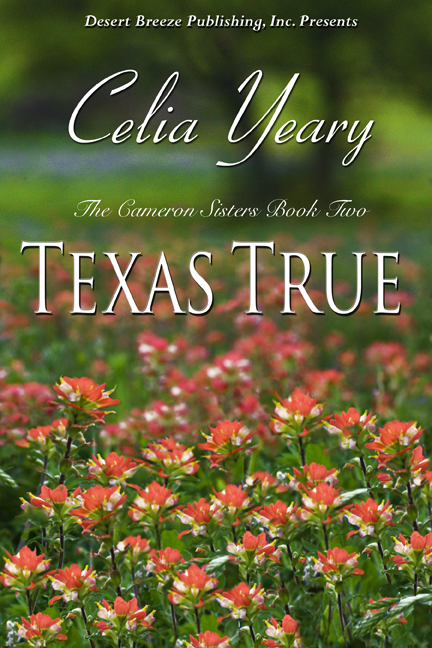
At a Governor’s Ball in Austin, Texas, True Lee Cameron meets suave Sam Deleon. Before the night is out, she transforms from the coddled and protected younger sister to a woman in love. Reality crashes down when she accidentally learns her new husband has deceived her. Daring to disobey him, she follows Sam to the oilfields and determines to live wherever he does. Has she made a mistake? Will she give up and return home where she can make her own rules?
KIRSTEN’S THOUGHTS: TEXAS TRUE is a fantastic story, sometimes just as gritty as the oilfield, of two people swept away by love and appearances and then have to face the reality of what love really requires when real life intrudes on the dream. Although coddled and protected True Cameron is a young woman I liked from TEXAS PROMISE and continued to admire her in her story. She comes from a loving family, and wants the same thing for herself. Her determination to follow her husband to the oilfields and push up her sleeves and do what it takes to survive there, to show her husband she could, made her every bit as likable as her sister Jo. As she takes on more struggles moving to Sam’s ranch, taking on his sister’s children and learning of the secrets that haunt him you really watch True bear up with each new challenge and grow into a strong woman who can stand on her own, even as you hope she and Sam’s love can bear up just as much and bring them to their HEA. And though at times you’d like to thump Sam upside the head, like Dalton, he’s a hero you hope can get past his inner demons and hold tight to True and their love.
I also found the history in this story extremely fascinating. I didn’t know much of the history of the oilfields in Texas and Celia describes the hard life and hard work on the oilfields so well you can almost smell the black gold and see the shanties, tents, and shacks that made up the “town” where the workers and their families made their homes.
All three stories are balanced between the challenges each faces as they work towards love and the dangers they face from outside forces that threaten to destroy them and tear them apart. The history Celia weaves through made each an enjoyable history lesson, as well, and I felt a connection to Texas and her people.
In each story the characters are so real you’ll just fall in love with them. The Cameron family ties are portrayed in such a way that although the sisters, Jo and True, don’t share many pages in each of their stories their love and support for the other comes through loud and clear and helps each get through their individual struggles. It is their family bonds and the example of their parents that encourages each woman to accept her worth and not take their worth or love for granted. The secondary characters in each story are vivid and real and help complete the stories without detracting from the man and woman at the heart of each. Celia Yeary pens such wonderful characters and their stories you just hate to see them end, and for an added treat today Celia provided a look at the future generations of Camerons, Deleones, and Kings, so the stories continue…
CELIA SAYS:
Don’t think I’m a little off, but I had so many characters in my Texas books, I made a genealogy chart to keep them straight. I’ve discovered I love to write a series, and it’s much easier to begin a new book when I have ready-made characters in my stories.
Unless I get a serious mental block, I have a list of characters for future novels or novellas:
~*~Lee Cameron King–he appeared in Texas Blue as a small boy who picked his nose and rode imaginary horses around the yard. I’d like to make him an early 20th Century entrepreneur during the oil boom in Texas–a wildcatter, a risk taker, a rich man with money to make money, a tough businessman who has a big sense of humor. I’d have him run into a real buzz-saw, a serious woman who is investigating oil company monopolies for a New York newspaper.
~*~Jackson Rene Deleon–he was the baby boy in Texas True. I see Jackson grown up and the heir to the great Deleon fortune. At a young age, he becomes the head of an empire consisting of ranching in Texas, gold and silver mines in Colorado, and shipping lines out of Houston. I’d have him meet a titled British lady whom he must convince to marry him and live in South Texas on the ranch–the headquarters for the Texas Star Corporation his father formed.
~*~Lacy Deleon–she was the little niece of Sam Deleon in Texas True, born in the Flats in Austin, a prostitution area where she and her little brother, Antonio, were born and lived. When True Cameron married Sam Deleon, she found the small girl and boy and brought them home, causing a huge problem. But True was determined to raise them as their own children. Lacy, now grown into a proper young lady, discovers her lurid birthplace and challenges the local government to do something. She would meet a brash, young attorney/senator and entice him to help her.
~*~Antonio Deleon–Lacy’s little wild brother in Texas True. He was a hellion as a kid, although lovable and good-hearted. But he didn’t understand the word “no.” I see him grown and sowing too many wild oats and getting in trouble. I’d like him to meet a strong-willed female rancher who challenges him to straighten up and learn to be a man.
~*~Laura Lynn Paxton–Jo King’s half-niece in Texas Promise . Beauty Laura Lynn has a horrible past she knows little about but sets out to find the burial place of her prostitution mother in New Mexico. In doing so, she hires a strong rough tracker to help her.
~*~Alexander King–son of Dalton and Jo King in Texas Promise. I have high hopes for the darling child. Just look at his name. He has it all–handsome, rich, smart, educated, adored by the entire family…and he takes it all for granted. Until…what? His story will require much thought.
Celia
What? Ya say ya’d love to read one of Celia’s stories, but ya just don’t have time for one of those full-length jobbers. Well prepare to be just as happy as cat with cream, cause Ms. Yeary has solved your problem! She’s published some Dime Store Novels for 99cents each!! Why ya can’t get a cup of Cookie’s coffee for that! And while they’re shorter stories her characters and stories are just as tip of the star as her full-length books!
But really folks I’d give the Cameron series five thumbs up if I had that many thumbs, ya just won’t be sorry layin’ your money down cause this is one series you’re gonna read and read again.
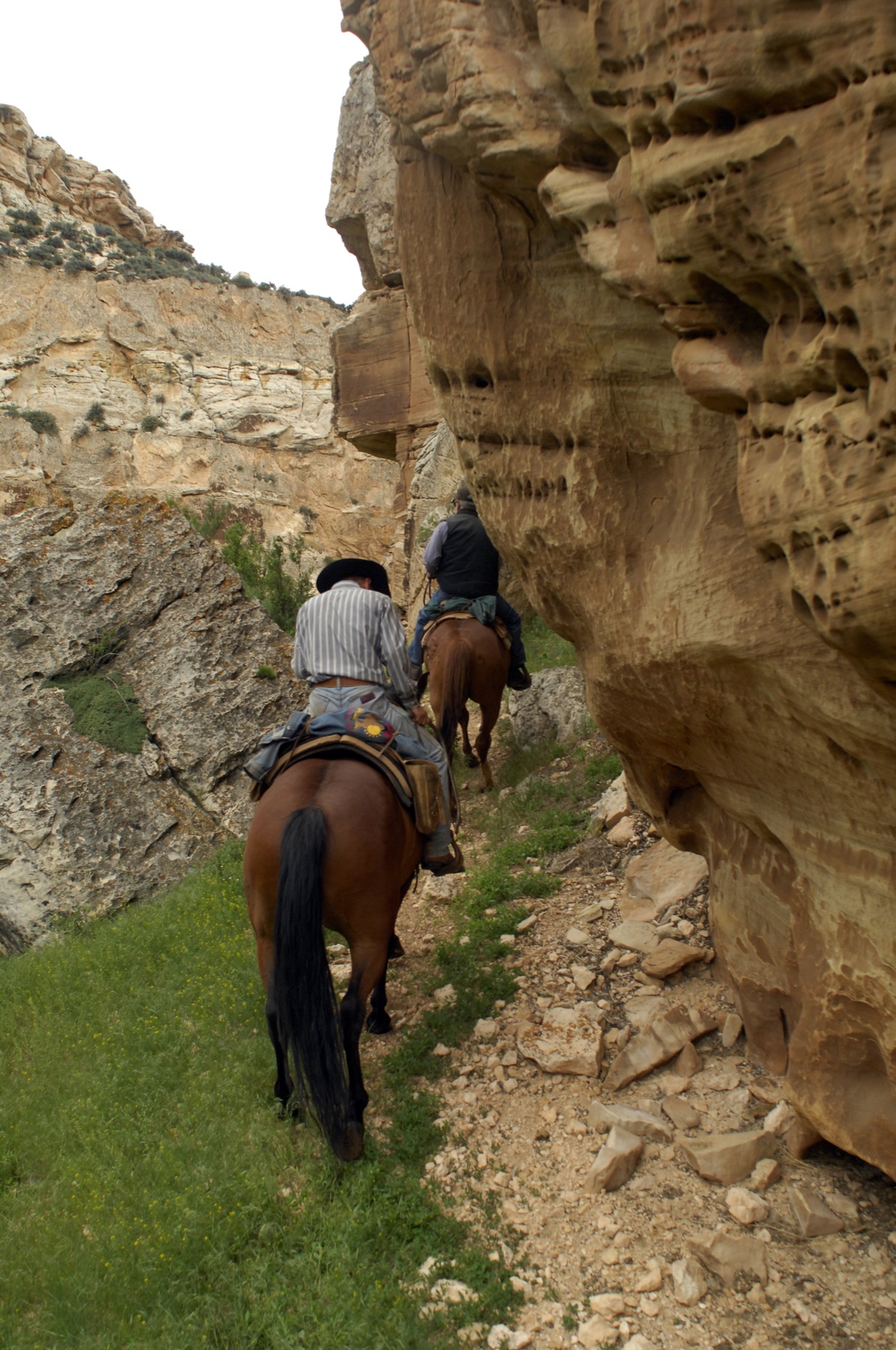
Whoa dogies don’t know about y’all but all this time on the trail I’m gettin’ a bit tuckered. I know a place up the way we can stop off at and rest up a bit. Now we’ll have to leave the wagons here and go in on horseback cause it’s a might tricky. But ol’ Robert Leroy Parker and Harry Longbaugh will be sure to offer us a good time.
Oh, Cookie just brought up a good point. Y’all better leave your valuables on your wagons…we’re just sayin’ can’t be too careful at the Hole-in-the-Wall!
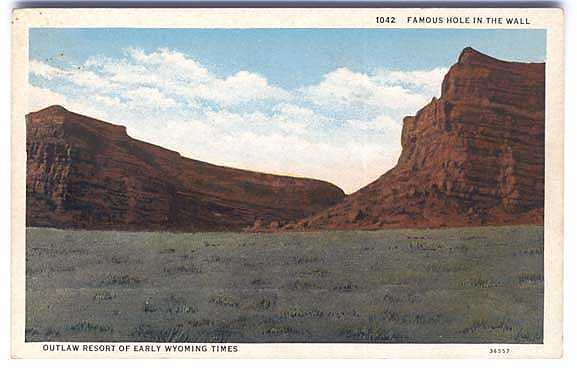
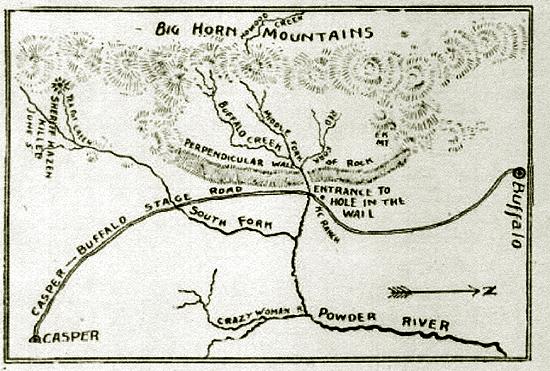
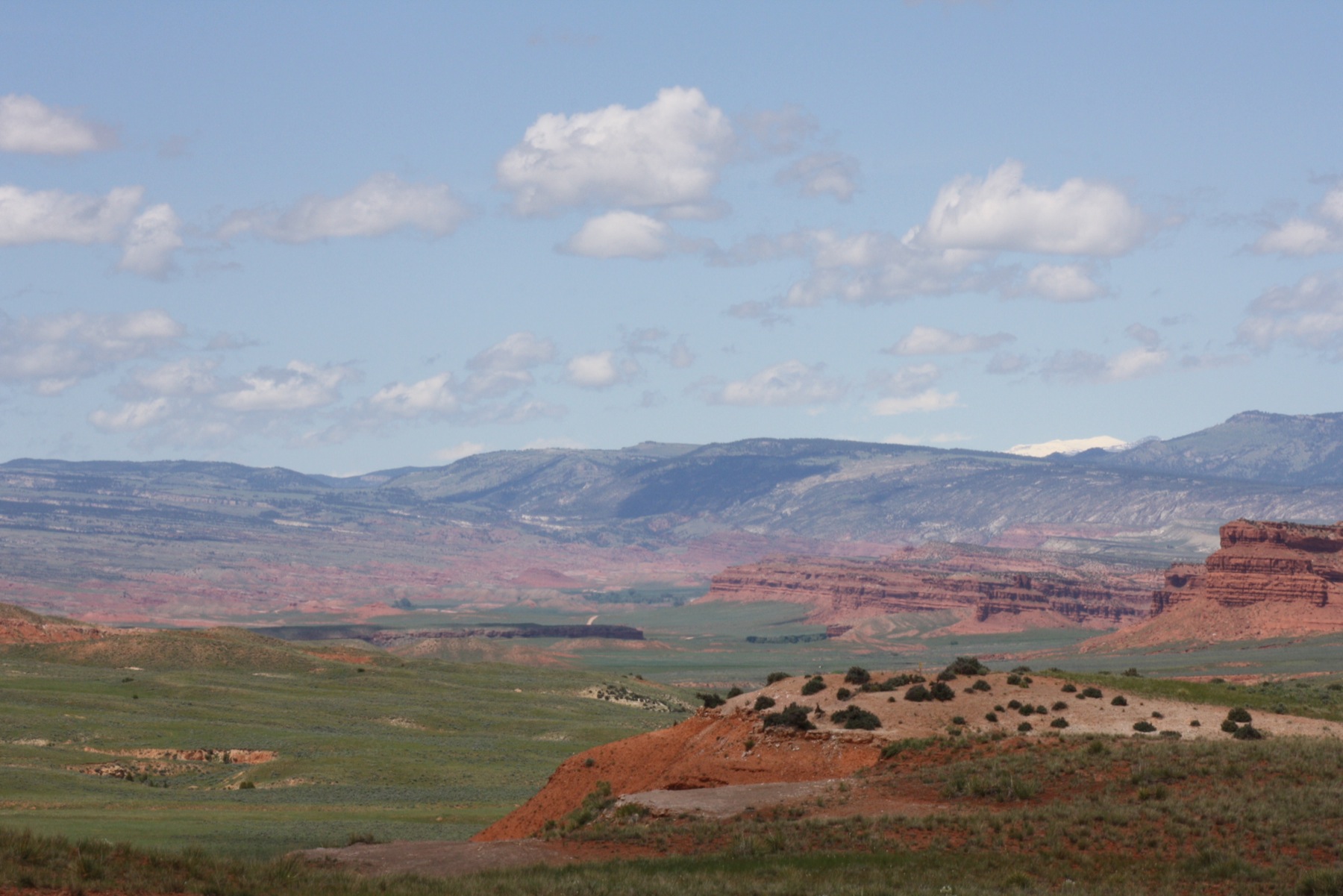
In Southwest Johnson County, Wyoming lying between the Red Wall and Big Horn Mountains is the most famous hideout on the Outlaw Trail, the Hole-in-the-Wall. Between roughly the 1860s and 1910, 30 to 40 outlaws stayed in the secluded spot including Jesse James and Butch Cassidy’s Wild Bunch. The area was (and still is) isolated taking about a day’s journey by horseback from any semblance of civilization. It is a steep climb to the top of the Wall, but overlooking the country below it is no wonder this location was chosen. With sweeping 360 views the pass was well situated to spot approaching lawmen and the narrowness of the approach made it easy to defend. The grassy plateau at the top and creek bed of the canyon below made it a good spot to graze all the rustled cattle.
In this area in the 1880s and 1890s, rustlers grazed stolen cattle and provided refuge to outlaws. Inhabitants of the six cabins that stood in the valley were known as the Hole-in-the-Wall Gang. Members of the gang included Bob Smith, Al Smith, Bob Taylor, George Currie, Tom O’Day, and the Roberts Brothers. Later Robert Leroy Parker (Butch Cassidy), Harry Longbaugh (the Sundance Kid), and Harvey Alexander Logan (Kid Curry).
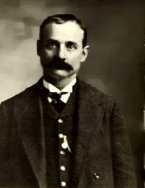
As we make our way up the rugged trail, let me introduce y’all to our hosts. Robert Leroy Parker, born in 1866, was the son of devout Mormons. He was led into a life a crime by Mike Cassidy and adopted the name George Cassidy, some believe as a way of not bringing shame on his family. In 1885, Mike Cassidy disappeared after killing a Wyoming rancher. Parker took a job with Charlie Crouse. Crouse operated a ranch in Brown’s Hole and a butcher shop in Rock Springs, Wyoming. It was alleged Crouse sold meat from cattle he rustled. It was while employed by Crouse, Parker adopted the name Butch.
By 1886, Parker was living near Meeteetse, Wyoming under his real name. It is believed he participated in the robbery of the San Miquel Valley Bank in Telluride in June of 1889. The Telluride robbery saw the introduction of a new tactic used by members of the Wild Bunch. Along the escape route, the robbers stationed fresh horses. The pursuing posse would have to continue the chase on tired horses, therefore the robbers could elude capture.
During this time, Parker continued to engage in rustling in Wyoming. He was arrested for horse stealing near Meeteetse and sentenced in 1894 to the State Penitentiary (in Laramie). He was released early in 1896 and returned to a life of crime using a series of hideouts including Robbers’ Roost in southern Utah, Brown’s Hole in northwest Colorado, and of course the Hole-in-the-Wall.
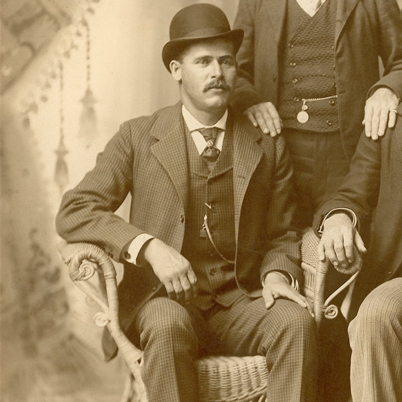
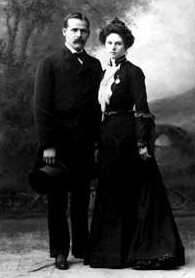
Our second host is Harry Longabough. Born in Pennsylvania in 1867, he moved to Colorado with his family. By age twenty, Longabough was working as a cowboy for the N Bar N owned by the Neidringhaus Brothers in Culbertson, Montana. In 1887, out of work and drifting he stole a horse, gun and saddle from Western Ranches, Ltd, owner of the Three V’s near Sundance, Wyoming. He was arrested and pleaded guilty, and was sentenced to 18 months in the Sundance jail. He was pardoned by Governor Thomas Moonlight. Longabough drifted to Bell Fourche, South Dakota, and there as a result of his bravado about the time spent in the Sundance jail he earned the appellation of Sundance or Sundance Kid.
Sundance moved north and worked for a period of time at the Bar U in Alberta and for a short period of time in the saloon business at Grand Central Hotel in Calgary. He then returned to Montana and the N Bar N at its Rock Creek unit.
In 1892, Sundance was implicated with Tom McCarty (an acquaintance from Colorado), Matt Warner, and Butch Cassidy, in the robbery of the Great Northern westbound #23 near Malta, Montana. By 1896, Sundance was reported to be in the Baggs and Dixon, Wyoming area.
On June 28, 1897, Sundance along with George Currie, Kid Curry, Walt Punteney and Tom O’Day participated in the robbery of the Butte County Bank in Belle Fourche, South Dakota. The bank was a huge target. After the railroad arrived, the town became prosperous as being a loading point for cattle and later sheep. The bank was so prosperous it was acquired in 1903 by Clay, Robinson, and Co., the largest commission agents in the country. John Clay managed the Three Vs, the ranch Sundance had stolen a horse and saddle beginning his criminal career.
The robbery and subsequent pursuit by the law was a comedy of errors with one man, O’Day, being found in a privy behind on of the numerous saloons after O’Day’s horse decided to leave town without him. It took until September for Sheriff John Dunn, Carbon County, Montana, and a small posse to catch up to the other three near Musselshell River. In the ensuing shootout, Kid Curry’s horse was shot through the neck and Curry was shot through the wrist. Curry leaped onto the horse and galloped away, only to have the horse drop dead. All three were arrested and transported to Deadwood Jail. There they escaped, stole horses and gear. They eluded capture on foot, losing horses and swag they had stolen. Ultimately, they made it back to the Hole-in-the-Wall, where as a result of their adventures, they were accepted as full members of the Hole-in-the-Wall gang.
Harvey Logan, Kid Curry, might be takin’ up residence at the Hole unless he’s out…on business. Harvey Alexander Logan was born in Iowa in 1867. After their mother died the four Logan boys, Hank, Johnnie, Lonny, and Harvey moved to Missouri and lived with an aunt. With Johnnie and Lonny, and a cousin, Harvey Logan left home to trail cattle from Texas to Colorado. The four ultimately wandered to the Hole-in-the-Wall where they met George Currie and adopted the last name “Curry.”
In 1894, the “Curry” Brothers established a ranch near Landusky, Montana, in what is now Phillips County. The town was named after Powell “Pike” Landusky who discovered gold in the area. Not long after their arrival the brothers had a falling out with Landusky due to the fact Lonny impregnated Landusky’s daughter, Elfie. For some reason, Landusky blamed Harvey for the deed.
Now just to warn y’all, Harvey’s a might quick tempered, especially when he’s had a bit of alcohol to raise his blood temperature. And after enjoying too much Christmas Spirit at “Jew Jake’s” Saloon, Landusky and Harvey decided to settle their differences in a way not keeping with the Season. Harvey, being younger, had the advantage and after bringing Landusky down he proceeded to beat the town founder’s head to a pulp against the floor. Lonnie and another friend kept spectators at bay using their side arms. Landusky reached for a revolver from his pocket. Harvey was handed a gun and shot Landusky dead. Eleven witnesses swore it was self defense, but the brothers fearing Harvey wouldn’t receive a fair trial departed town on a stolen buckboard.
On the outlaw trail, Harvey fell in with Butch and Sundance and participated in the Wilcox and Tipton, Wyoming train robberies…
A trestle across the Union Pacific near Wilcox, Wyoming at 1:00 a.m., June 2, 1899, forces the Overland Flyer to halt. Men wearing masks made from white napkins, possible stolen from the Harvey House Restaurant, boarded the train. One of the men after unsuccessfully forcing the engineer to pull the train forward, pulls the train forward himself. The trestle is dynamited to prevent the second section of train from catching up. The train is pulled forward two miles and stopped.
There the express car was surrounded, and the attendant, E.C. Woodcock, was ordered to open the door. He refused. The car was blown up. Woodcock suffers a concussion from the blast and can’t remember the combination to the safe. The gang blows up the safe and stole $30,000, some of the bank notes being scorched by the explosion or stained with raspberries also in the car.
Even though the men were masked immediate suspicion falls on the Wild Bunch. Other newspapers identified the culprits as the Roberts brothers and reported the robbers to be George Currie and the Roberts brothers. It is now believed the name “Roberts” was used by Sundance and Harvey Logan. Authorities believed some of the robbers were headed for the Hole-in-the-Wall. Posses gave chase. Near Teapot Creek some of culprits were cornered by a posse led by Converse County Sheriff Joe Hazen. In the ensuing fire fight, Sheriff Hazen was killed and the train robbers made their escape by swimming across the river.
On August 29, 1900, train robbers, using the same modus operandi robbed the Union Pacific No. 3 Train near Tipton, Wyoming of $50,000 in gold. Woodcock, if you can believe it, was again the express car attendant. This time he opened the door. The robbers were pursued by a posse led by Sheriff McDaniel of Carbon County, Sheriff Peter Swanson of Sweetwater County and United States Marshal Frank Hadsell until the tracks of the robbers were obliterated by a rain. Five years later an employee on a construction crew for the Farris-Haggarty tramway discovered near the head waters of Cow Creek thee bags in which the money from the Tipton Robbery had originally been held.
Although successful the Wilcox and Tipton Robberies marked the beginning of the end for the Wild Bunch and many of its members fled to Bolivia or Argentina including Butch Cassidy, Sundance and Etta Place.
Of all the Wild Bunch members Etta Place is the most mysterious. She is one of the Wild West’s most legendary women. Beautiful and wild she is reported to have been mistress to both Butch Cassidy and Sundance. Eyewitnesses maintain she was the second woman to ride into Robber’s Roost in the winter of 1897. She was allegedly 20 years old at the time, strikingly beautiful, an excellent horsewoman, and outstanding rifle shot, Etta became Sundance’s primary love interest.
Etta was reportedly a refined, highly educated woman of Eastern birth and rearing. She’s also alleged to have been a prostitute from Texas. Others claim she was a schoolteacher from Denver, Colorado with music as her primary discipline. Even her relationship(s) with Butch and Sundance is a mystery. It’s been said she was Butch’s mistress then Sundance took an interest and she went with him. There are even rumors the three lived as a ménage a’trois. Even her name has been debated as five different women who road with the Wild Bunch used the alias Etta Place.
We do know, Etta traveled to Argentina and Bolivia with Sundance and Butch returning to the United States three times during their time in South America. After returning to the United States in 1908 with Sundance, where he left her in Denver, Etta Place was never heard from again. Many claimed to be her, or claimed to be her son or daughter with Butch, but nothing was ever verified. But once Butch and Sundance were run to ground in South America Etta disappeared, as well.
The six cabins no longer stand at the Hole-in-the-Wall, and time has covered their foundations. But if you’d like a Wild West experience you can stay at the Willow Creek Ranch. The Willow Creek Ranch dates to 1882 when it was founded by Kenneth MacDonald, an immigrant sheep rancher. The area’s small ranchers, such as MacDonald, aided the outlaws because they didn’t want any trouble, and outlaws rustle from large cattle barons and robbed trains with well-filled strong boxes.
Today, a rugged dirt road leads from ranch headquarters to the former hideout. Guests can walk threw the chunks of foundation remaining. Guests can picnic beneath the old cottonwoods by Buffalo Creek and dream of the days when Butch, Sundance and the gang would seek refuge at the Hole-in-the-Wall.
Okay folks, we’re gettin’ close so get yer hand off the heel of your gun before ya get us all blown to bits. Smile big and look like ya belong! It’s sure to be a high kickin’ time with this bunch!
Howdy, Butch and Sundance! You boys are lookin’ just as fine as frogs hair!
*Pictures from Wyoming Tales and Trails, Willow Creek Ranch website
**Information from Wyoming Tales and Trails, Willow Creek Ranch
Sometimes on the trail ya find a story that lassoes your heart and pulls tight. Characters ya cheer on and embrace like long lost pards and a message that keeps gnawin’ on ya long after the campfire has turned to embers. SAVING HOPE by Margaret Daley was one of those stories for me, and I was plum thrilled when she agreed to let me pass the tale ‘round the fire.
Since Cookie and me get all riled about crimes against our young folk and I’d like to share the message of SAVING HOPE, we decided we’d give one lucky commenter an ebook copy of SAVING HOPE. So, leave a comment and tomorrow at first light I’ll pull a name from the hat.
When a teenager goes missing from the Beacon of Hope School, Texas Ranger Wyatt Sheridan and school director Kate Winslow are forced into a dangerous struggle against a human trafficking organization. But the battle brings dire consequences as Wyatt’s daughter is terrorized and Kate is kidnapped.
Now it’s personal, and Wyatt finds both his faith and investigative skills challenged as he fights to discover the mastermind behind the ring before evil destroys everyone he loves.
Today’s feature not only includes a fantastic modern day tough, tender, law-dealing, cowboy, Texas Ranger Wyatt Sheridan, and a brave, intelligent, caring heroine, Kate Winslow, but the message of this book is so dynamic I just had to feature it even though it is contemporary and not historical. Margaret Daley tackles the crime of human trafficking in a powerful story with characters readers come to care deeply about, and a story that pulls you in completely (even to places you don’t want to go).
I would say this book has two heroines, as once you meet Rose Garland you can’t help but love this teenager who has endured the worst humans can dish out, but still finds the will to fight against those who would drag her back to a life of sexual slavery. I found myself verbally cheering Rose on and encouraging her to fight, and wanting to fight for her.
Ranger Wyatt Sheridan is what a hero should be. He’s determined to see justice in rescuing victims of these crimes, and punishment meted out for those dealing in humans. His personal struggles only make him a stronger character especially his relationship with his daughter and keeping his family safe and intact from the horrors he witnesses daily.
Kate Winslow’s driving desires to see the girls in her care overcome their tragic pasts and succeed and prosper…to find hope really inspired me. Her willingness to get in the trenches and do whatever it takes to save as many girls as she can, and her interaction and how she truly gets to know each girl made her a heroine who makes you take stock of what you would do in her situation and how hard would you fight.
But I don’t want to give the impression this is a dark and dreary story you’ll never recover from. What makes SAVING HOPE such a great read is it’s a story of forgiveness not just of forgiving others but ourselves so we can face the future and live the full life God wants for us. It’s a story of faith. Faith in our family, our friends, and in a faithful Heavenly Father. And it’s a story of hope. Of holding onto hope when it seems most out of reach, and of giving hope to others when they can’t reach it on their own.
SAVING HOPE is one of those books when it ends it leaves you with the memories of a great story, but with a challenge of: What can I do?
Please read the message from Margaret Daley about why she wrote SAVING HOPE. It’s so important we become educated about this crime against humanity. And keep your eyes peeled for book two from THE MEN OF THE TEXAS RANGERS series!
It is estimated that 293,000 American youths are at risk of becoming involved in sex trafficking. We aren’t talking about just 16-18 year olds but younger children, too. The average age is 12-13 years old.
The FBI says this problem is growing in the United States with pimps on social media sites to lure more youths. Most of these teens are runaways or throwaway kids, often children that have been abused or kicked out of their families. Some teens are targeted and kidnapped or their parents sell them to a trafficker. Anyway you look at it, these youths are trapped in a horrific situation with little means of getting out. They become victimized, not just girls but boys, too.
1. We need to recognized the problem.
Human trafficking exist in the United States, not just other parts of the world.
2. We need to see these youths as victims.
These are not criminals to be prosecuted and pass laws to protect our children against this situation and predators.
3. We need to train law enforcement to deal with these youths as victims.
We must give law enforcement the tools and resources to identify the children victimized and ways to connect them to a place that will help them.
4. We need places to give these youths a refuge and a second chance.
We need safe havens–places like Children of the Night have (http://www.childrenof the night.com).
Organizations are beginning to see we need to do something. The Salvation Army is heavily involved in educating the public about the problem. There are organizations that are set up to offer help to children involved in child trafficking–ECPAT and Children of the Night. Also many churches are getting involved. If you suspect a child or situation, please report it to the Human Trafficking Resource Center hotline (open 24/7) at the toll free number 1-888-373-7888.
The above are the reasons I wrote Saving Hope. I taught high school students for twenty-seven years. I never wanted them to become a victim of a human trafficker. I wanted to do something about the problem, to warn them of what can happen if they aren’t careful, but at the same time give the reader an entertaining story that they will remember after they finish the book. I hope people become involved in Kate, Wyatt and Rose’s stories.
Howdy! Good to see y’all back on the trail. Today were headed out of Montana and back to big beautiful Wyoming. In my first blog, I mentioned Sheridan turned this cowgirl’s head and stole my heart. So, we’re gonna visit the area again and then head on down the trail. Let’s get those wagons movin’ we’re burnin’ daylight and we’ve got a ways to go!
The Battle of the Little Big Horn and the subsequent surrender of the Sioux and Northern Cheyenne brought to an end the American Indian conflicts, for all intents and purposes. This opened the door to lands on the eastern slope of the Big Horn mountains to ranchers, cowboys, and homesteaders. John Loucks founded the town of Sheridan in 1882, to serve as a hub for these inhabitants.
When John Loucks arrived, visiting his friend James Works in 1882, he found George Mandel’s post office in a little cabin where the Rock Creek stage line crossed Big Goose Creek. An old cabin built in 1878 by a trapper known as Dutch Henry was nearby, along with a horse barn for the stage-line teams. These buildings became the nucleus for the emerging town.
Works convinced Loucks to stay, and Loucks purchased Mandel’s cabin and claim for $50. Loucks then traveled south to find a justice of the peace so he could be sworn in as postmaster. On his return, Loucks rested as what today is Courthouse Hill. Enthralled by the abundant grass and grazing herds of buffalo and deer, he returned to the cabin and sketched out the town of his dreams on a piece of brown wrapping paper. He named the town for the commander he served under during the Civil War, General Phil Sheridan.
In May 1882, Loucks had an engineer, Jack Dow, from the neighboring town of Big Horn City survey the 40-acre town. Streets were named after several men who had already taken up claims in the area and helped with the survey: Kenneth Burkitt, James Works, George Brundage, Alexander Gould, L.H. Brooks, and W. Scott.
Another of Sheridan’s earliest townsmen, and a man who appears in a few of my stories so a personal favorite, is Henry Held. Held was heading for Yellowstone country when he pulled up his wagon to stay overnight in the brand new town of Sheridan. When Loucks found out the new arrival was a blacksmith, he made Dutch Henry’s cabin available and Held set up shop there. Held filed claim on adjacent land and purchased lots in Sheridan where he built his new blacksmith shop on the northwest corner of Main and Works Streets.
Henry Held’s blacksmith shop was the first structure built on the new Main Street in 1882. Held also built the town’s first irrigation ditch, developed one of the earliest subdivisions, and helped build the first electric light plant. He later donated land for the city cemetery.
Of course every Old West town had to have a saloon, and Cow Boy Saloon was Sheridan’s first. It served the areas inhabitants until it became a drugstore after a few years.
John Conrad built his general merchandise store across from the Cow Boy Saloon. Conrad’s store carried everything from knitting needles to threshing machines. Sheridan’s third oldest building still stands at the northeast corner of Main and Loucks Street and has housed the Hospital Pharmacy since the 1980s.
The Grand Central was Sheridan’s first hotel. All of Sheridan’s townspeople, 17 women and 65 men, attended the opening ball on July 3, 1883. The nine-room hotel was replaced by the Keenan Building in 1914.
Other Sheridan firsts include: The first seventeen children to attend school in John Loucks’s cabin, and the first frame school built in 1884. Built at a cost of $1000.00, Loucks contributed the extra $200 for the bell and belfry. Henry Coffeen, who also built a complex of stores known as Coffeen Hall, organized the first fair in Sheridan south of town near Little Goose Creek. Livestock and agriculture shows were a big part of the fair, but horse racing was the most popular event.
Almost half of Sheridan’s 1,000 residents gathered at the depot to welcome the first passenger train at 10:00 a.m. on November 18, 1892. Burlington and Missouri River Railroad executives announced their intent to build a line through Sheridan in 1888, expanding the towns population and connecting Sheridan to the outside world.
Sheridan always had the inside track on its selection as the railroad’s route through northern Wyoming. Several of the Burlington and Missouri Railroad officials from Omaha owned property in the Sheridan area and realized the value of expansion there. With local investors Edward Whitney, Horace Alger, and C.H. Grinnell, they formed the Sheridan Land Company, and built the Sheridan Inn in 1893, right across from the B&M Depot.
The Inn featured the first running-water bathtubs and electric lights in town, and the first telephone line was connected to a downtown drugstore. Inn guests have included such notables as Ernest Hemingway, Will Rogers, Bob Hope, Robert Taylor, and several presidents.
Among its guests was also Buffalo Bill Cody. In 1894, Cody became a Sheridan Land Company partner. Cody auditioned local cowboys for his famous Wild West show from the comfort of the inn’s large porch. Some of the cowboys’ wives were featured in one of the Wild West’s acts. The ladies rode sidesaddle and, with their partners, performed a square dance on horseback. The Inn is still there in Sheridan. You can order a cold one at the same bar where Wild Bill ordered a round for the house, and one of his business partners George Beck originated the popular drink called the Wyoming Slug (a concoction of champagne and whiskey). And a personal note their steak is fabulous and just a warning order one desert to share.
Speaking of cowboys, and this is Wyoming so we have to talk about cowboys, Sheridan had its share. You can read about John Kendrick in a previous post, so let’s visit some others.
Some of the largest ranches in Wyoming are in the Sheridan area. Ranchers like W.H. “Doc” Spear, Bill Glasgow, Andy Martinson, Lew Burgess, Nelson Darlington, Guy Wood and Bill Leavitt established large landholdings in the area. One of the largest and earliest ranches in the area was started west of Sheridan by two brothers Matt and Al Patrick, who also had the stage line contract from Rock Creek in southern Wyoming to Custer Station on the Yellowstone River. The PK Ranch is still one of the largest in the area, and portions of it have been set aside as a nature conservancy.
On the heels of ranching came a uniquely western phenomenon, the dude ranch came to Sheridan. Ranchers discovered that not only friends, but complete strangers were willing to pay for the privilege of riding horses and even helping out with the chores. In 1890, Daniel T. Hilman operated the first dude ranch in Sheridan County near Big Horn when he accepted the first two of a long line of visitors.
Dude ranches flourished in Sheridan County in the early half of the 19th century. The Dude Rancher’s Association in the West was formed in 1926 to set standards for the industry. The Burlington Railroad helped out by printing special maps of dude ranches in Wyoming and Montana.
The Eaton brothers, Howard, Willis Larimer, and Alden Eaton, launched the nation’s first dude ranch in 1880s at their ranch in North Dakota. The brothers moved their ranch to Wolf, just north of Sheridan, in 1903 making it the second dude ranch in Sheridan County. The Eatons ranch remains one of the better-known dude operations.
When people think of Wyoming, dude ranches can come to mind. Most visitors to Sheridan, myself included, are surprised to learn the sport of polo is alive and well int the American West. Afterall, polo isn’t a typical western sport.
However, the sport of kings found a western home when three Britons introduced the sport in the 1890s. The Moncreiffe brothers bought a ranch just outside Big Horn and named it the Quarter Circle A. Malcolm Moncreiffe and Oliver Henry Wallop and Malcolm’s brother William, partnered to provide 22,550 remounts for the British cavalry engaged in the Boer War. The Moncreiffes became known for the quality of their stock including polo ponies. William Moncreiffe’s registered brand is the second oldest in Wyoming.
It was Malcolm Moncreiffe who was the driving force behind polo in Sheridan County. In 1901, Malcolm developed the first polo field on what would become Polo Ranch southwest of Big Horn, where polo was played until 1984. Since then, the game has been played at the Big Horn Equestrian/Events Center where world-class players and horses appear every summer.
In addition to Big Horn’s Polo Ranch, the game was played at several sites around Sheridan. Cowboys played polo around Saberton Avenue before the hospital was built there and at Sheridan’s original fairgrounds. In 1900, the first match played for a cup took place behind the old Western Hotel near Works and Brooks Streets.
The local Big Horn team, called the Magpies, wore distinctive black and white vests. They traveled to Colorado to compete in matches with teams, including several fielded by the U.S. Army.
William Moncreiffe married in 1908 and remained on the ranch until 1923 when it was sold to an Illinois businessman, Bradford Brinton. Brinton used the ranch as a vacation home. Brinton collected many pieces of western art and expanded the ranch. The Bradford Brinton Memorial Museum is opened for visitors and showcases the historic home and vast art collection.
Oliver Henry Wallop married Marguerite who was the sister of Amy Moncreiffe (Malcolm Moncreiffe’s wife). Wallop became a United States citizen in 1904 and was elected to the Wyoming legislature in 1908. However, the death of his older brother forced him to assume the earlship and membership in the British House of Lords in 1925. His grandson Malcolm Wallop served for many years as one of Wyoming’s U.S. Senators.
A more familiar site in Western sports is rodeo, and since its beginning Sheridan’s has always been one of the best in the West. The Sheridan-WYO rodeo, established in 1931, features all the finest rodeo events. The organizers of the Sheridan-WYO had three goals: keep Sheridan residents home, provide a mid-summer event in Sheridan, and advertise Sheridan to tourists. From its start, the rodeo attracted some of the biggest names in the sport of its day.
From the beginning, the Sheridan-WYO included a strong American Indian presence. After facing cancellation during World War II, the rodeo came back strong. And in 1952, Lucy Yellowmule, a shy Crow girl, was selected rodeo queen. Aided by reporter Howard Sinclair, Lucy turned her reign into an opportunity to improve American Indian and white relations. She made many public appearances to dispel myths and share American Indian culture. Gradually, new appreciation was gained on both sides. American Indian leaders organized an event called All-American Indian Days, celebrating all tribal cultures and featured a pageant to select Miss Indian America.
Like all Western towns Sheridan has faced fire, flood, boom times and bust times, but year after year the people of Sheridan have struggled, straggled, rebuilt, built more, persevered and preserved their history. It’s no wonder Sheridan is continually named one of if not the number one Western town in America. But folks we have a little more traveling to do before nightfall. I know, I know it rips my heart out to leave Sheridan, too, but these next stops will be worth the trip. We’re heading into the Big Horn National Forest.
Before we head out let’s make one last stop at the Mint Bar, established in 1907, still in business on North Main Street. It was at the Mint, Theodore Roosevelt noted that cowboys “when drunk on the villainous whiskey” would “cut mad antics such as riding their horses into the saloons.” And indeed, the custom continues today. The Mint Bar continued to operate through prohibition, although quietly. Upon the repeal of prohibition it officially reopened. Sheridan even had its own brewery, the Sheridan Brewery, maker of Sheridan Export and Sheridan Pale, in business from 1885-1954. The Mint makes an appearance in one of my stories, and yes a cowboy rides his horse into the saloon.
The Big Horn National Forest is eighty miles long and thirty miles wide. The Forest covers 1,115,073 acres, and extend from the Great Basin area of Wyoming northward to Montana. Elevations range from 5,500 feet to 13,175 feet (Cloud Peak).
Hold onto your mules folks we’re headin’ up the Dayton-Kane Highway! God bless your hearts! Make sure your supplies are tied down tight and iffin ya don’t like heights I’d hunker in the back of the wagon.
The Dayton-Kane was named for two small communities. Dayton is still there, but Kane was destroyed when the Bureau of Reclamation condemned the land and bought the community in 1965 when the Yellowtail Dam neared completion and the Bighorn Lake would flood Kane.
All that being said let’s head up the road and by up I mean waaay-up. First stop, Sand Turn. I’ll just stand back and let you take all the pictures you’d like. It’s an amazing site looking over the road you just traveled, all the twists and turns. Many visitors hang glide from Sand Turn and best of luck to them, I’m getting back in the wagon.
As we travel take time to check out all the gorgeous wildflowers at their peak in the Big Horns in late June and early July. It can take a good bit of time to get down the mountains when you stop every few feet for a photo opportunity (this is from personal experience, but I’d do it all again).
Next stop are the Shell Falls. These are spectacular and make sure you walk the paths to get the falls from all angles and find other falls cascading down the mountains.
Another interesting spot is the old Beef Trail. I don’t mind taking pictures, but Cookie would demand a huge raise if this trail boss took the herd up that narrow path and this trail boss would demand a huge sedative.
We’ll just ease on down into the basin leaving the majesty of these mountains. Hope y’all enjoyed just this brief glimpse of what Sheridan and the surrounding area offers. But please folks if ya only choose one place to visit from all these posts make Sheridan and the Big Horns it!
Now if ya’ll will excuse Cookie and me we have to go shed a few tears around the campfire. We always get a might choked up when we visit this piece of God’s country. Below are some links to places to visit that should keep ya busy for a time and give ol Cookie some time to compose hisself for the next leg of our journey!
The boys and I are fairly burstin’ at the seams about today’s featured author Peggy L. Henderson and her Yellowstone Romance Series! Why Cookie almost fell in the dutch oven of beans at a series of stories takin’ place in our old stompin’ grounds!
And yippee ki yay, we’re dancin’ a jig cause y’all are winners today! Today and tomorrow (April 18 and April 19 on Amazon) you can upload YELLOWSTONE HEART SONG for FREE!! We’re shootin’ are six guns in the air!! And don’t y’all forget National Park Week, April 21-29!!
Nurse and avid backpacker Aimee Donovan is offered the opportunity of a lifetime. She encounters a patient who tells her he can send her two hundred years into the past to spend three months in the rugged Yellowstone wilderness at the dawn of the mountain man era. The only requirement: she cannot tell anyone that she’s from the future.
How did a white woman suddenly appear in the remote Rocky Mountain wilderness? Trapper Daniel Osborne’s first instinct is to protect this mysterious and unconventional woman from the harsh realities of his mountains. While he fights his growing attraction to her, he is left frustrated by her lies and secrecy.
Daniel shows Aimee a side of Yellowstone she’s never experienced. She is torn between her feelings for him, and exposing a secret that will destroy everything he holds as truth. As her three months come to an end, she is faced with a dilemma: return to her own time, or stay with the man who opened her eyes to a whole new world. When the decision is made for her, both their lives will be changed forever.
City boy Chase Russell is on the fast track to self-destruction. A star athlete, he gets into trouble with drugs and alcohol. Fulfilling a community service sentence in Yellowstone National Park is the last thing he wants to do. After a night of drinking in the park, he wakes up to find his new friends gone, and everything around him has changed.
Sarah Osborne grew up in the rugged Yellowstone wilderness. She can hunt and track right alongside the most experienced men. When some Indians drop a near-dead man off on her doorstep, she doesn’t know what to think. He’s convinced he’s from the future, and wants to find a way home.
Chase has no idea how he ended up time traveling to the past. He doesn’t know the first thing about surviving without modern conveniences. Finding your own food means a quick trip to the nearest fast food joint, not hunting and foraging for it. Time and again, his will is tested to stay alive in this untamed land. Is his growing love for a brave woman who shows him what it truly means to be a man strong enough to keep him in the past, or is he still determined to return to the ease and comforts of the future?
A tender, heartfelt love story . . .
A man willing to risk everything, including his life and all he’s worked for, to free the woman he loves from an impossible situation.
Kyle Russell has worked with prominent men, led scouting expeditions through the Yellowstone country, and irritated more than a few Indian braves, but he will never duplicate his father’s legendary accomplishments. Captured by a group of Crow warriors, his plans of escape are derailed when a lone white woman is brought into camp.
Kate Ellen Devereaux is on the run. Her guardian is dead, and she is lost in the Yellowstone wilderness. Found by an Indian war party, she is brought into their camp and thrown at the feet of a white captive. If he has plans of escape, she won’t be left behind.
Kyle’s father may be a legend in the territory, but he never had to deal with an eastern lady full of secrets, a woman who disrupts Kyle’s plans to see the Yellowstone area turned into a national park. Convincing her that they are destined to be together may be a greater challenge than gaining support for the park movement. Kate can’t afford to show interest in any man, regardless of her growing attraction to her backwoods rescuer. Will her ultimate reason for rejecting him spell doom for their growing love, and the national park idea, or can Kyle find a way to rescue both?
Danica Jensen dreams of a man she knows she can never have. After one brief encounter five years ago, her heart was lost to him forever, and she’s never given up hope of seeing him again. Raised by a bitter father, she’s learned to be strong and resourceful on her own. When a pleasure trip to the newly created Yellowstone National Park turns into a battle for survival, her inner strength is tested like never before.
A woman like Danica doesn’t interest Josh Osborne. He’d be crazy to get involved with a bossy, strong-willed white woman. His mixed heritage has always made people weary of him. He prefers to be on his own, and his role as protector of the national park’s game allows for no attachments.
Danica’s dream of ever winning Josh’s heart shatters after a cruel twist of fate changes her life forever. Suddenly forced together, they must confront their deepest secrets. Josh can’t deny his growing respect and admiration for this brave woman, but will the bond they’ve forged be powerful enough to turn his feelings into love? When an unforeseen danger threatens their lives, Josh must protect more than the wild inhabitants of the park.
KIRSTEN’S THOUGHTS: This is such a fresh and exciting series. I only recently discovered Peggy Henderson and her fabulous series, so I have only read YELLOWSTONE HEART SONG, but I am hooked!! Of course, she had this Wyoming girl at Yellowstone. But really, I found the time period, early 1800s during an era when only a few trappers and adventurers ever laid eyes on this wonderland extremely original. The time travel aspect is wonderful and Aimee’s reaction was realistic in thinking she could handle everything since she had been to the park many times in the 21st Century, only to find early 19th Century Yellowstone is a someplace altogether different. Daniel is a wonderful hero who learns while he might know about surviving in the wilderness; he’s clueless when it comes to the stubborn woman who dropped into his life. Their journey of learning about each other and how to survive the love they develop is as tough as the land and tender as a love song. I don’t want to say too much because Daniel and Aimee’s story is such a joy to discover on your own.
The amount of information regarding the area is amazing, and you’ll find yourself learning even as you’re entertained. It’s easy to tell this series is written by an author who loves the area and knows what she’s talking about.
When I first started this story, I thought “This is a good story, I like this.” Then BAM!! It reeled me in like a bass on a hook.
So move swiftly and don’t spare the horses to take advantage of the freebie offer on Amazon of YELLOWSTONE HEART SONG. And you might-as-well get the rest of the series, cause once you read Daniel and Aimee’s you’ll be dangling from the line with me for more.
MESSAGE FROM PEGGY HENDERSON:
Yellowstone Heart Song was born on a lone stretch of Interstate 5, heading home from a trip to Yellowstone National Park in 2009. Driving through the Utah desert every year on a thousand mile (one way) road trip to the park, the mind has a lot of time to wander. Although the published story has some changes in it, the original concept remains the same as it took shape in my mind. I’ve never thought about writing a book of any sort, but I had been reading romance, especially western and early American historical, for many years, so this story came as a complete surprise to me. I didn’t think much of it over the months, but it always stuck with me in the back of my mind.
The following year, on another trip to Wonderland, I took greater notice of all the places in the park that were part of that story in my head. The day after we got home, I sat down to write. It just wouldn’t let me go. I told no one what I was doing. The thought of letting anyone else see what I wrote was laughable. A year later, I had a finished story. Now what? I checked around the internet. I wanted someone to read it, just to let me know what they thought, but never did I have publishing in mind. I found some RWA contests, and entered one. My scores were decent that first time around to my surprise, and I tweaked the story based on each judge’s comments. I entered another contest, and finaled! How shocking was that! My harshest judge said, “find a critique partner.” So I searched the internet again. And I struck gold when Carol Spradling answered my query. She tore through my manuscript with a loaded red pen and fine tooth comb. Months later, she asked me when I would pursue publishing. What?!?! I basically ignored her. She wanted to know what I would write next. Huh??? Okay, I thought. I love Yellowstone, I can’t think of anything else to write, and I loved the interaction with Carol, so why not write a sequel? That’s how Yellowstone Redemption came to be. Carol hated my new hero as much as she loved Daniel in the first book. I told her to trust me, Chase would end up just fine. After I completely surprised her with the ending in that book, I was gung ho to write another. I knew right away I could never duplicate a story like the one in Book 2, and decided to write a hero who was just a nice guy, trying to solve an impossible problem for his leading lady. Yellowstone Awakening was a few chapters from completion before Carol put the brakes on me, and told me I need to get something published. Her experiences with her publisher scared me away from that idea, until my husband suggested I self-publish. So, that’s what I ended up pursuing, and I published Yellowstone Heart Song on January 2nd, 2012. The reader response has been overwhelming, to say the least.
By now, it became obvious that this was turning into a series, and I wrote a couple of characters into Book 3, who would be my main characters for the fourth book, Yellowstone Dawn, which releases today! The series has evolved from one stand alone book, to me taking factual events from Yellowstone’s history, and weaving them into my stories. Yellowstone Redemption contains a scene that was inspired by John Colter’s legendary escape from the Blackfoot Indians. Yellowstone Awakening is a fictional account (with true facts sprinkled in) of the creation of the nation’s first national park, and Yellowstone Dawn deals with some of the problems the park encountered in its infancy. The final book I am writing in the series, Yellowstone Deception, will deal with a more current issue the park has faced.
I’ve enjoyed my journey as a writer so far, and hope to bring the old west, the mountain men, and the Rocky Mountains to life in future books I plan to write.








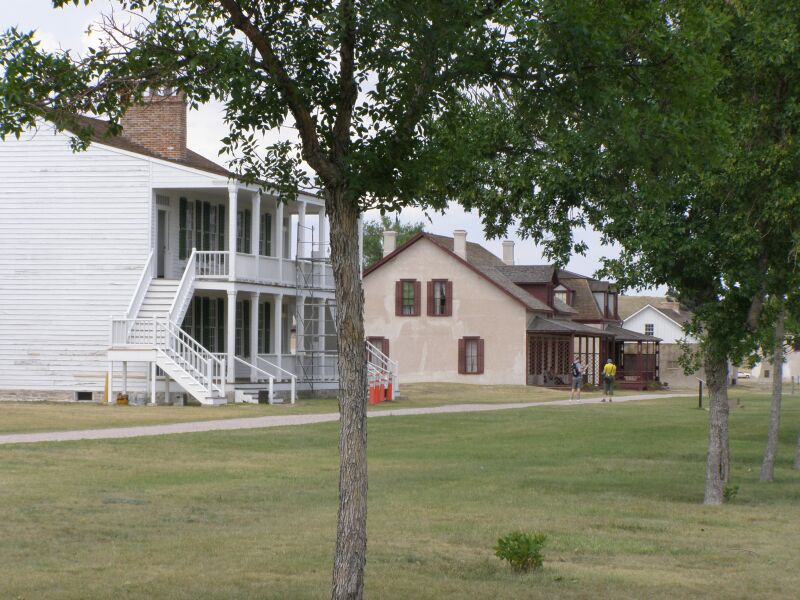 One of the most memorable shrines in Western America, and a location that appears in many books and movies about the West, is found in Eastern Wyoming at the junction of the Laramie and North Platte Rivers. Today the restored buildings of Fort Laramie remain preserved as a National Historic Site, where weary travelers can still stop by off the trail and step back in time.
 In 1826, William Ashley of St. Louis sold out to Jed Smith, William Sublette and David Jackson, and Sublette brought the first wagon caravan up the Platte. In 1832, Sublette and Robert Campbell formed a trading partnership, contracting to supply others at the rendezvous, and in 1834, they built the first fort on the Laramie. The first fort Laramie was named Fort William (according to one of Sublette’s party William Anderson the name was in honor of the common name shared between himself and Sublette). In 1835, Sublette and Campbell sold Fort William to Jim Bridger, Thomas Fitzpatrick and Milton Sublette. These men sold out within a year to the American Fur Company.
 In 1837, as Scotch nobleman, Sir William Drummond Stewart, traveled with artist Alfred Jacob Miller. Miller’s sketches remain the only pictorial record of Fort William. Later visitors of record include, Kit Carson, Joe Meek and Osborne Russell, Father De Smet, and Augustus Johann Sutter (whose ranch in Sacramento would later host its own hordes of gold seekers).
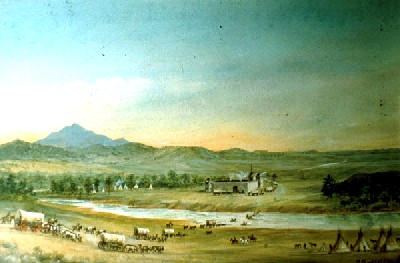 missionaries and the random adventurers. However, that was about to change with the arrival of the Bidwell-Bartleson expedition and the White-Hastings expedition the following year. These were the first avowed settlers bound for the west. Both of these expeditions hired Thomas Fitzpatrick, veteran mountain man, as a guide.
 Company C, Mounted Rifles, arrived in July and Company G, Sixth Infantry in August completed the garrison. The temporary shelter of the adobe post was decrepit and infested with vermin. However, by winter a two-story block of officers’ quarters, a block of soldier quarters, a bakery, and two stables had been pushed to completion. This began Fort Laramie’s forty years as a frontier command post of the United States Army.
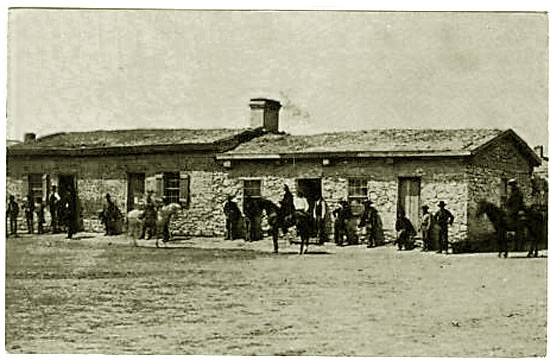 The Fort provided care for wounded and sick, and sometimes the final resting place for travelers in the old fort cemetery. Some emigrants disposed of their surpluses here, others were in need of provisions, which the Post Quatermaster was able to supply, and the post blacksmith did a land-office business. However, the busiest place was the post sutler’s store where emigrant coin and valuables were exchanged for canned goods, liquor, patent medicines, lotions, muslin, sunbonnets, and other essentials.
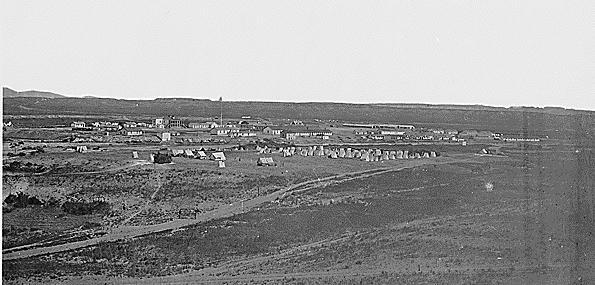 First in 1853, a North Platte ferryman, busy with emigrants, refused to transport a party of young Sioux. The Sioux seized the boat and one fired on the soldiers, who recaptured it. Lieutenant H.B. Fleming and 23 men were dispatched to the nearby village of Minniconjou Sioux to arrest the offender. The Sioux refused to give him up. In the ensuing exchange of gunfire three Indians were killed. The enraged Sioux then threatened the fort. Captain Richard Garnett, post commander, through skillful negotiations diffused the situation, but the seeds of mistrust were planted.
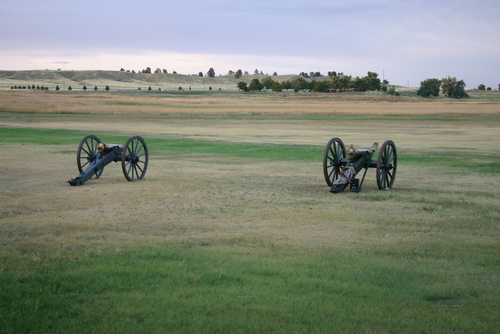 The first serious disturbances did not occur until spring of 1862 when Sioux raided stations west of the fort, running off horses and scalping the tenders. To protect lines of communication vital to the Union Army fighting a Civil War, cavalry companies were ordered to the western theater. Colonel William Collins arrived at Fort Laramie with a battalion of the Eleventh Ohio Cavalry. It was his unenviable duty to guard the route between courthouse Rock and South Pass (a distance of over 500 miles). This blue line seemed powerless to intercept the mounted warriors of the Sioux, or to chase them down.
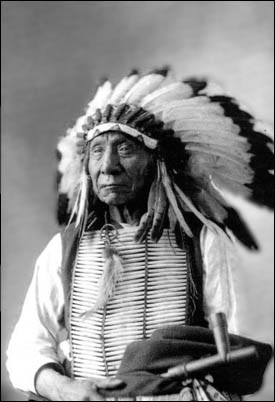 While the ceremonies were still in progress, Colonel Henry Carrington arrived with 2,000 troops, heavily armed and equipped to set up a chain of posts along the Bozeman Trail. To Red Cloud, such an armed occupation made a mockery of any peace treaty. He withdrew in anger, and the Fort Laramie Treaty of 1866 was the shortest lived peace treaty on record.
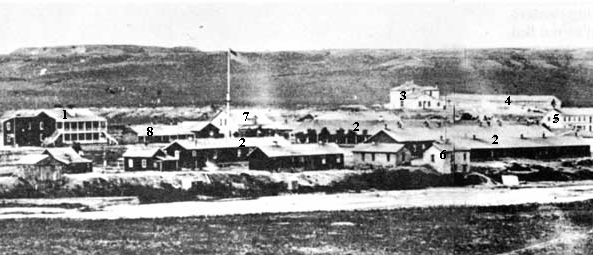 Fort Laramie’s destiny was welded to the “Magic City of the Plains” about 100 miles to the south that began as a huddle of shacks springing up at the end of track when the Union Pacific construction crews reached that point in 1867. The Sioux wars and the stampeded to south Dakota combined to make Cheyenne a great supply depot and jumping- off place for the Black Hills while Fort Laramie became its principal gateway and guardian.
 Calamity is alleged to have played various roles in the saga of Fort Laramie, including stage driver, roustabout, and occupant of one of the boudoirs at the Three Mile Ranch. Buffalo Bill Cody was another celebrated visitor, as a scout for the Fifth Cavalry.
 and order, field exercises, maneuvers, and target practice, military activity was at low ebb, while grand balls, celebrations, dress parades, theatricals, picnics, and tree planting became the dominant preoccupations. This is not the stuff of which epic history is made. And the bright star of the plains was fading fast.
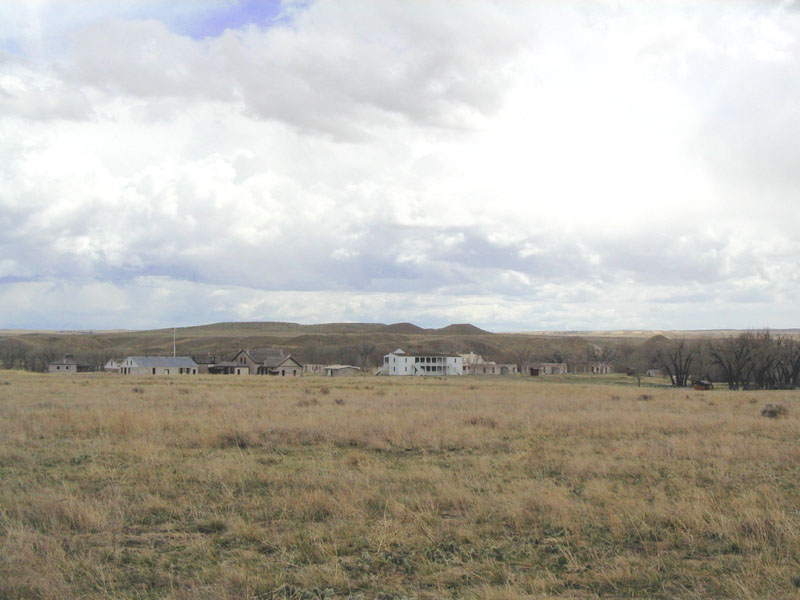 But put those handkerchiefs away folks and dry those pretty little eyes, cause y’all can still make an Old West pit stop, just like our predecessors, at Fort Laramie! Why there’s still barracks and officers’ quarters ya can walk through or traipse across the parade grounds just like ya wore Blue! And iffin’ ya visit in July or August why ya can really experience the thrill of sweatin’ under that big ol’ Wyomin’ sun it’ll take ya back for sure. Doggone, Cookie! Does a gal have ta beg for a sarsaparilla? My biscuits are burin’ for sure!